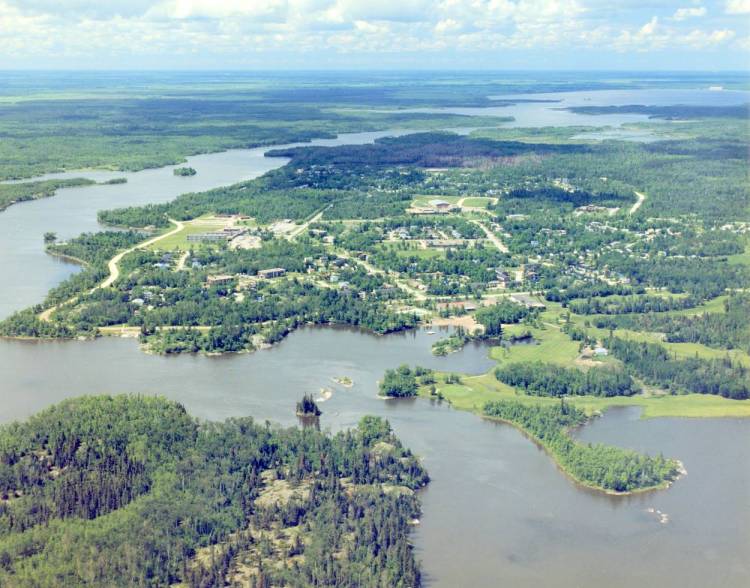
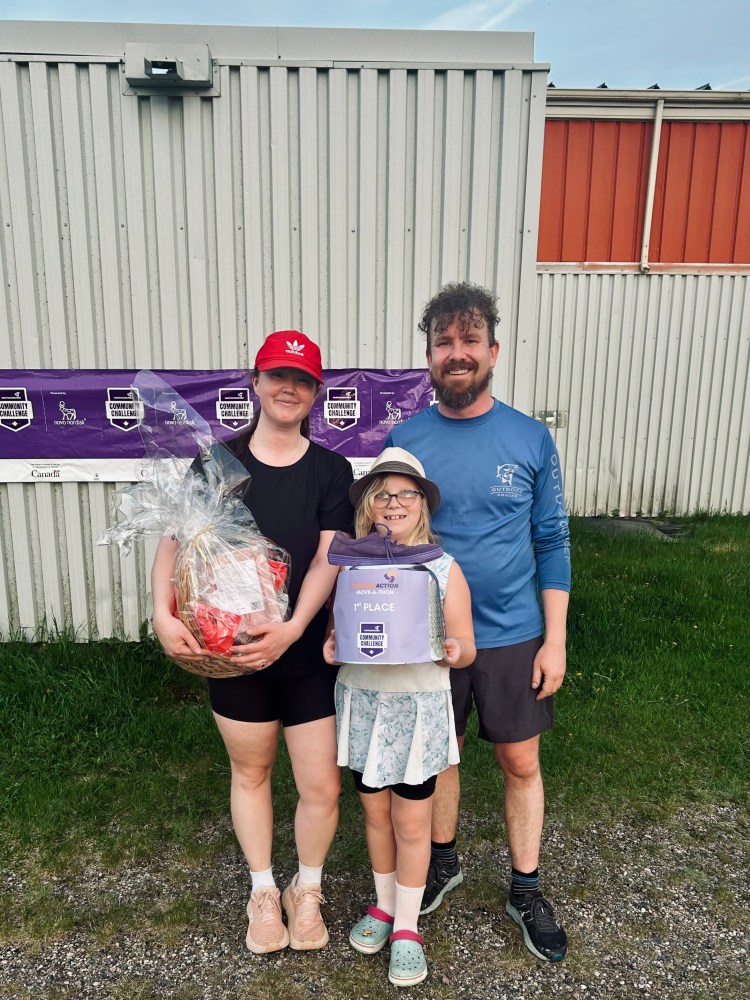
Thanks for reading my brochure and choosing to follow the link. I’m glad you are here to learn more about who I am, what I have already done for Pinawa, and how I intend to lead if elected as your Mayor.
Creating the brochure was an interesting project for me. I didn’t use AI, just a word processor, my own photos, thoughts, and reflections. I know that people are busy, and so, of course, I tried to communicate my core ideas as briefly as possible.
One of the themes of my campaign has been to demonstrate the substance behind what I say. Platitudes are cheap, and in elections people can frame up all kinds of stories and narratives. That’s what this website is for, and why I write these essays. I’ve served five years on council, guided by integrity, solving problems, and fighting for the people of Pinawa. I’m proud of my record.
Below you will find links to my essays on topics you might be interested in. Have a cup of coffee and a read through. If this is your first time here, there will be a lot of content to look at. For the future, you can subscribe by email below, and then whenever I write a new essay, it will be delivered directly to your inbox.
In the brochure I talked about Recreation and Storywalk. Two projects that I am very proud to have played a part in. There were many challenges that needed navigating for those to come to fruition. I wrote an essay about What Transparency Actually Means that uses Storywalk as a case study.
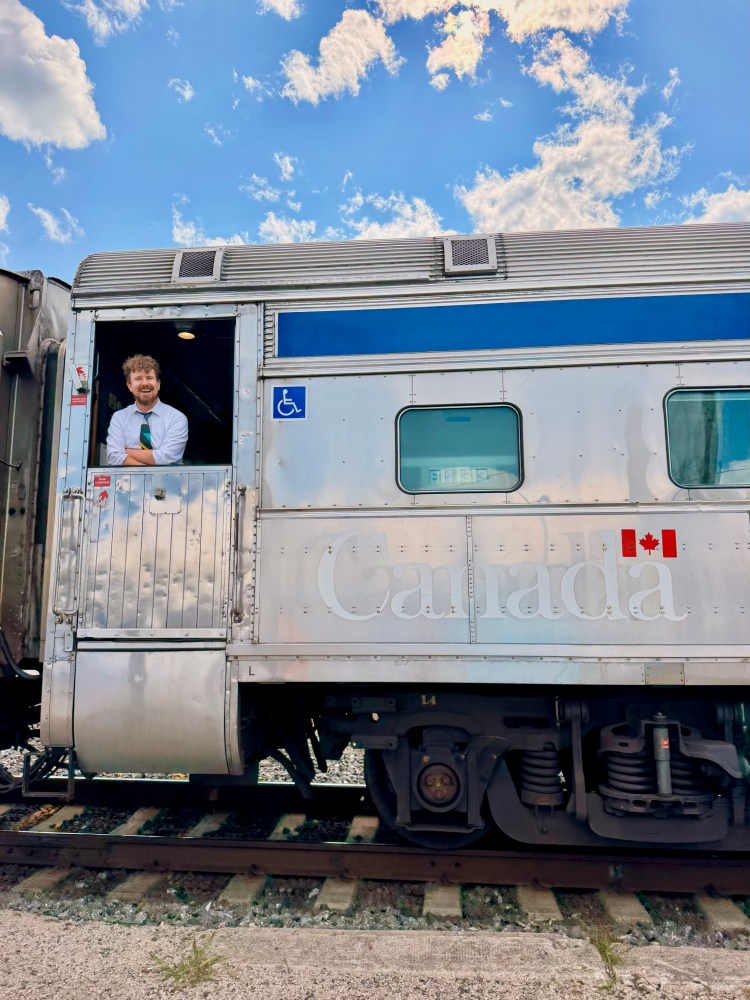
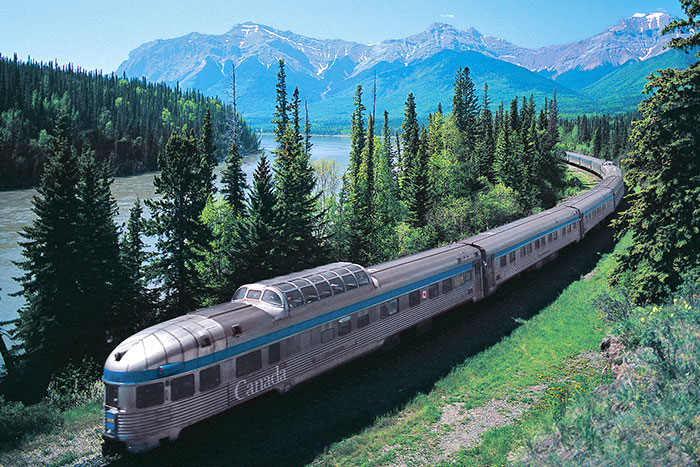
People are often curious about my job. I’ve been very open (including doing a presentation at the Library) about working on The Canadian. My job has a unique schedule that gives me a lot of days off. It’s part of the reason why I’ve been able to be an effective member of council, while still volunteering in the community and raising my two kids.
Thanks for checking out my site. Feel free to leave a comment below. I hope to see you soon. If you haven’t already, subscribe below to get the next essay delivered to your email.
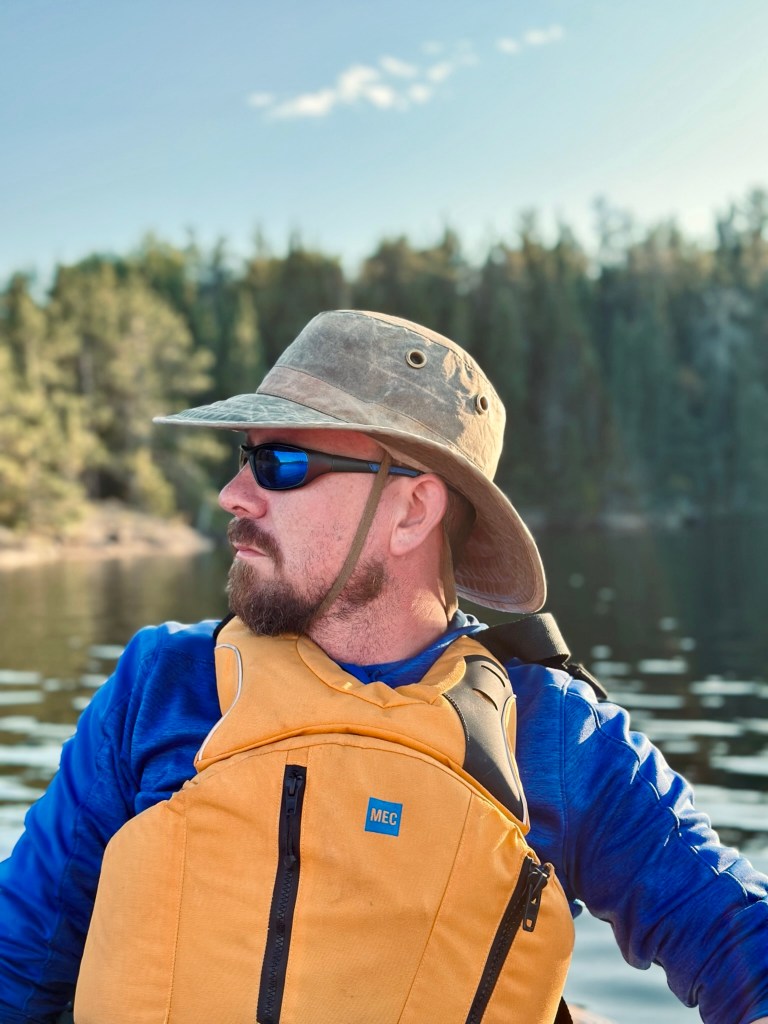
When I first discovered the secret of Pinawa twelve years ago, one of the things that immediately captured me was the Ironwood Park. This is such a beautiful and unique feature of the town, that the river is there for everyone to enjoy. Water is one of our most precious resources, and we are very lucky to have it in abundance here. When I walk on the Ironwood Trail, it really calms my mind and improves my mood and energy.
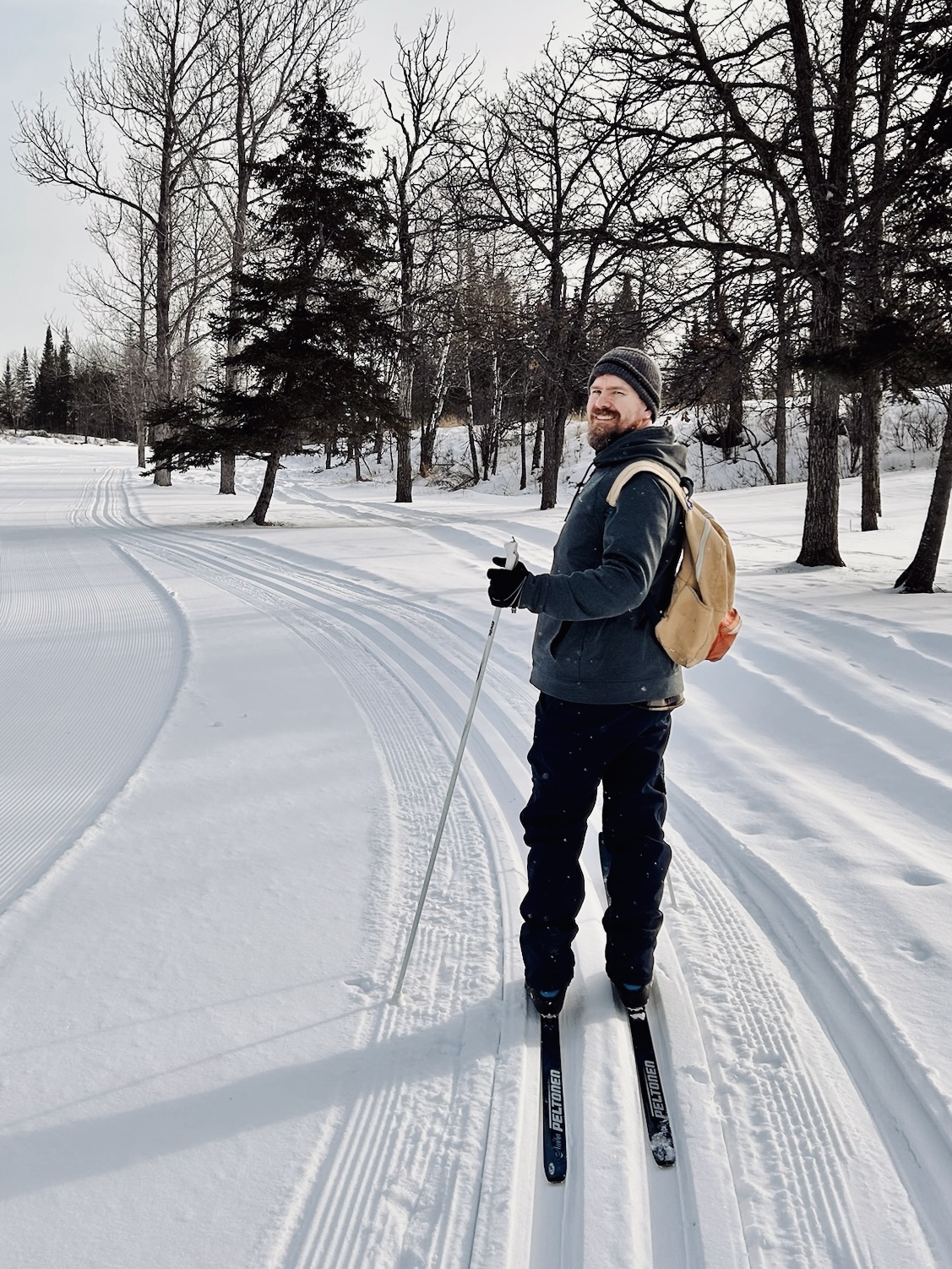
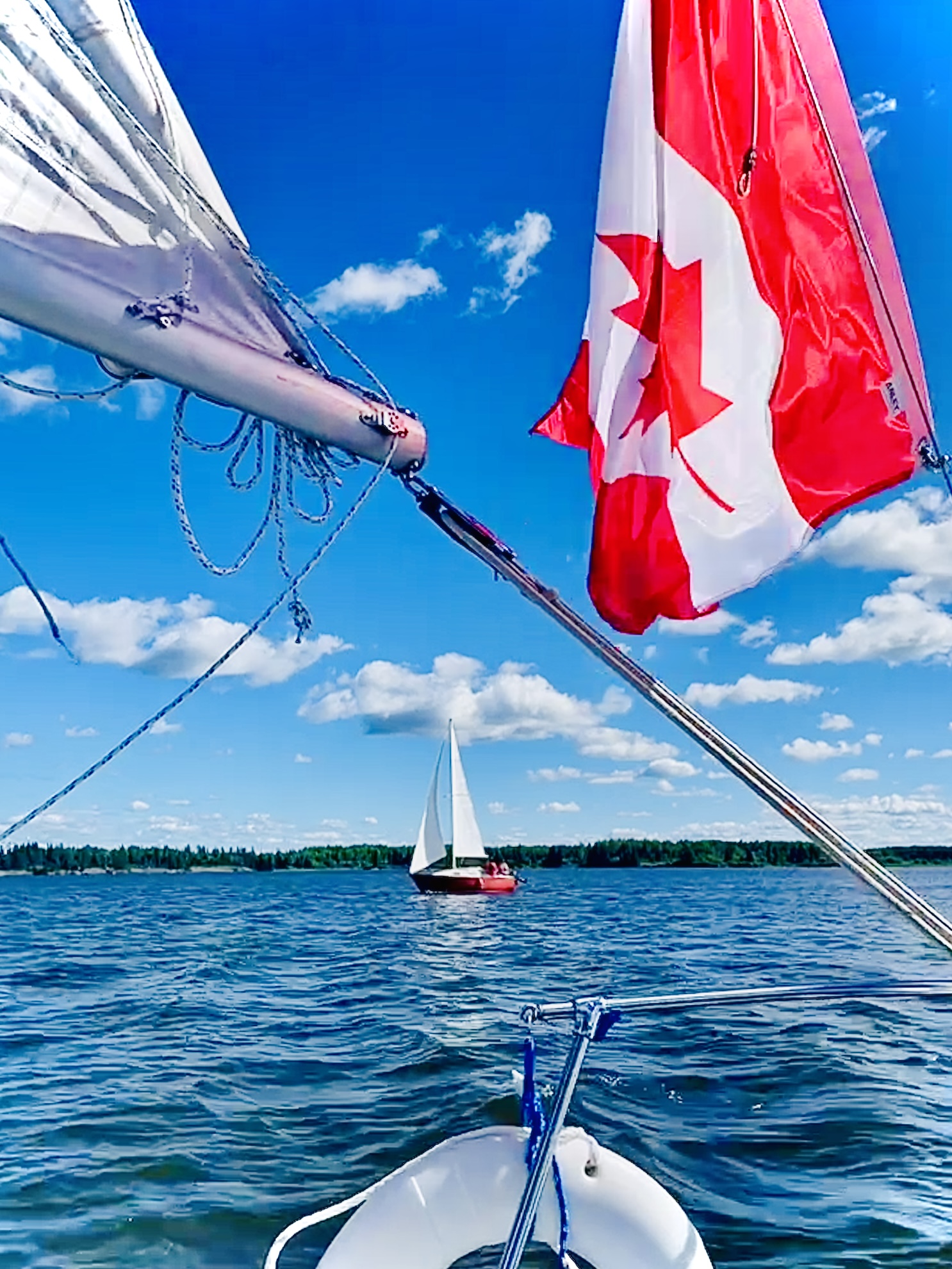
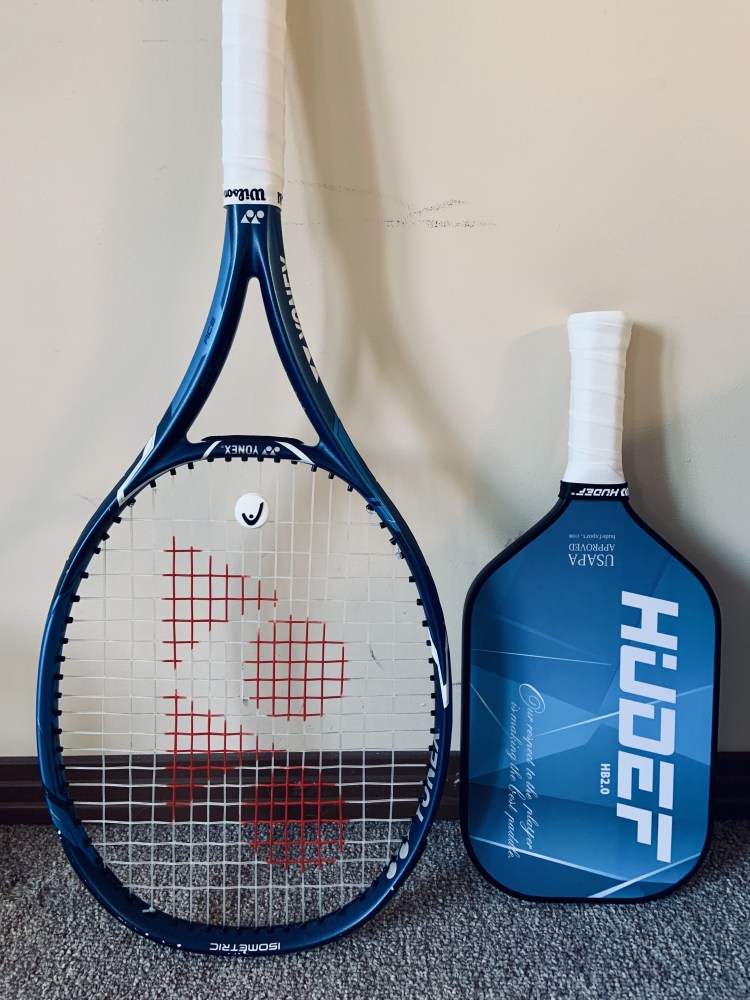
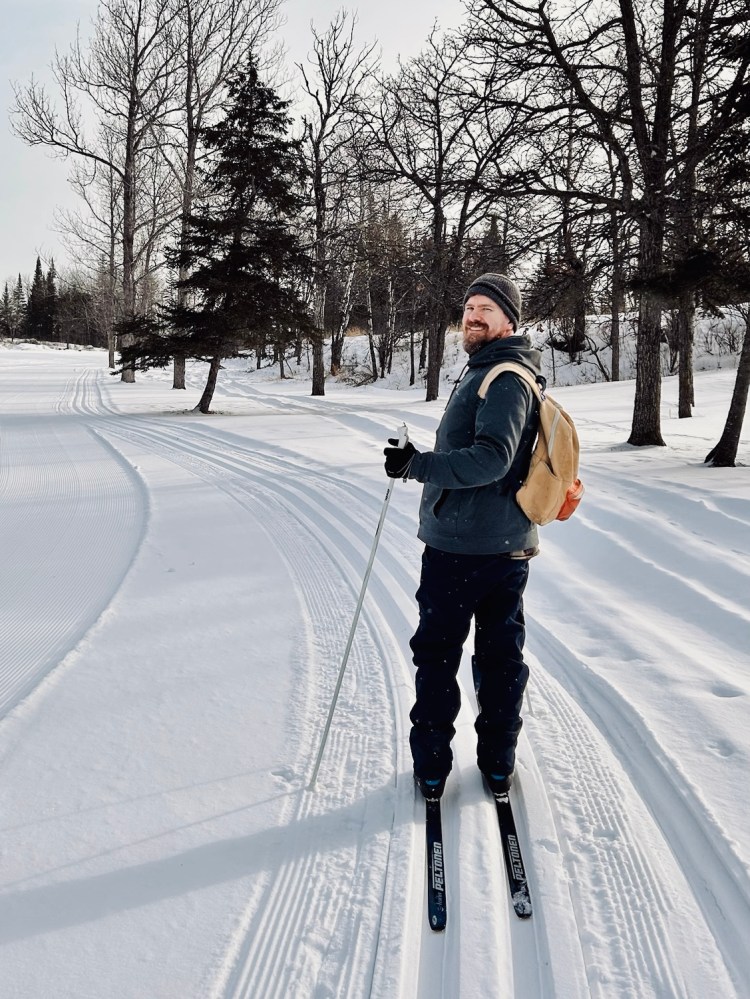
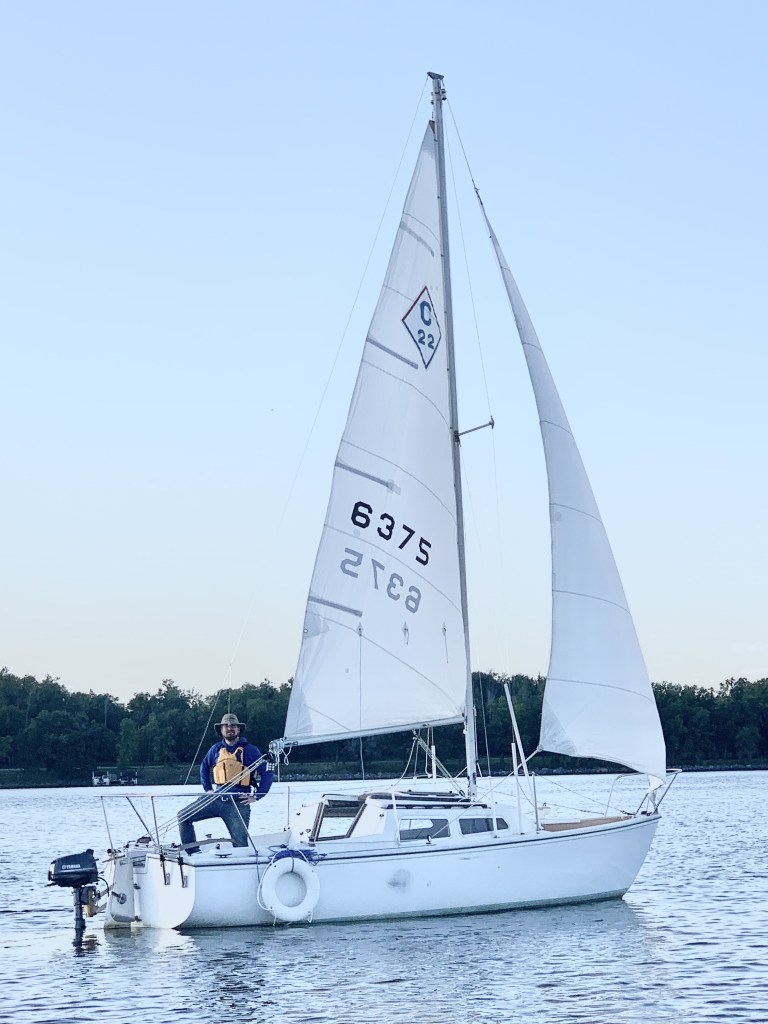
For myself, when it comes to recreation, I enjoy a little bit of everything. I like being on the water, sailing, canoeing, and occasionally rowing. I play tennis, pickleball, and occasionally golf (poorly). In Winter, I’ve switched between curling, hockey, and skiing. My kids participate in hockey, music, and art outside of school, to name a few. We all like to get out to an EMCA concert when we can.
I have always believed that good parks, walkable trails, access to quality recreation and the arts is key for our community wellness. That’s one of my core values and has guided my actions over my five years on Council.
Recreation is a key component for our quality of life and for economic development. I believe that affordable high quality recreation promotes health and equity in the community. When I joined Council in 2021, the LGD had no recreation department or plan at all. I started it from the ground up, recruiting volunteers, organizing the committee, writing the charter, facilitating and writing the strategic plan, fighting for funding and resources and staff. Now, the recreation department is going strong, with a variety of programs and offerings, year round, coordinated by a great team of staff and dedicated volunteers. I was happy to support the recent improvements to the Teen Centre, it’s important to me that youth have safe places to hang out and socialize in real life.
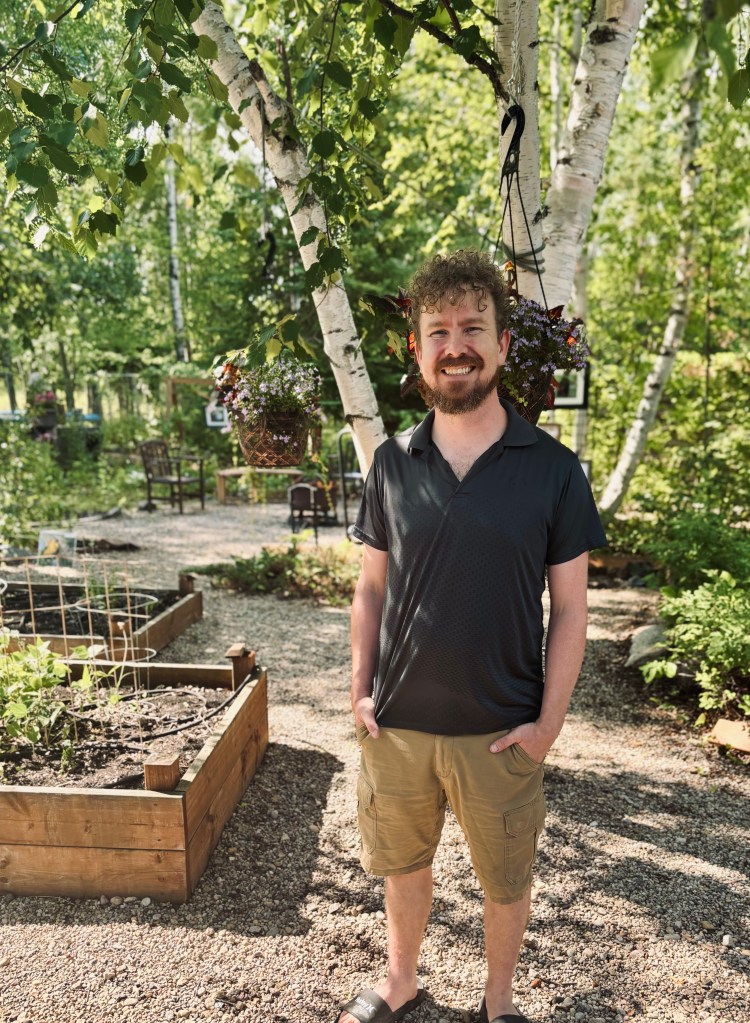
Me in my backyard for Art in the Garden 2025
The next step that I am excited to advance as your Mayor, with the help of Council and input from the community, is to update the Recreation Strategic Plan to incorporate a plan for Parks, Trails, and Natural Spaces. I see a vision of a town where residents, businesses, parks and green spaces are connected by trails and walking paths and sidewalks. We can have different types of parks, like a community garden, tot-lots, fat-bike riding trail, and outdoor gathering spaces. What ideas do you have? Let me know in the comments below what you would like to see!
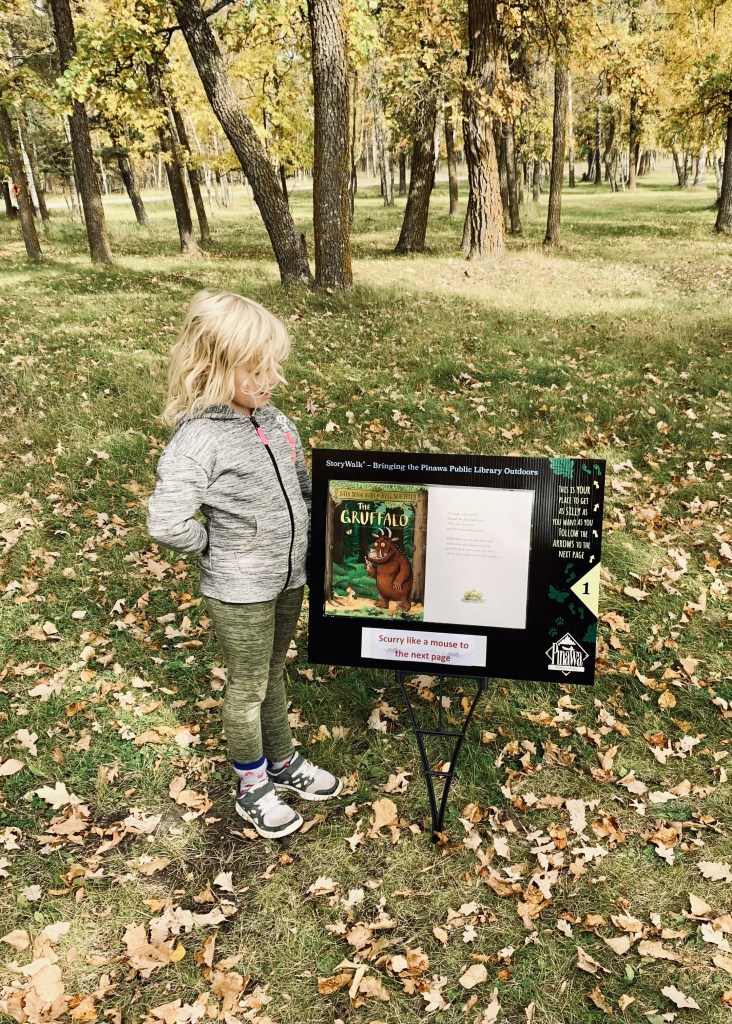
Emma seeing the brand new first edition of Storywalk for the first time.
These types of amenities are not only a benefit for the people who get to use them. Parks, trails, and recreation attract people who want that lifestyle. That special Pinawa lifestyle will be helpful to developers who want to build and sell property. More homes and more people are key for keeping our taxes reasonable. Investing in these amenities makes sense. People see the value in good quality of life. Parks, trails, recreation are a part of that.
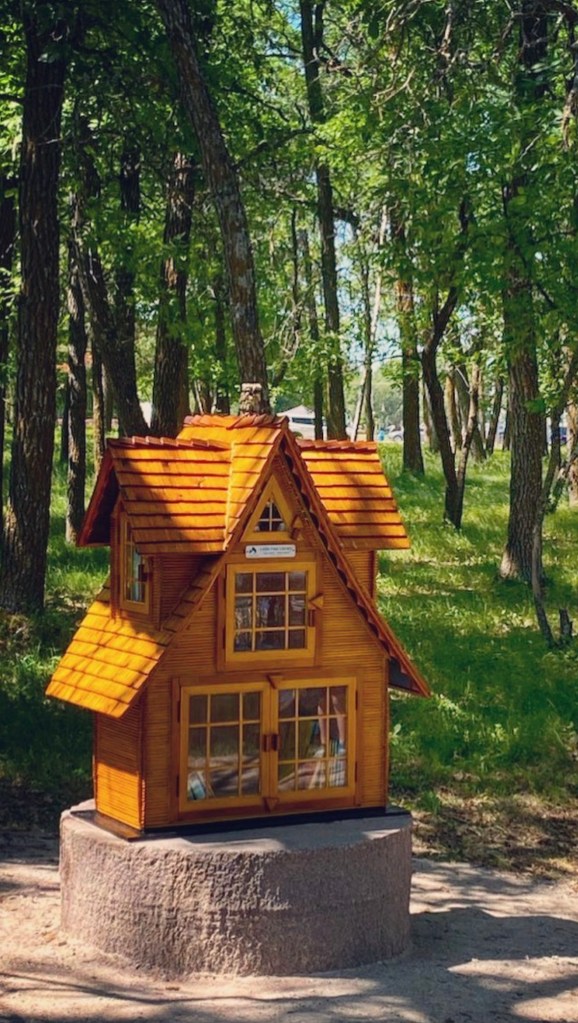
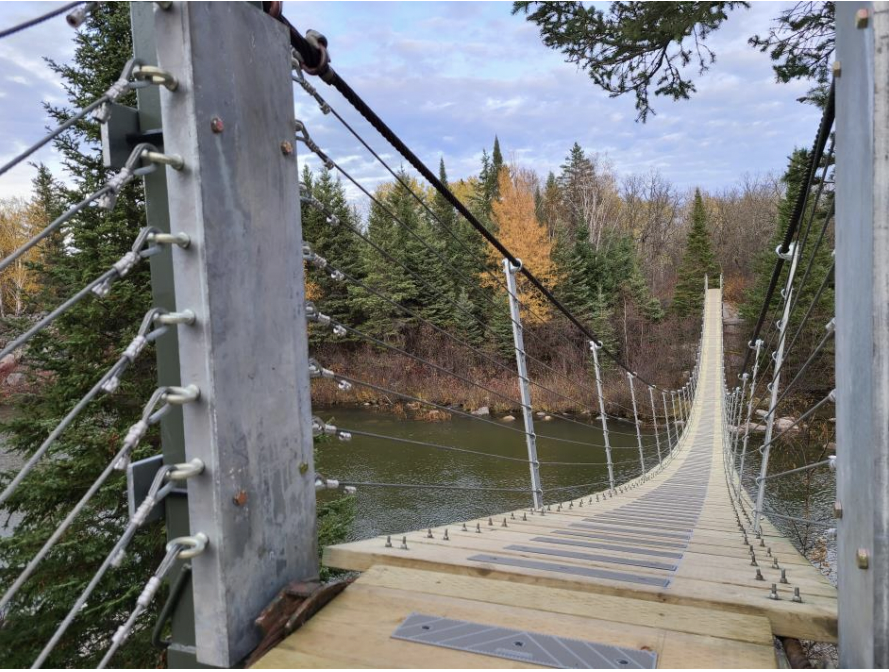
One of the projects I’m most proud to have been a part of is the Storywalk. I connected the Library to the original grant to launch the project, negotiated with the Trails organizations, defended a resolution through council to get the beautiful Little Lending Library and the wooden displays. Now it’s a celebrated addition to the Ironwood Park. We can do more great projects like this, together.
The Lending Library Created by George G. The pedestal base is from the Underground Research Lab. I led the resolution to move it from the recycling depot to become part of this beautiful park feature, for all to enjoy.New members of the Sailing Club! The focus is on learning skills and kind, welcoming atmosphere.
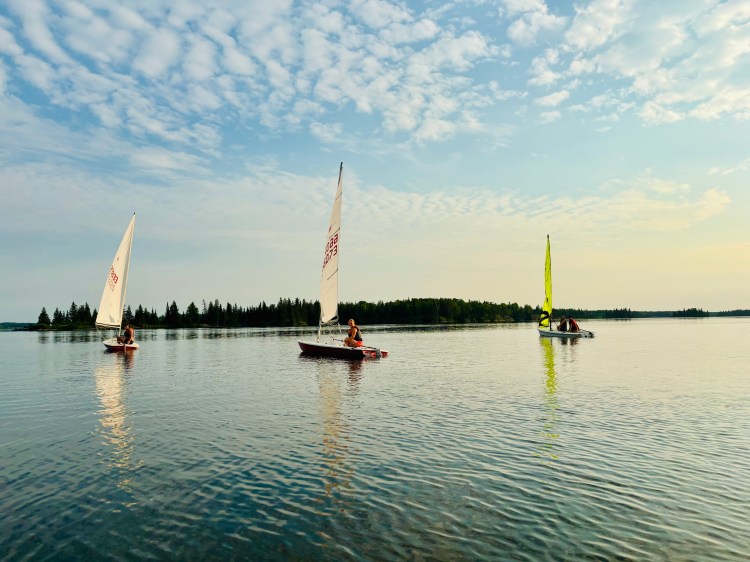
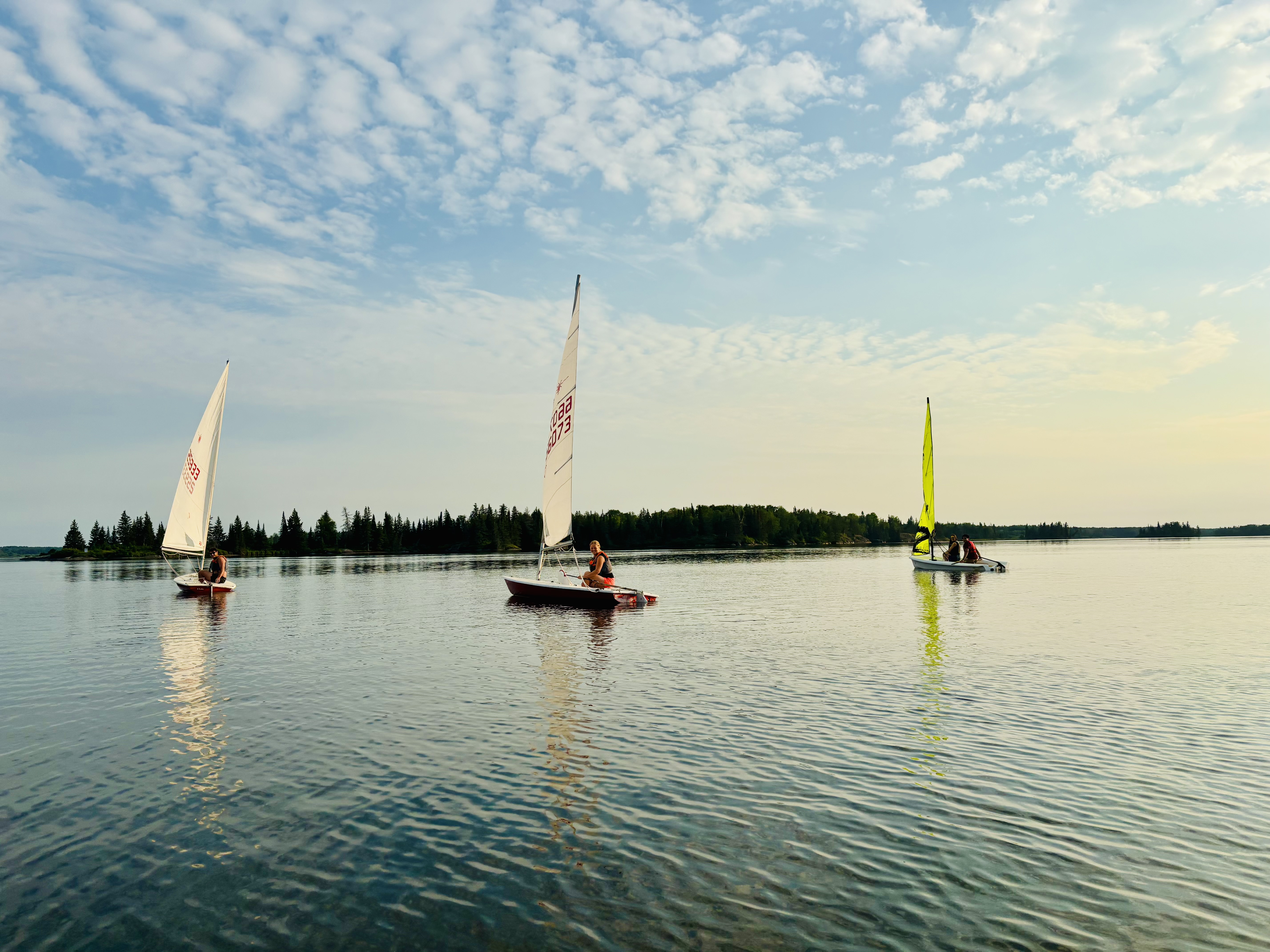
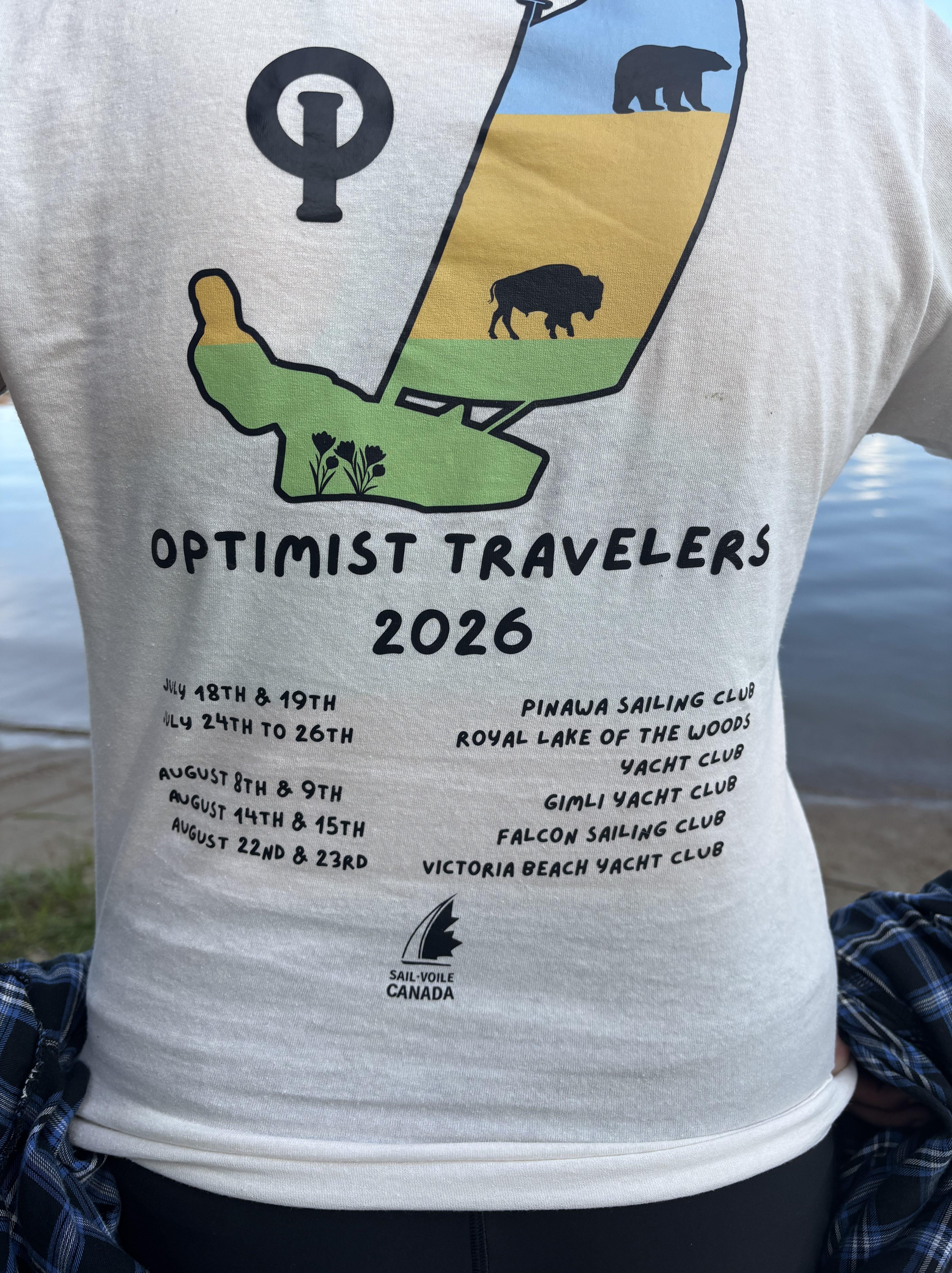
Outside of Council, as the Commodore of the Sailing Club, I have led growth of our membership, improved organization, and launched our annual sailing school and Pinawa Birthday Regatta, an exciting new event to add to our town’s Summer festivities.
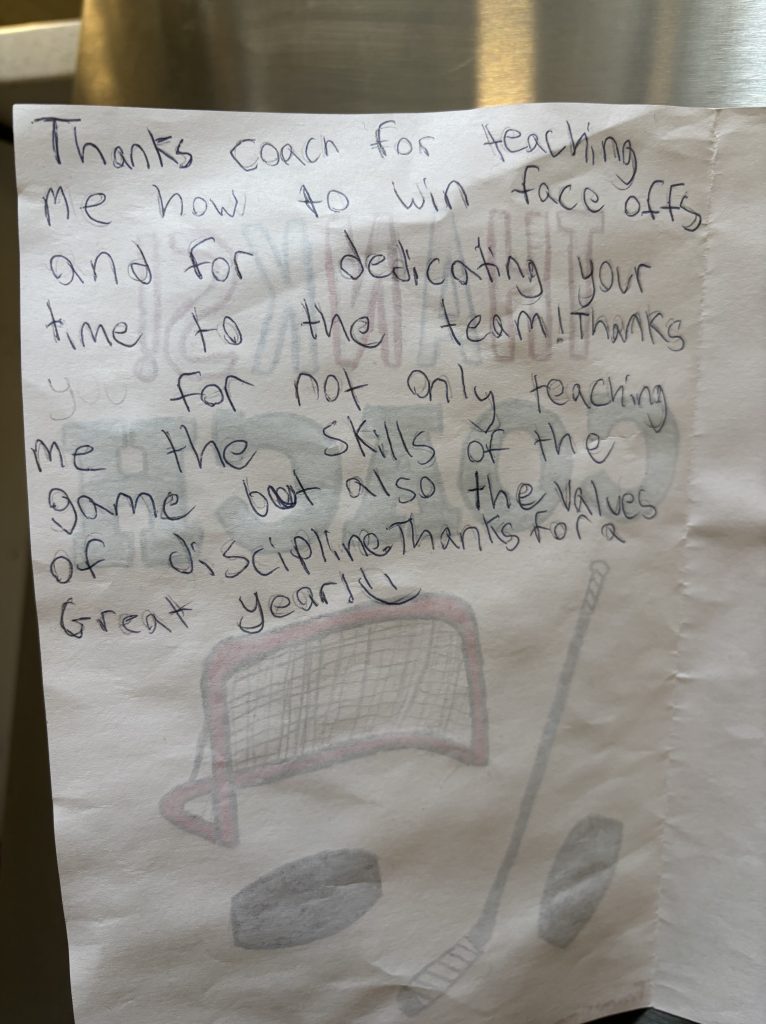
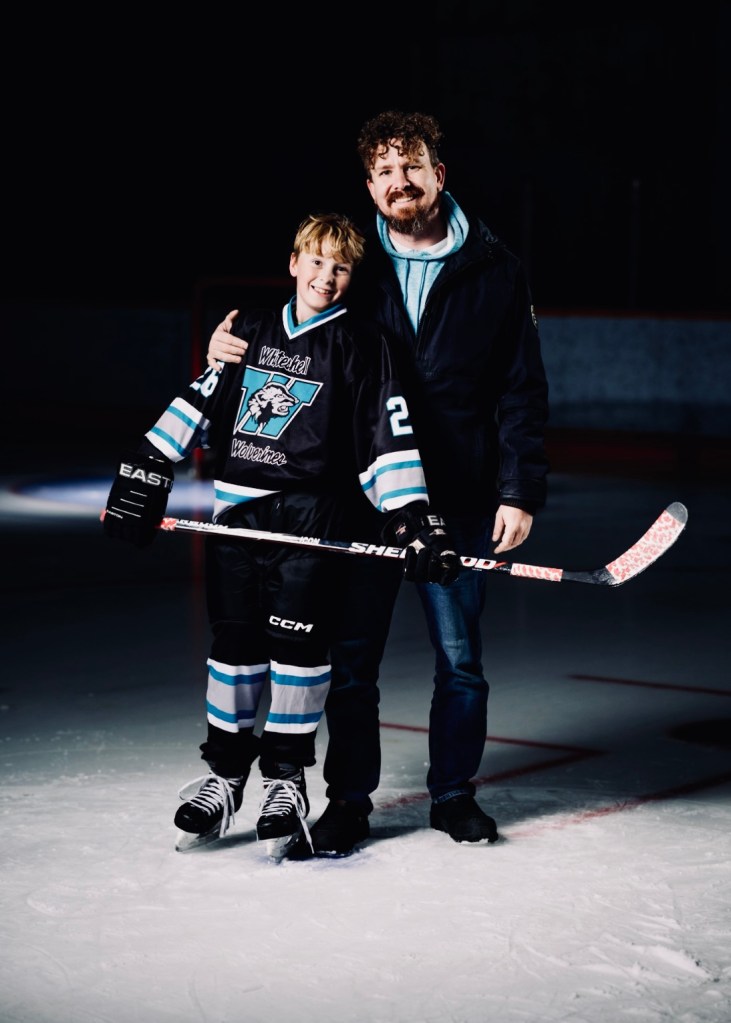
In 2025/2026 I coached U-13 hockey and it was a great experience. I really enjoy teaching the kids and it’s fun for me. My focus is on positive growth, teamwork, and keeping kids in the game.
Next: We will continue the principles outlined in the Recreation Strategic Plan and update it to ensure we continue to meet the needs of the community. We will update the Strategic Plan for Recreation to include a much needed Parks, Trails and Natural Spaces Plan. How can we have a cohesive vision that protects and connects these resources? This has always been my vision, and now it’s time to take the next step, together. What is it about parks, trails, recreation, arts, and culture that speaks to you and gives you joy? Share with us in the comments below!
If you haven’t signed up already, enter your email below so my next essay will go straight to your inbox and you won’t miss it! I will not send you spam emails.
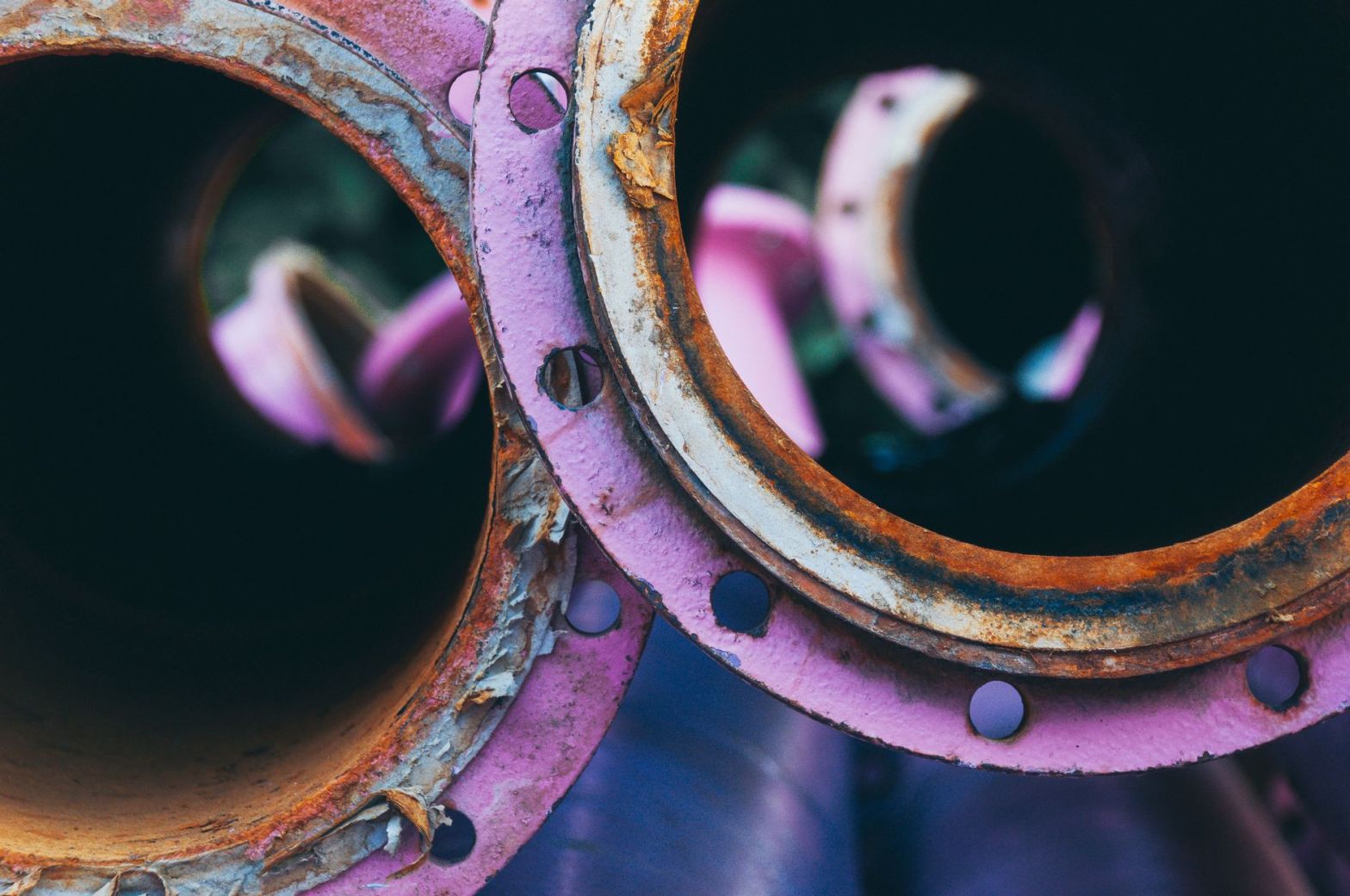
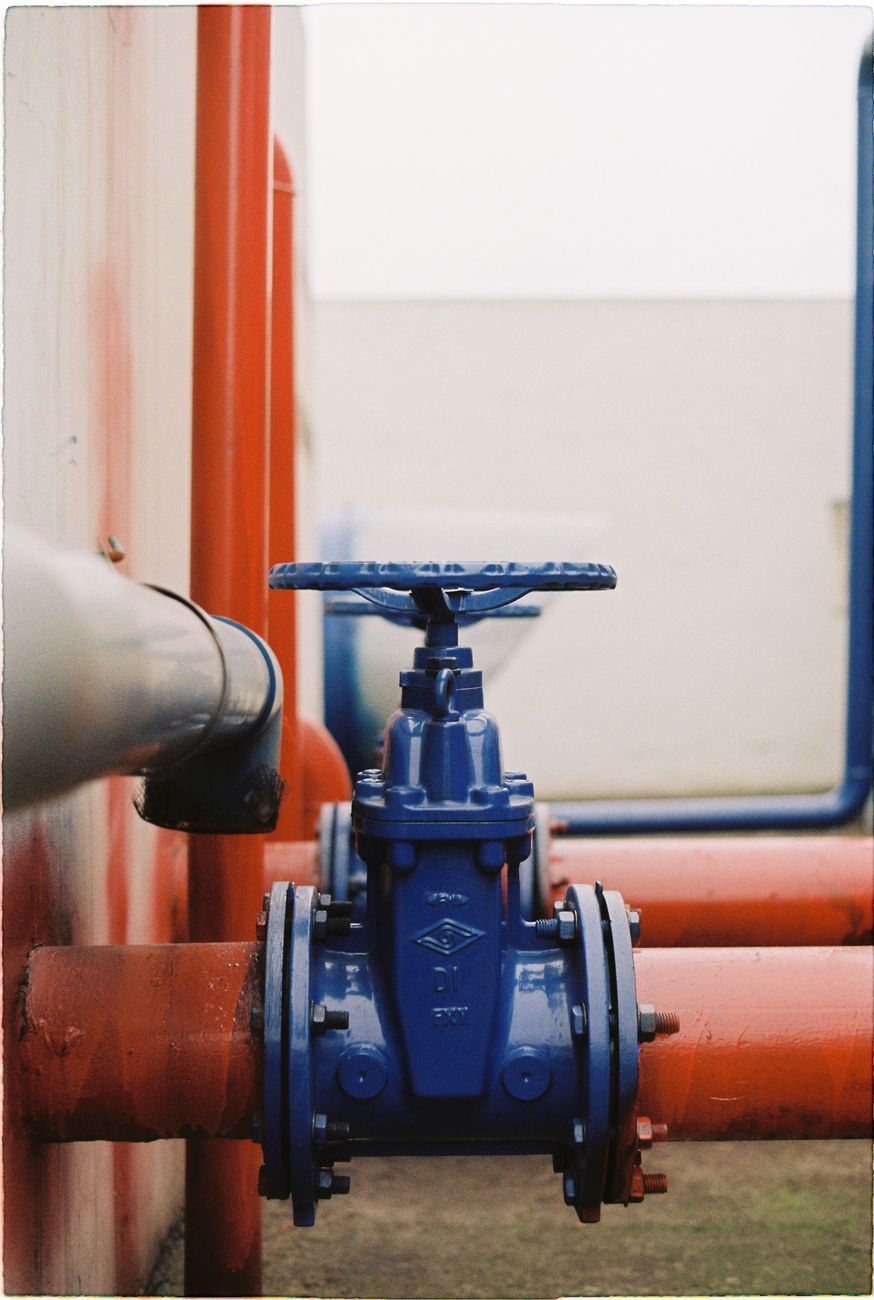
Municipal assets like roads and pipes and sewers aren’t really assets at all. They’re liabilities.
It’s pretty easy to think about the next election. What we need is a plan for the next generation. For years, budgets in Pinawa were built around inflation. When the province required an asset management report, the numbers finally told the truth. Limiting spending to inflationary increases was never going to be enough, because it didn’t account for the assets quietly wearing out underneath us.
The asset management report forced the LGD to shine a light on the problem. The report showed that pretty much everything was at end of life. Now, that doesn’t mean everything is immediately broken and useless, rather, it’s a way to force a town to account for its infrastructure long term. A $5 million road expected to last 50 years loses $100,000 of accounted value every single year. That’s the liability piece I was talking about earlier. It’s an imprecise tool, and repairs in real life don’t follow such a linear model, but the lesson holds true. Eventually, you have to pay, so you had better plan.
Here’s Pinawa’s problem in numbers. Our asset replacement forecast identifies roughly $129 million in municipal infrastructure, with only about $26 million in remaining asset value. The bill keeps growing as the assets wear out underneath us.
This is why Sue Appleyard and I pushed for the asset management plan in 2023, and why we’re still pushing for it. The underground network is where the biggest costs lie. I say we should determine our priorities based on risk: what threatens safety, health, environment, reputation, considering potential severity and likelihood.
The top of my list is clear: water. The treatment plant, the distribution, and sewer. It would be foolhardy to pave the roads in gold while the water lines underneath fall apart. We will fill the potholes, but water has to be the priority.
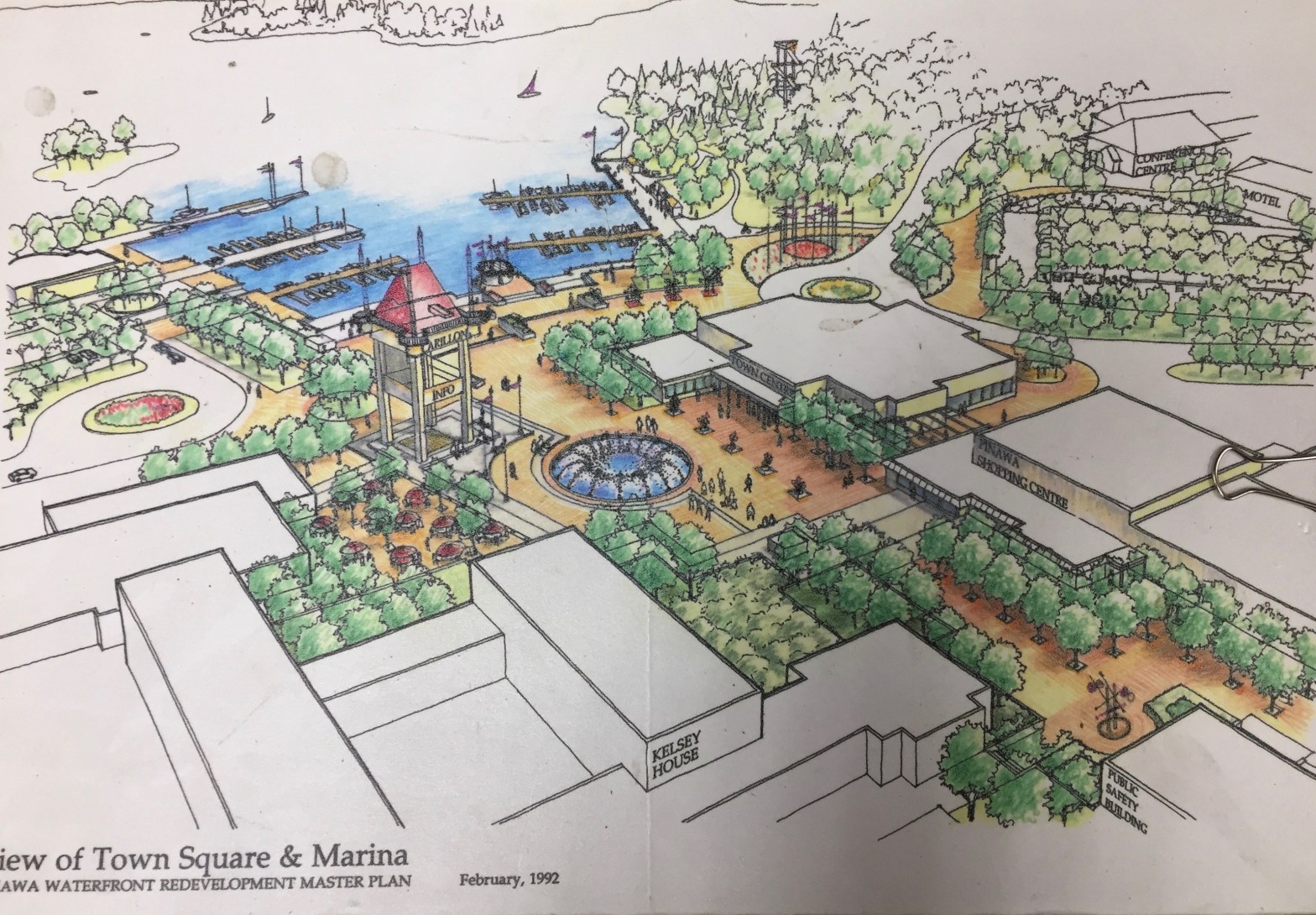
My plan is pragmatic, consistent with the Downtown Waterfront Secondary Plan adopted in 2017 and consists of three parts. First, grow the population and the tax base using mostly available undeveloped land. Land that’s ideally already serviced or easily serviceable so we grow the wealth of the town while minimizing growth in our infrastructure debt. Second, we can target strategic investments and incentives to boost the value of our productive areas. Finally, when it is time to expand, we will want to plan it in a sustainable way, so we don’t keep kicking the can down the road for our kids to pay for.
I’ve seen people ask: ‘How can the town develop land it doesn’t own?’ Good question — and the answer is: the town doesn’t have to own it. Its job is to make private development worth doing with clear rules, real incentives, and a council that says yes instead of stalling. If private landowners are confident they’ll make more money developing their land than letting it sit vacant, they’ll develop it.
I know of at least two significant development opportunities that did not proceed here — one worth $16 million (Deer Ridge), and a multi-unit residential build. The same developer was involved with both and came to council as a delegation and said it was too hard to do business in Pinawa. Some people might have different opinions on that, but the outcome is not in dispute: the investment didn’t proceed, and Pinawa lost the assessment growth that comes with it.
It will take a change in attitude to create those conditions. There are real developers who want to work with a town that’s open for business. We need a different way of thinking to incentivize and encourage private capital to invest in Pinawa.
The bottom line is: Can we afford to maintain the status quo?
That’s what Pinawa 2000 is really about: not a bigger town for its own sake, but a town that generates the wealth needed to protect what we have and keep taxes reasonable. If we do not do this, our community will be forced to make some very painful choices in the probably not so distant future. I think I speak for all of us that we would rather not have to do that. So, let’s make a choice, on October 28, to elect a council that can work together to tackle this challenge.
I hope you enjoyed reading. Thanks for the ongoing encouragement. I’m here to offer the people a choice. I’m going to keep on working, but I can’t do it without you. Subscribe below with your email to get the next post delivered directly to your inbox.– Michael
When we talk about the future of Pinawa, one conversation comes up constantly: How do we create a vibrant, walkable downtown that supports local businesses, welcomes new families, and protects our town’s long-term financial health?
Recently, the Pinawa Chamber of Commerce gave our community something invaluable: clear, independent data.
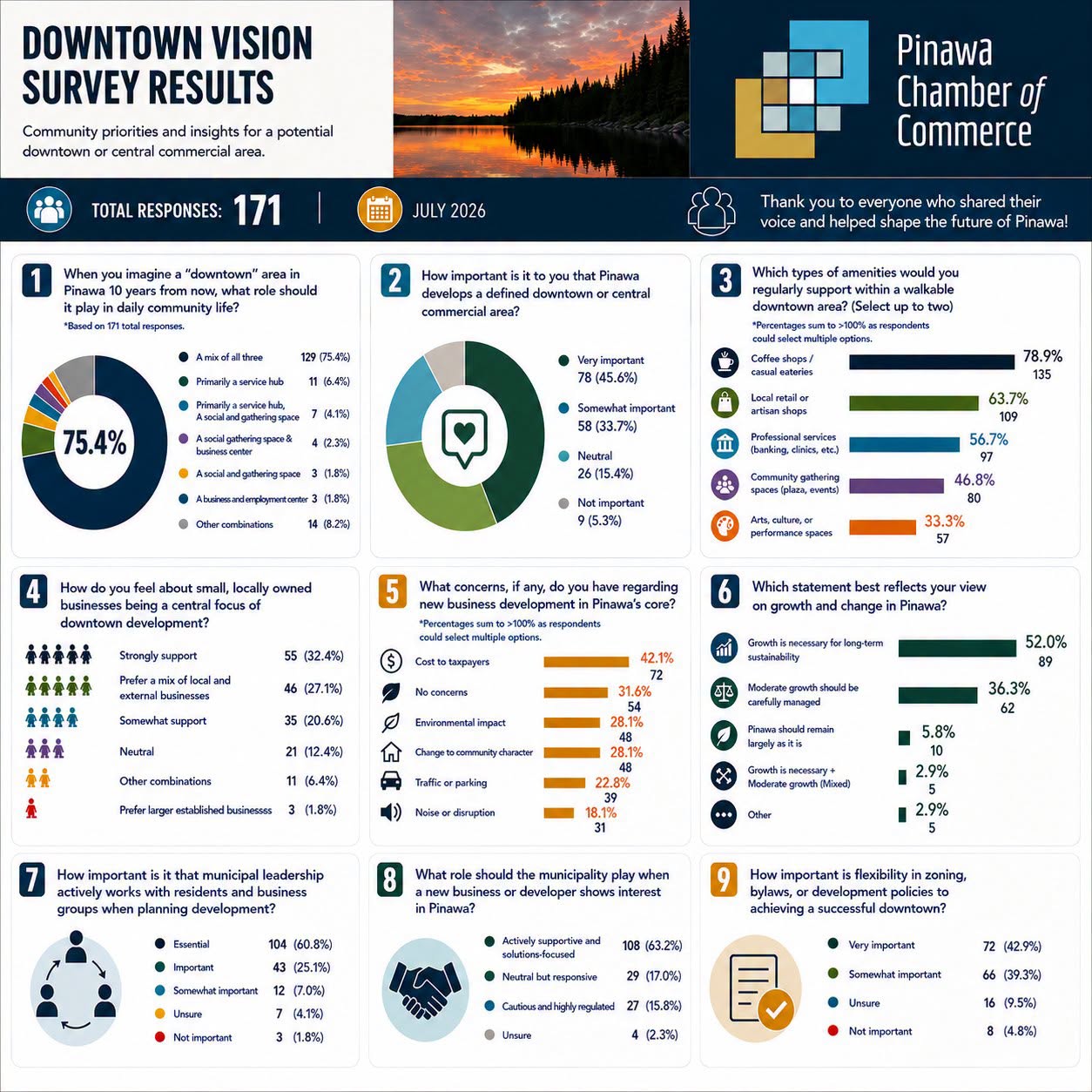
In July 2026, the Chamber released the results of its Downtown Vision Survey, gathering thoughtful input from 171 residents.
The results are not just interesting; they provide a shared, constructive roadmap for how Council, local businesses and community groups can work together. I would like to thank the Pinawa Chamber of Commerce for putting this survey together and the service they provide to local businesses and the community.
Now, let’s get into it:
What the Community Told Us (The Shared Data)
Source: Pinawa Chamber of Commerce
What I take from this: 88% of survey respondents support growth, and their #1 concern is protecting taxpayers. That tells me Pinawa wants to grow carefully. We want a vibrant downtown core, and leadership that sits down with people to find solutions rather than putting up roadblocks. (Updated for precision: all percentages are of survey respondents)
The message from the community isn’t “go slow or stay small.” It’s “grow smart, and show the math.” That’s exactly what the rest of this post is.
Strong Towns: A Common-Sense, Low-Risk Path Forward
How do we deliver the walkable amenities and services that residents want, while directly respecting the #1 community concern of protecting taxpayer dollars?
It’s not about growth for growth’s sake. We already have a massive infrastructure deficit. Like they say, if you are in a hole the first thing you need to do is stop digging. What we need to do instead, is focus on measured, incremental, fiscally disciplined growth. That’s my approach, and that’s how we can stabilize the budget, maintain the amenities and services we care about and rely on, and keep our town affordable. This is how we protect what we have, by investing in the future.
I’ve spent time learning from a framework called Strong Towns, a movement of municipalities across North America focused on financially sustainable, human-scale growth. This has a significant influence on my planning philosophy and strategy. Here’s what that means for us here in Pinawa, in plain terms:
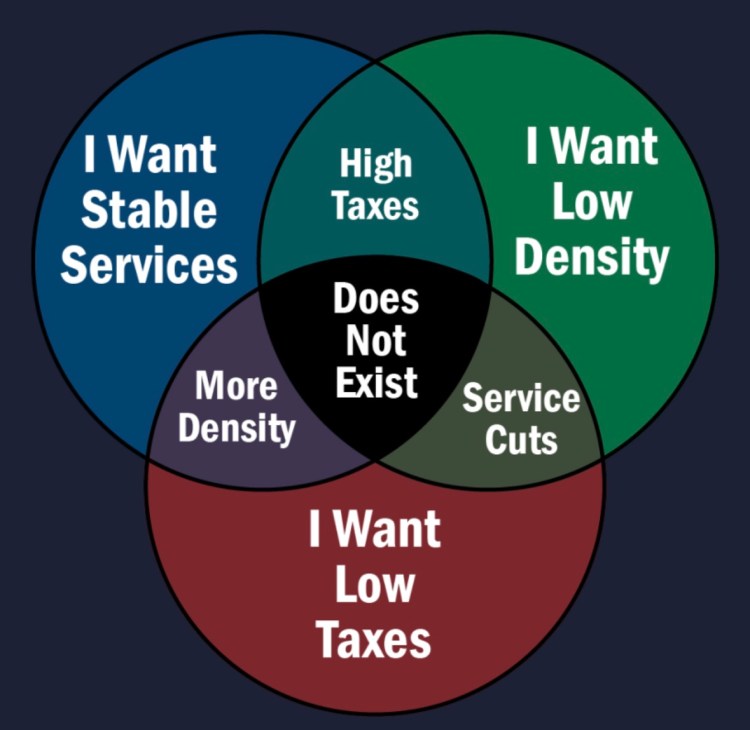
Photo credit: Strong Towns
Grow Inward, Before Outward: Prioritize new residential and commercial opportunities along existing, serviced municipal streets where water and sewer lines are already in the ground. This saves us money on construction, and future maintenance. Pinawa is a very spread out town with a lot of infrastructure for a town this size. There is currently no money in the coffers to catch up to the infrastructure deficit that has been growing and growing for decades. We must increase the tax-base, without increasing the infrastructure burden, if we want to maintain our services and keep taxes reasonable.
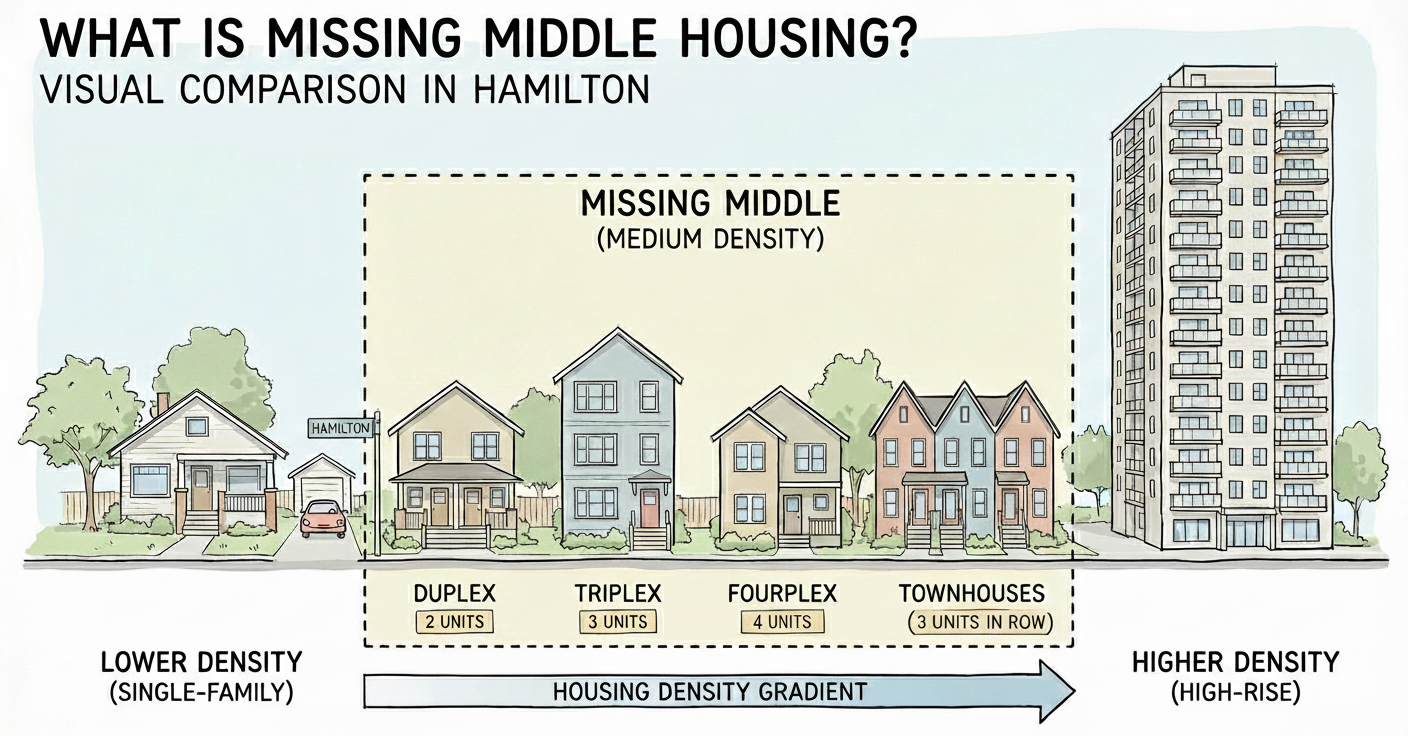
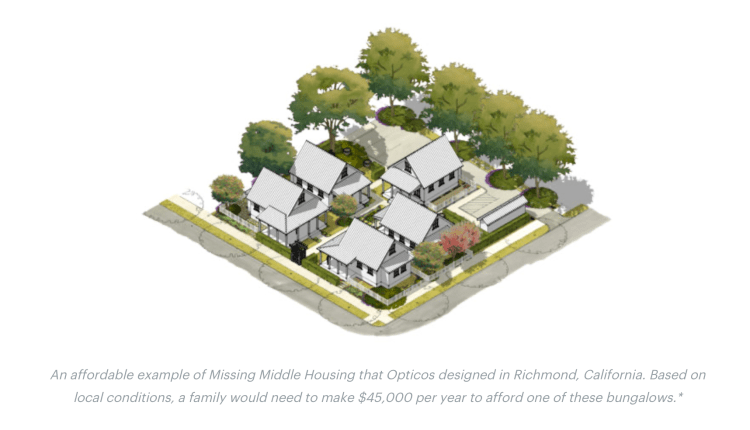
Missing-Middle Housing: You’ve heard me talk about this over and over. The term “Missing Middle” was coined by architect Daniel Parolek to describe housing types that have been systematically under-built in North American cities—not due to market forces, but due to policy decisions and zoning regulations. We need to encourage rowhouses, side-by-sides, duplexes, and accessible multi-unit residences in and around the Waterfront and Central areas. These homes will be perfect for seniors looking to downsize, single people and couples, and young people just starting out. We could also explore tiny-home concepts with several houses on a single lot, perhaps around the Ironwood, or elsewhere. Missing middle housing also allows people to downsize from the single-unit homes around town, freeing them up for families that need them. Don’t let anyone scare you about a concrete jungle plan, that would be an irresponsible misrepresentation. This will actually allow us to better protect natural areas. Missing middle housing integrates nicely into our town, because it already does exist here, just not in sufficient enough quantities.
High Return for Taxpayers: Multi-family and mixed-use infill areas generate significantly more property tax revenue per acre, creating a sustainable funding stream to renew our 1960s underground infrastructure without raising tax rates on current homeowners. To put it another way, if the taxes you pay on your house are meant to help for the road and sewer in front of your lot, who’s paying for the road and sewer in front of all the empty space? The answer is the same, you are! The unfortunate truth is, that the financial situation of the town has not properly accounted for this, and we are falling further behind. Fixing this situation is key for improving our fiscal situation where the town’s reliance on the AECL federal funding for basic operations puts us at risk.
Photo Credit: Gateway Group
Putting our Public Resources to Work for Maximum Impact
I’ve chaired the planning committee this term, so I know exactly how little authority or resources it has. It’s advisory, with little power to advance anything. For years, our tax dollars went to organizations like the PCDC, with high overhead and little accountability. That’s not economic development – that’s governance failure. That structural weakness is part of the governance problem I’m running to fix. We need to address changes and updates to the zoning by-law, to streamline our permitting and approval process, and to manage land issues so we can market, sell, and develop land. This is where I believe that the LGD will be better served by using our economic development dollars on land-use planning and development, rather than the previous spending on tourism marketing through the old PCDC and Innovate Eastman, formerly known as North Forge East. Let’s invest our money into the areas that are going to give us the biggest return on investment.
The Goal: Pinawa 2000
Our local businesses and services cannot survive on summer visitors alone. A local coffee shop, a family restaurant needs year-round, local foot traffic to thrive through the winter months. More families will keep our school population sustainable, which is absolutely important for the town.
That is why our housing and economic efforts should unite around a tangible community target: Pinawa 2000, growing our year-round permanent population to 2,000 residents.
Achieving this together within our existing footprint:
Delivers the steady, year-round customer base needed to keep local storefronts and services open 12 months a year.
Protects the long-term vitality of our local school, recreation facilities, and community health services.
Strengthens our municipal tax base, ensuring we can afford to repair and maintain our infrastructure for decades to come.
Pinawa 2000, reaching 2,000 residents, means roughly 150 new homes. Done in five years, that’s about 30 a year: ambitious, but possible. Done over a decade, it’s a dozen homes a year. Either way, it starts the same way: subdividing parcels, harmonizing the zoning bylaw with the plan that already permits this, and putting the tools in place so builders can build.
An Old Waterfront Redevelopment Plan for Pinawa from 1992
Looking Ahead: Connecting Housing to Infrastructure
Growth is not an end in itself; it is a key part of how we protect what we already have.
In an upcoming post, I will explore Asset Management & Infrastructure Renewal: how we take the revenue from smart infill growth and deploy it methodically to renew our water mains, sewer pipes, and community facilities for the next 50 years.
The Path Forward: Teamwork and Shared Purpose
Building a vibrant Pinawa won’t happen through closed-door decisions. It happens when Council, the Chamber of Commerce, community volunteers, and residents work as a team with open communication and mutual respect.
The Chamber survey gave us the blueprint: 88% want growth, 82% want flexible planning, and 63% want solutions-focused leadership.
By working together with pragmatic optimism and clear goals like Pinawa 2000, we can build a thriving, financially resilient community that works for everyone.
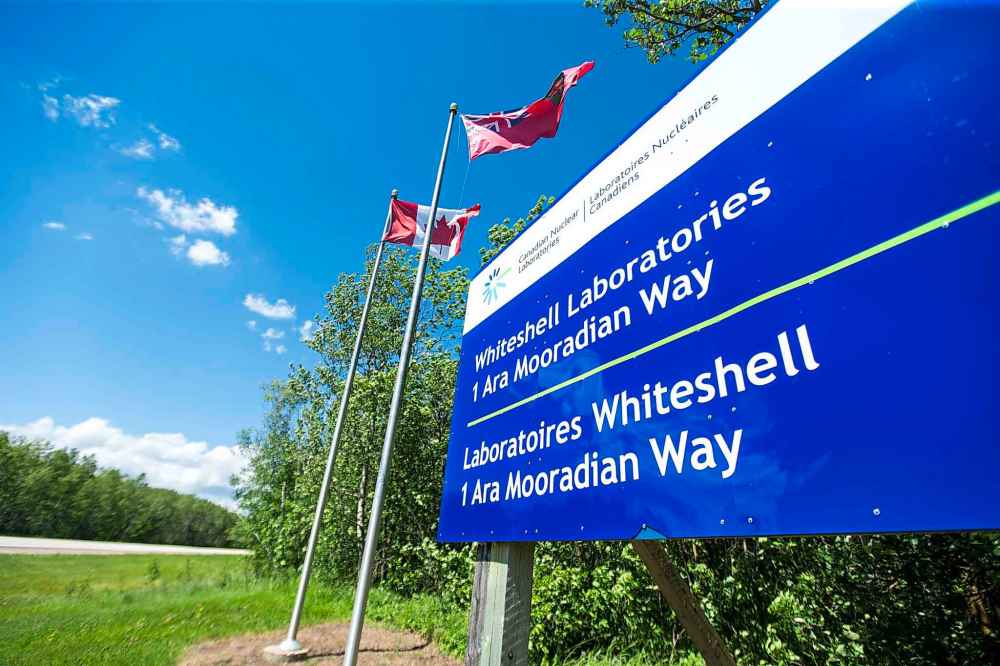
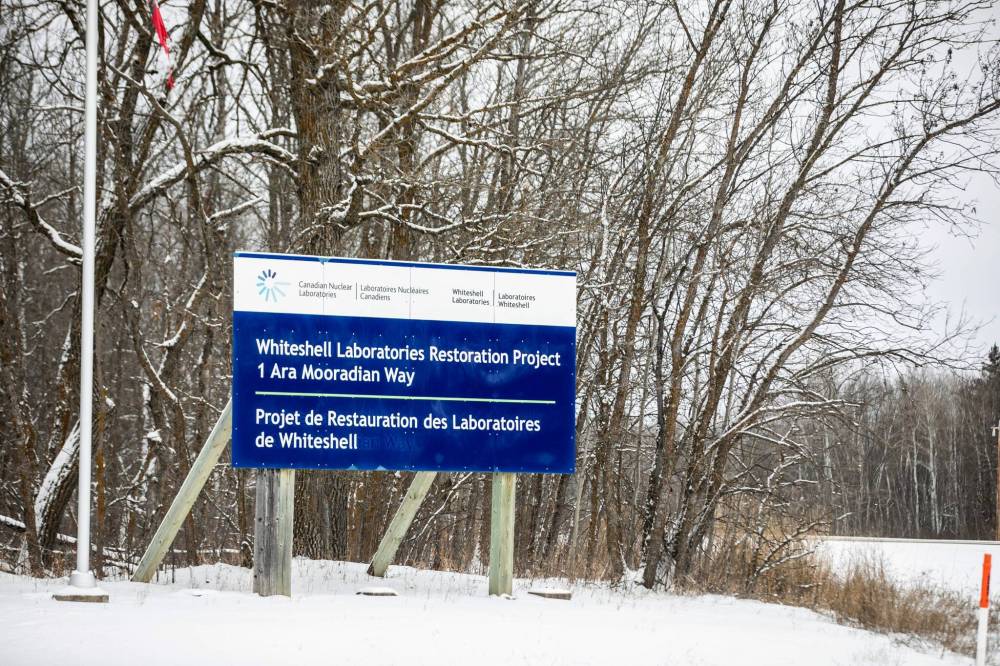
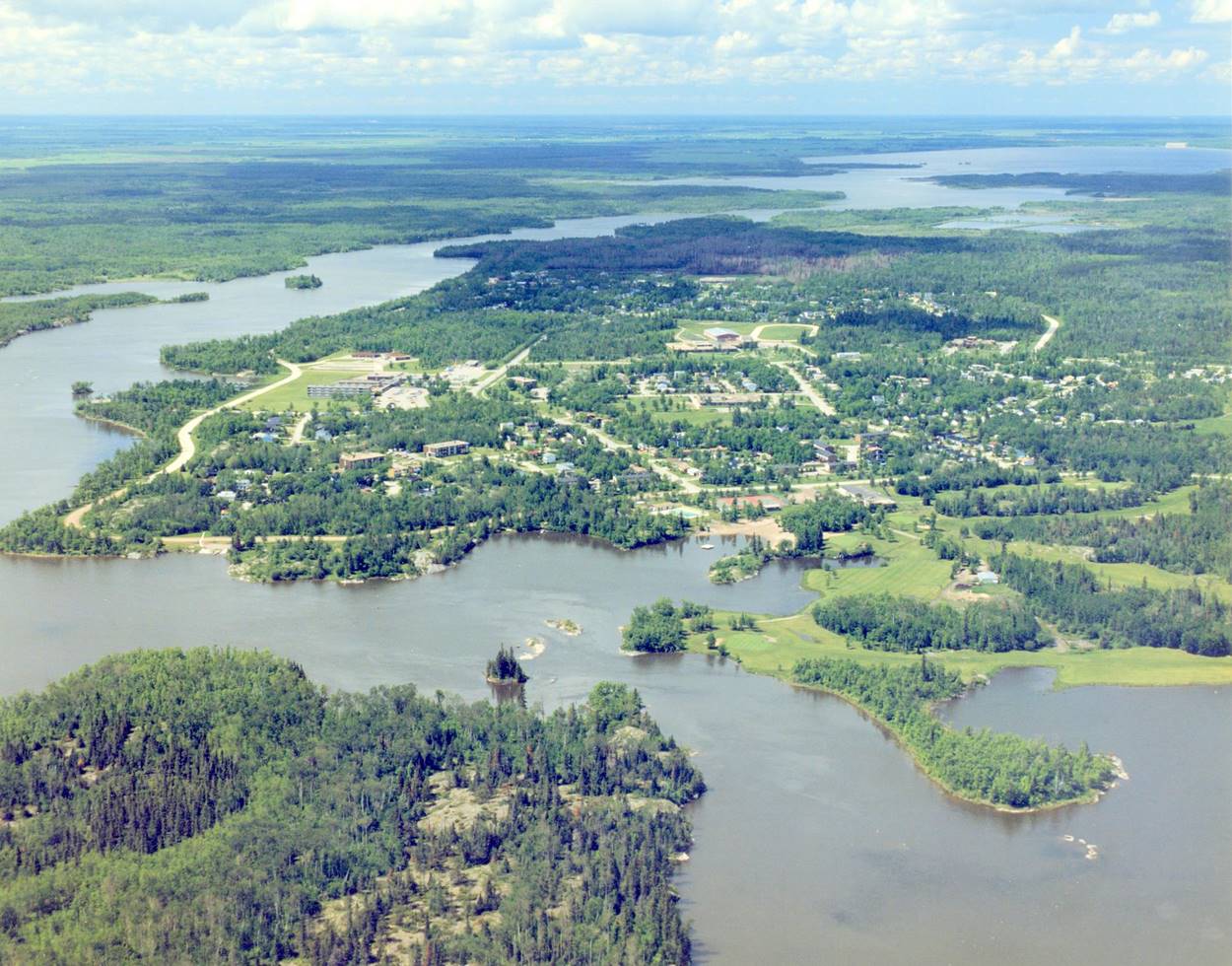
Pinawa was built on a bold idea: that a community nestled in the boreal forest of Manitoba could sit at the very cutting edge of science, clean energy, and nation-building technology. That heritage isn’t just history, it is in the DNA of our town. The decision by the federal government to decommission the Whiteshell Laboratories site was an economic and psychological blow to our town. But, I believe that a set-back doesn’t have to define who you are.
Today, nuclear energy is having a worldwide renaissance. Across Canada and around the globe, people are realizing that reaching a clean, reliable, zero-emission energy future requires nuclear power working alongside renewables.
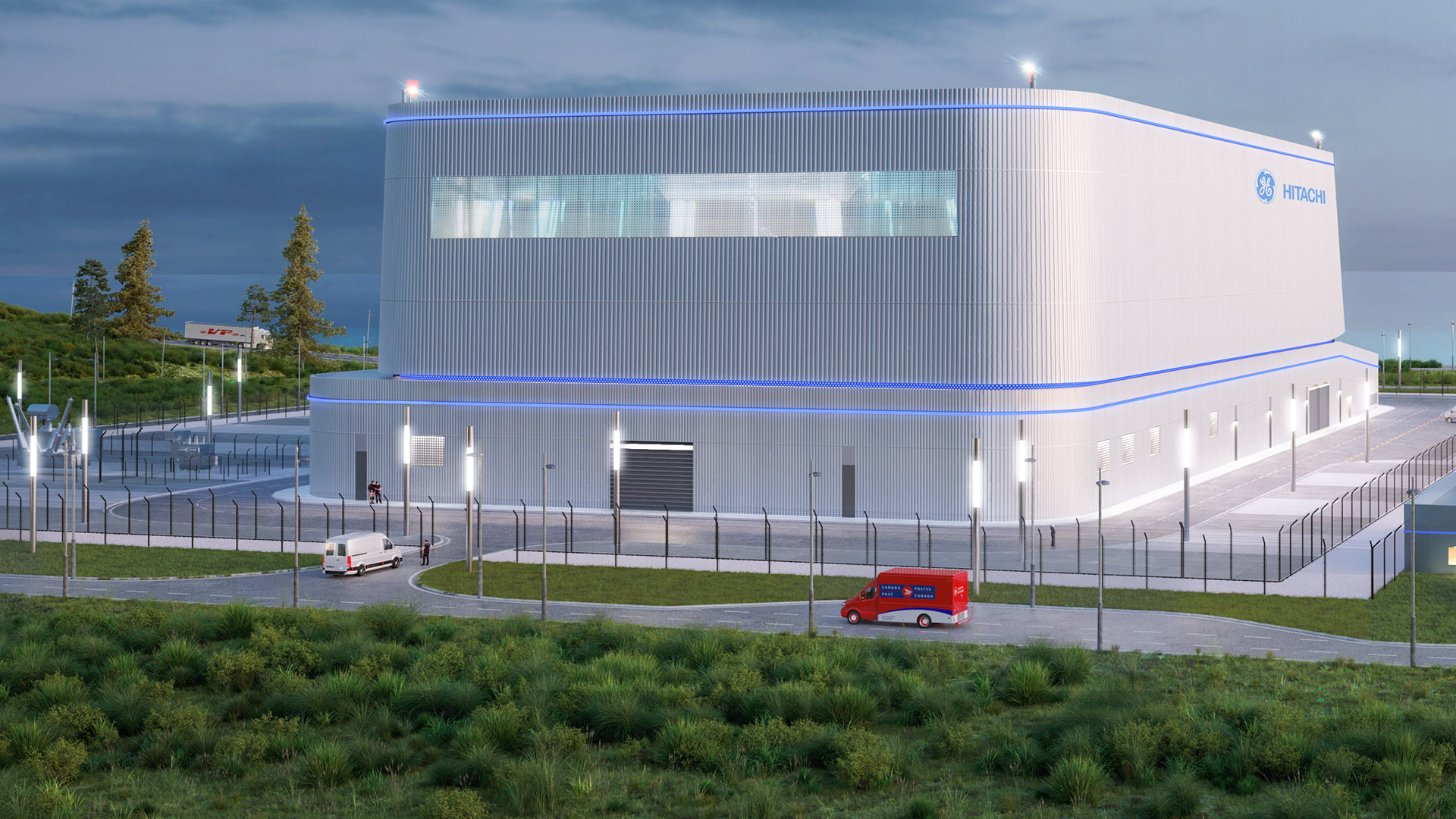
For the past several years, Mayor Blair Skinner helped keep that spark of hope alive in Pinawa by championing Small Modular Reactors (SMRs), specifically of the micro-reactors type. That vision matters. But as we look to the next decade, hope alone isn’t a strategy. We need a clear roadmap and the persistence to turn opportunities into real jobs and investment for our town. A good working relationship with CNL and AECL is important for the LGD of Pinawa.
Here is what the nuclear and Whiteshell landscape looks like today, why preserving our site is our greatest economic opportunity, and how we take this vision to the next level.
Understanding the SMR Landscape: Hope Grounded in Reality
There is genuine excitement around Small Modular Reactors (SMRs) and micro-reactors, and for good reason. Partnering with Indigenous Nations on clean-energy equity and power generation is one of the most promising frontiers in Canada’s energy transition.
However, moving a new reactor design from concept to reality is a long and rigorous journey:
The Regulatory Mountain: Before any new reactor can be built, it must navigate years of licensing and safety reviews with the Canadian Nuclear Safety Commission (CNSC).
The Economics of First-of-a-Kind: Developing a new reactor requires massive upfront capital. The real economic payoff comes after multiple units are built and operating.
The National Playing Field: Provinces like Ontario, Saskatchewan, Alberta, and New Brunswick have already signed an interprovincial agreement on SMRs. Ontario is building the BWRX-300 grid-scale SMR at Darlington, while Saskatchewan is planning new nuclear capacity. Manitoba has not yet signed on, meaning our province has been sitting on the sidelines of major federal funding and regional partnerships.
What does this mean for Pinawa? It means we must be smart, open, and forward-looking.
Carrying the torch for clean energy means we cannot tie our entire future to any single private company or one specific design. We need to be a welcoming home for innovation across the board, whether that is micro-reactors, grid-scale SMRs, isotope production, or non-nuclear clean technology.
Why Preserving Whiteshell Infrastructure is Our Story of Hope
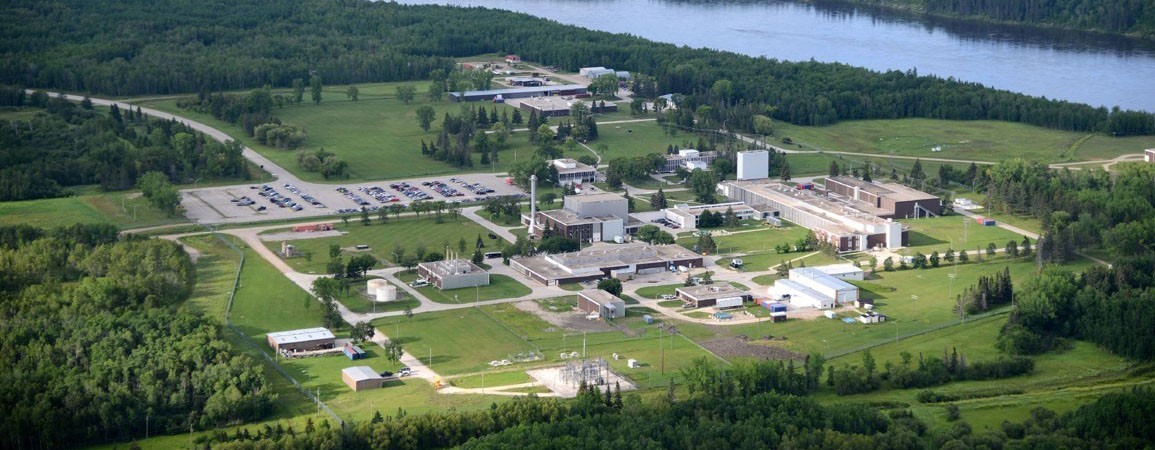
The Federal Government made the decision to decommission back when people thought nuclear energy’s future was over. Right now, the federal government is spending roughly $130 million a year, totalling over $1.3 billion over the next ten years, to decommission Whiteshell Laboratories. That is an astonishing amount of money to destroy something that actually has immense potential.
The current end-state plan is to tear down virtually every building. But think about what is actually out there today:
A dedicated water treatment plant and industrial lagoon
Fully serviced heavy electrical feeds and power distribution
Paved road networks and utility corridors
Specialized Hot Cells (critical, high-value facilities for producing medical isotopes)
Administrative office complexes and a fire department facility
A licensed nuclear site boundary, one of the rarest and most valuable regulatory assets in Canada.
Tearing all of that down to bare earth doesn’t help Pinawa. If an industrial company or clean-tech startup looks at an empty field 100 kilometers from Winnipeg with no rail link, and a buried reactor behind a fence; that’s not attractive to anyone. The cost to build roads, power lines, and water plants from scratch is simply too high.
Preserving that infrastructure is our story of hope.
If we protect those assets, we offer future clean-tech businesses, isotope producers, and advanced manufacturing companies a ready-to-use platform with millions of dollars in existing utility value. That means lower costs for them, faster startup times, and real, long-term jobs and municipal tax revenue for Pinawa.
Doing the Homework: What Real Advocacy Looks Like
Turning this potential into reality requires rolling up our sleeves and doing the detailed work. I understand the assignment.
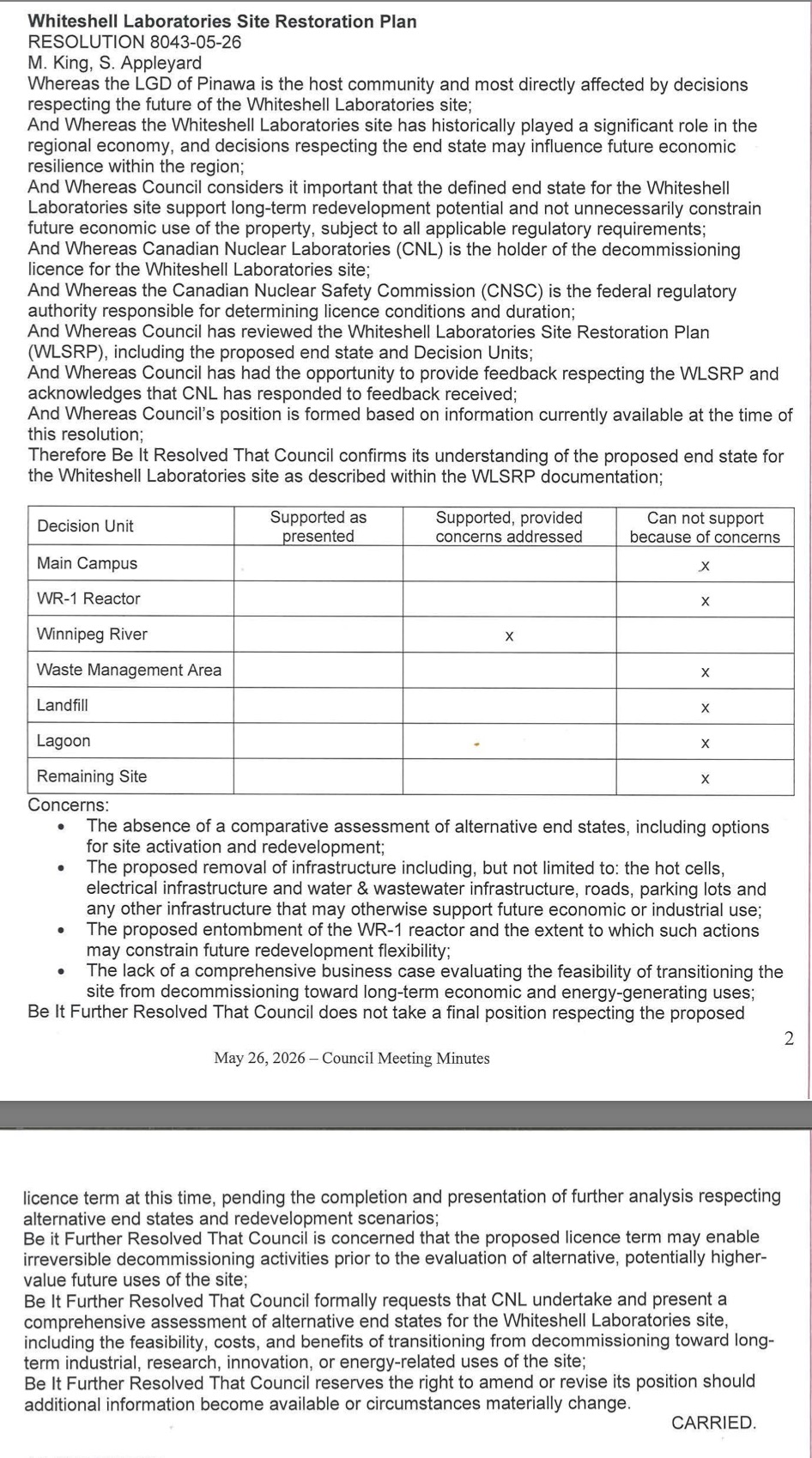
When Canadian Nuclear Laboratories (CNL) asked Council to pass a standard resolution supporting their end-state plan to remove all above-ground assets, I stepped forward to examine the fine print. I rewrote the resolution to make our community’s position clear: Pinawa expects an alternate plan that protects useful infrastructure for future industrial and clean-energy redevelopment. Council passed that resolution, marking the first time that our town established a formal, recorded policy decision defending our long-term economic interests at Whiteshell. We need to push that regionally right up to the Ministerial level. In this challenging time, Canada should be looking for opportunities to make the most of what we have. We cannot afford, as a Nation, to squander this opportunity. We want to be part of Canada’s future. (Click here to learn more about why resolutions are important)
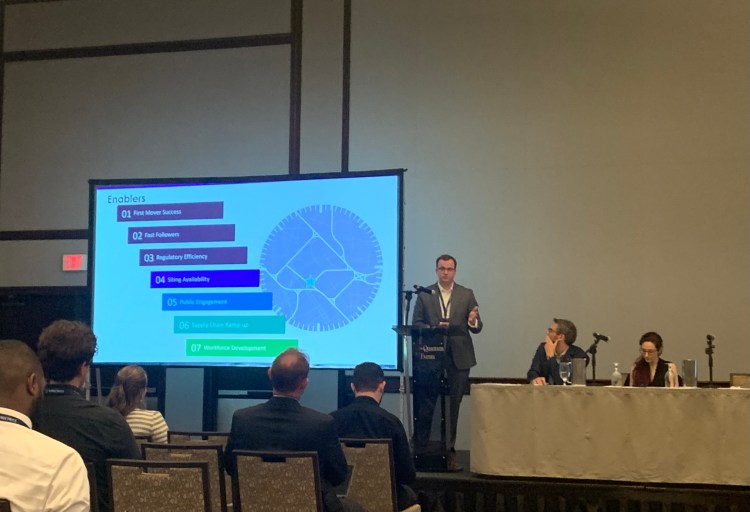
When I was Deputy Mayor, I attended the Generation IV and Small Reactors (G4SR) national conference in Ottawa with Mayor Skinner, which was very informative for me. It was there that I participated directly in working sessions on micro-reactor regulatory frameworks. Micro-reactors may be useful for protecting energy security in remote communities in Canada, as well as for our Department of National Defence. Did you know that there are dozens of different micro-reactor designs and startups? Starcore Nuclear is one of them; but none of them have been able to get off the ground, for a host of reasons. A federal working group was being stood to figure out how to overcome those hurdles. I was able to pitch to the organizers and successfully secure three Pinawa and Whiteshell representatives, including our Mayor, onto national working committees that help shape Canadian standards. If I hadn’t done that, the Whiteshell site would have been completely left out of that important conversation.
G4SR Conference in Ottawa
And in discussions with provincial leaders, including the Minister of Innovation and New Technology, I have actively advocated for Manitoba to join the national SMR dialogue, pointing to Darlington’s success and showing how Pinawa can be at the centre of a Western Canadian energy economy, with uranium from Saskatchewan powering clean innovation right here at Whiteshell, and future storage at Ignace. Ontario, with federal support, is building up to four BWRX-300 units at Darlington, and the federal government has framed new nuclear as a nation-building priority. Western Canada should be a part of that, and Whiteshell is the obvious choice.
The Road Ahead
Pinawa’s future will not be built on passive waiting or informal promises, or putting all our eggs in one basket. It will be built on professional advocacy, strategic foresight, and an unapologetic ambition for what our community can achieve. I believe this will take an all-of-council, and whole-community approach, no one person can accomplish it all. This is a team effort. Hope alone isn’t a strategy for Pinawa’s future. Moving from promising ideas to real jobs requires a concrete roadmap, regional leverage, and relentless advocacy to protect our billion-dollar infrastructure before it’s gone.
Ambition without knowledge is hollow. Yes, I do think big. Yes, I do believe in bold action.
Pinawa has the heritage, the people, and the physical assets to lead once again in clean energy and industrial innovation. That is the vision I will continue to champion, and that is the dedicated leadership I will bring as your Mayor.
The Whiteshell Laboratories have immense potential. Only by working together, can we unlock it.
ps. Thanks for reading. Join us in our campaign to unlock Pinawa’s Potential! Subscribe below
When candidates talk about “transparency,” it can easily sound like abstract political jargon. But in municipal government, transparency is very simple: It means that major decisions and public spending must happen in open Council meetings through formal resolutions, and not through informal side deals.
A clear example of why this matters occurred back in 2022 when I was new on Council. A resident wrote a letter to the Council raising valid questions about how food truck locations and related municipal infrastructure were going to be managed in Pinawa. At this time, the LGD was grappling with the influx of tourism and better management was one of the reasons I had ran for Council in the first place. The letter was well written and demonstrated that there are pros and cons to different potential locations to set up food trucks, such as the Sundial/Marina, the Pool/Beach area, or others.
I was thankful for the letter. I thought it presented an opportunity to do some intelligent work to better manage the tourism challenges of the town. I believed there was merit to not over-saturating a certain area with too much visitor attraction too fast. I pushed for a structured approach. However, I was told that tourism discussions belong at the Pinawa Community Development Corporation (PCDC). So, I went to the PCDC and established a committee there, with the letter, to review several potential sites, weigh the pros and cons, assess zoning considerations, and bring a transparent recommendation back to Council. A senior member of the Council insisted on being part of the committee to provide zoning oversight.
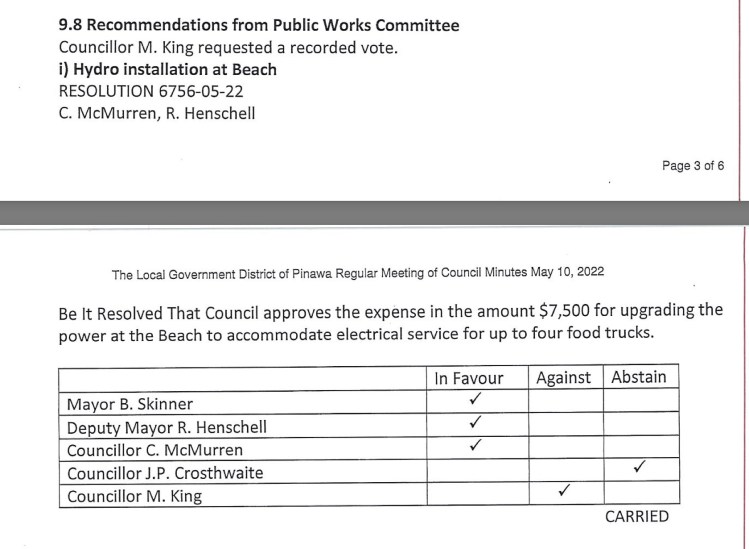
While our committee was actively doing this work under the assurance that no decisions had been made, a troubling situation came to light: work was already underway at the beach site. Electrical infrastructure and landscaping was being installed by Public Works and Manitoba Hydro before our committee had finished its review, before Council had debated the matter, and without a formal resolution or budget authorization passed in an open Council meeting.
I was new on Council, and I wanted to be certain. I searched the agendas and minutes of the Council meetings, public works committee meetings, the budget… nowhere could I find any record of this project being approved.
At the time, I was working at the school, and had to take time off to attend the Public Works Committee meeting to understand where approval for this work had come from. When I asked why this work was proceeding, it became clear that Public Works staff had been verbally directed to carry out the project outside of the formal Council process.
It protects staff: Municipal employees should never be put in the position of executing unbudgeted work without explicit, formal Council authorization.
It respects residents: Citizens who take the time to engage with local government deserve to know that public processes are meaningful, not predetermined behind the scenes.
It ensures financial control: Public funds and equipment should only be deployed after an open debate and recorded vote.
I called out the impropriety and demanded a vote in Council. A resolution was subsequently brought to Council after the fact to retroactively approve the expenditure, however, the work was already well underway and couldn’t be stopped without massive waste. The person who wrote the original letter was in attendance to witness. I called for a recorded vote and voted against approving a process that bypassed Council oversight and public transparency.
Unfortunately, this project also went extremely over budget. And because of the increased traffic flow to the area, then Council had to react further by spending more money to add additional parking. Was this the best decision? That’s up for debate. But the real issue here is that there was no debate before the decision was made, and that’s not a right way to govern.
This matters because if councillors are kept in the dark, the people are kept in the dark. No one person or faction should act as gatekeepers.
On the flip side, formal resolutions are also how we empower our community and turn great ideas into reality.
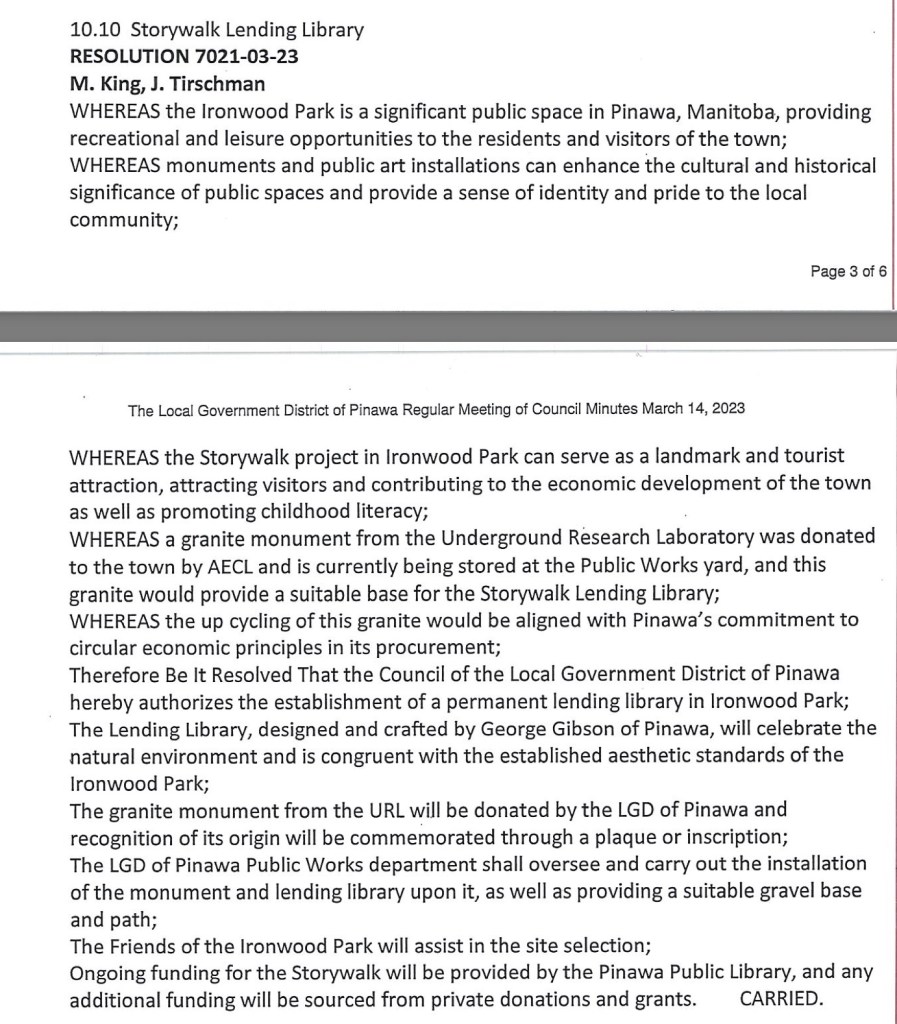
When volunteers proposed creating the Little Lending Library, they had the idea to upcycle a surplus granite stone from the AECL Underground Research Lab. The granite, which was sitting by the recycling depot, could become the base pedestal for the Library. Unfortunately, the project stalled under vague councillor objections that the pedestal “might be needed for something else, someday…” Rather than letting a great volunteer initiative wither in limbo, I drafted and passed a formal Council resolution to grant permission and move it forward.
If you were to read a resolution like this in the minutes after the meeting or even years later (this was from January 2023) you would understand what Council decided and the reasoning behind it. That is what resolutions are for: they break through bureaucratic gatekeeping, establish clear public support, and empower councillors and community members to make Pinawa better. That is the Truth about Transparency.
The bottom line is that any public projects, especially where money is being spent, must be decided by formal resolution in Council, following an informed debate. All councillors must be given all available information to make informed decisions, and the opportunity to debate, provide input, and support or oppose the issue.
That is the standard of governance I have advocated for as a Councillor, and it is the standard I will uphold as your Mayor.
P.S. — If you made it this far, THANK YOU!
This was a long read, but it is a critical issue to understand. In elections, candidates can tell all sorts of stories, but real transparency stands up to scrutiny. I believe our leaders must be champions of good governance, and an informed, engaged community is vital for Pinawa’s long-term success.
If you found this helpful, please share this post with your friends and neighbors. You can also subscribe on my below a to receive future updates directly in your inbox. Just type your email in the box below.
Thank you for being engaged and for caring about our town!
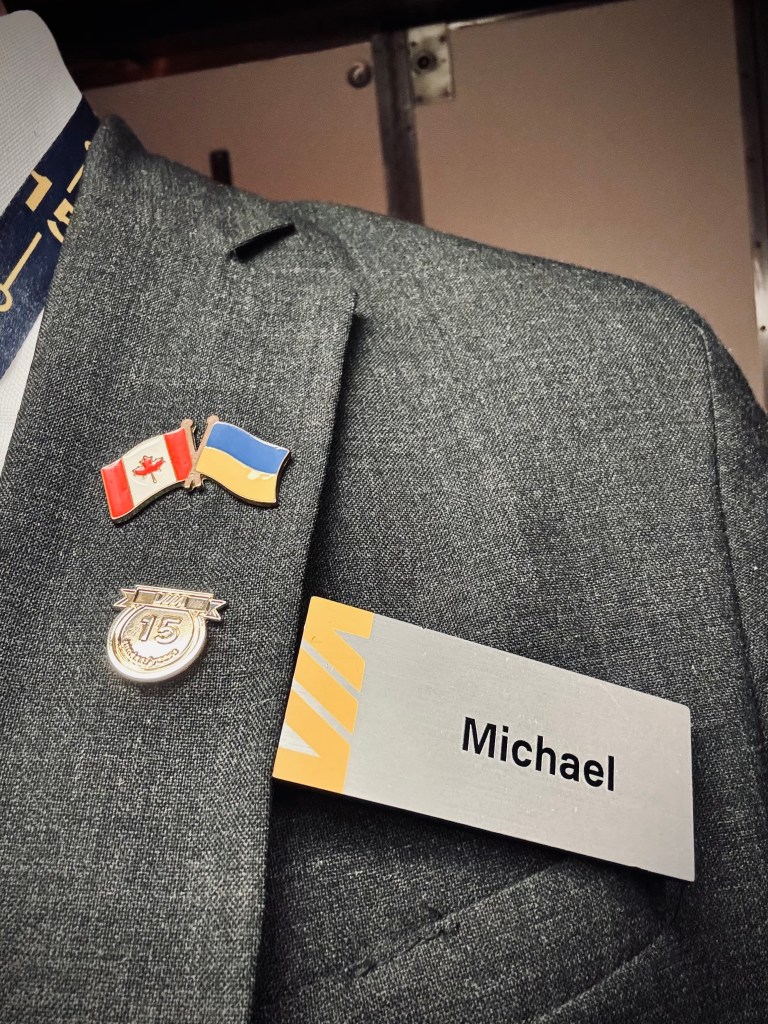
One of the questions I’ve been asked during this campaign is how my career with VIA Rail fits with serving as Mayor.
It’s a fair question.
The answer is simple: my work schedule actually gives me more flexibility to serve the community than a traditional Monday-to-Friday job.
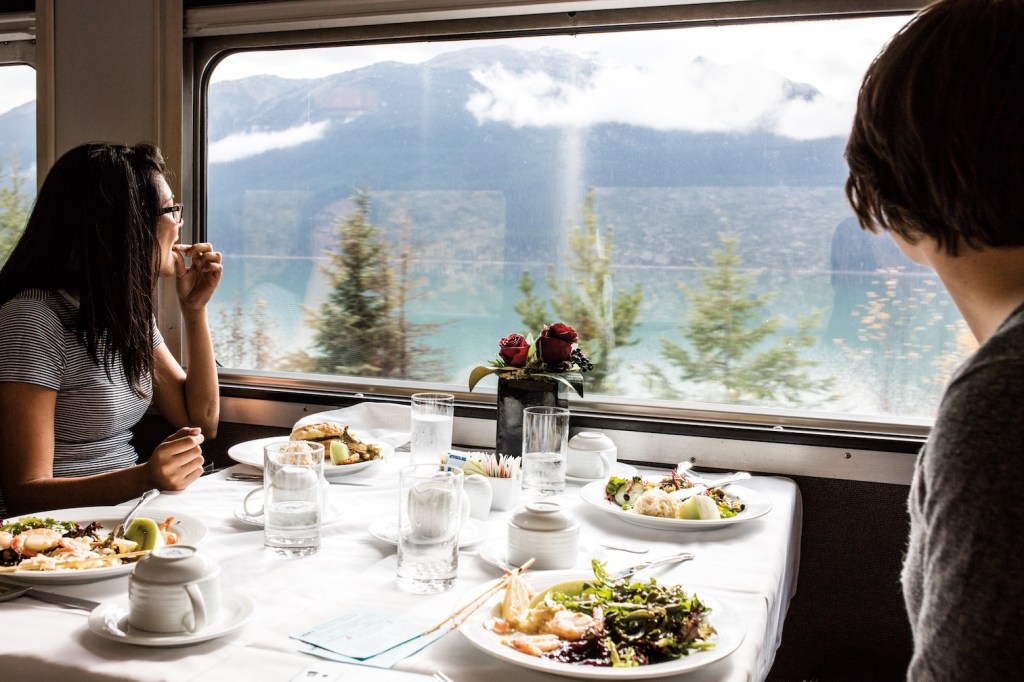
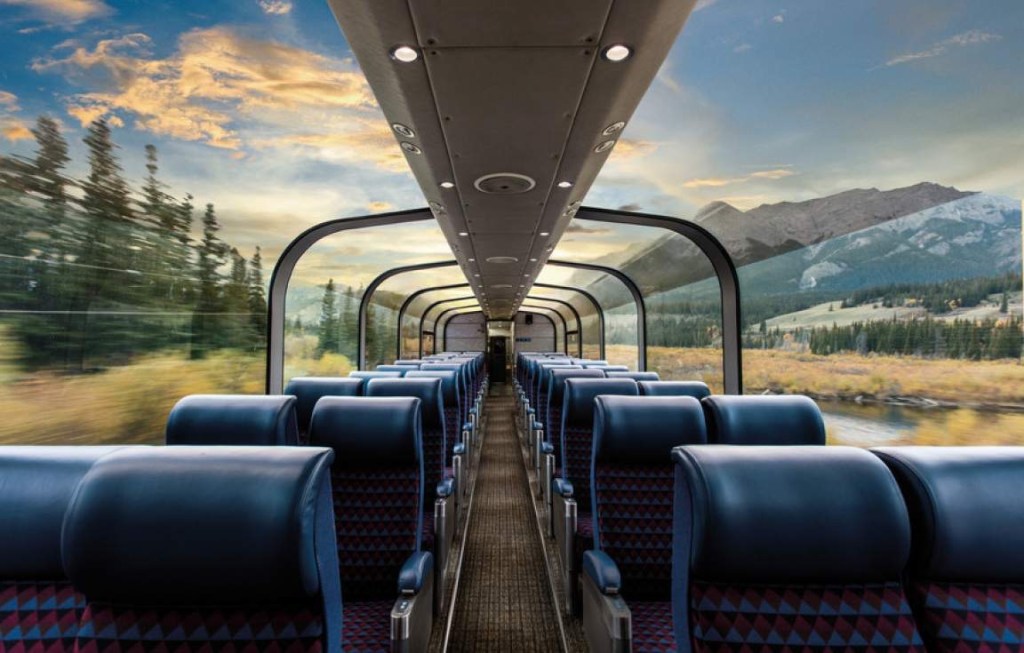
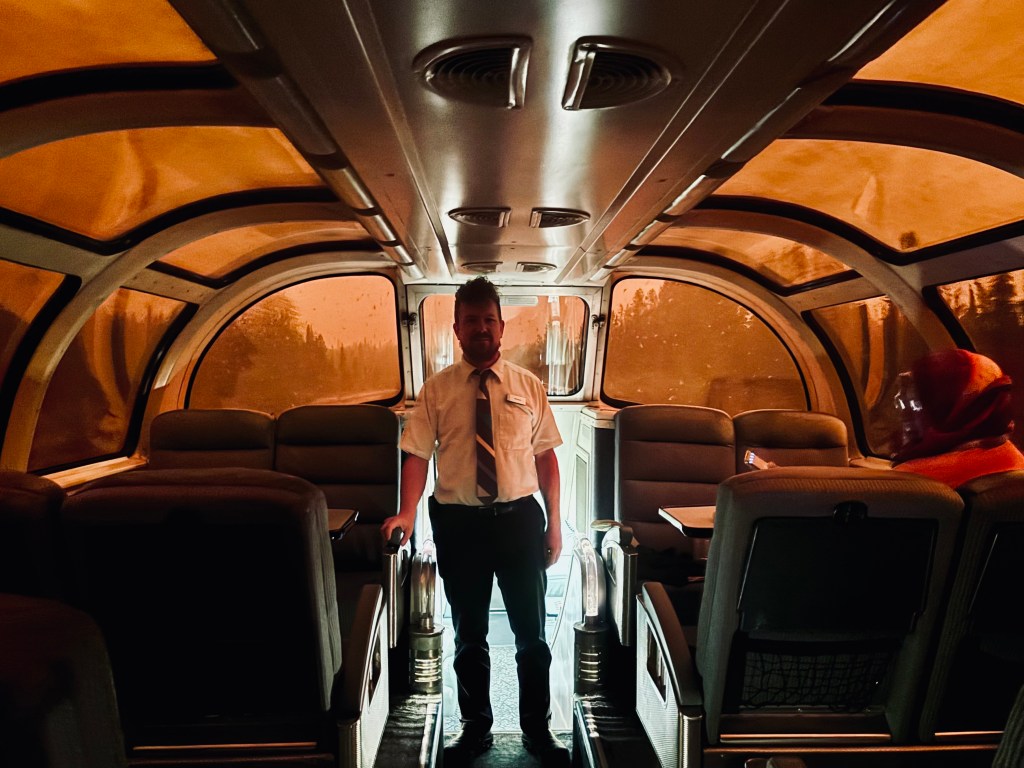
Dining CarThe CanadianObservation Car
Train crews work long hours while on duty, followed by extended periods at home. I typically have between five and eighteen days in Pinawa between assignments. That flexibility has allowed me to serve on Council, chair committees, coach minor hockey, organize sailing programs, volunteer with community organizations, attend school activities, and raise my children here in Pinawa.
Over the past five years, residents have been able to judge that for themselves. I have maintained a strong attendance record, taken on leadership roles within Council, and remained actively involved throughout the community.
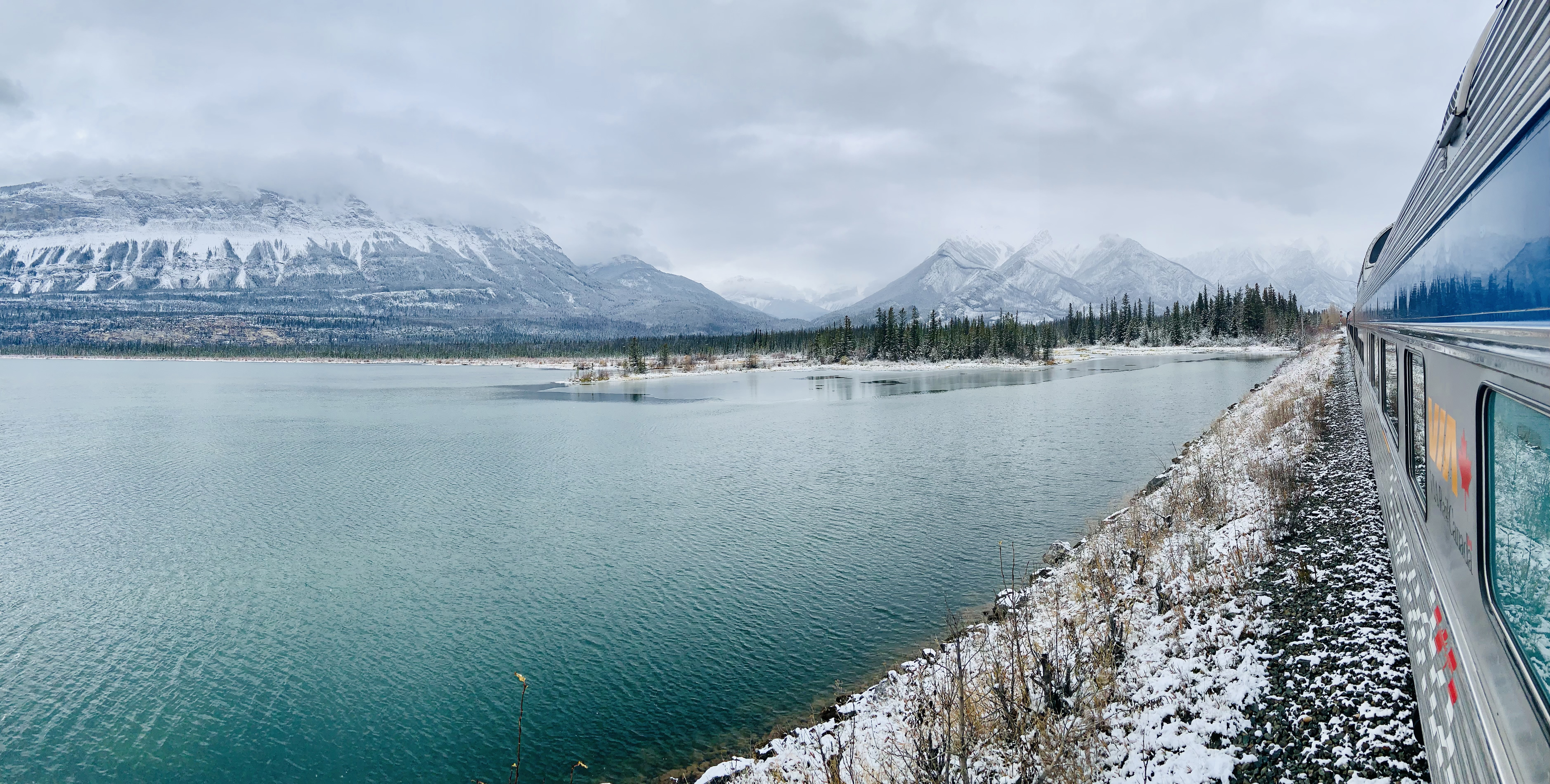
Nature, Steel, and Sky
Many people are surprised to learn that my schedule actually gives me the flexibility to do Council work during the day while the municipal office is open. I regularly use that time to connect with administration, businesses and other government officials, as well as attend meetings, respond to residents, and work on municipal projects. These days, a lot of information is shared digitally. So, even while travelling, I often spend part of my layovers keeping up with Council emails and phone calls. For example, I helped secure funding for the Pinawa First Responders Program while on a layover in Churchill.
Council is about governance, not day-to-day administration.
The Mayor’s responsibility is to provide leadership, work collaboratively with Council, set priorities, make thoughtful decisions, and ensure good governance. It is not to manage the daily operations of the municipality. Those are the responsibilities I have focused on throughout my five years on Council, and I am proud of the record I have built.
Like every member of Council, I work with the municipal office and my fellow councillors to schedule meetings so everyone can participate as fully as possible. That has always been part of being a respectful and effective Council, and it is an approach I would continue as Mayor.
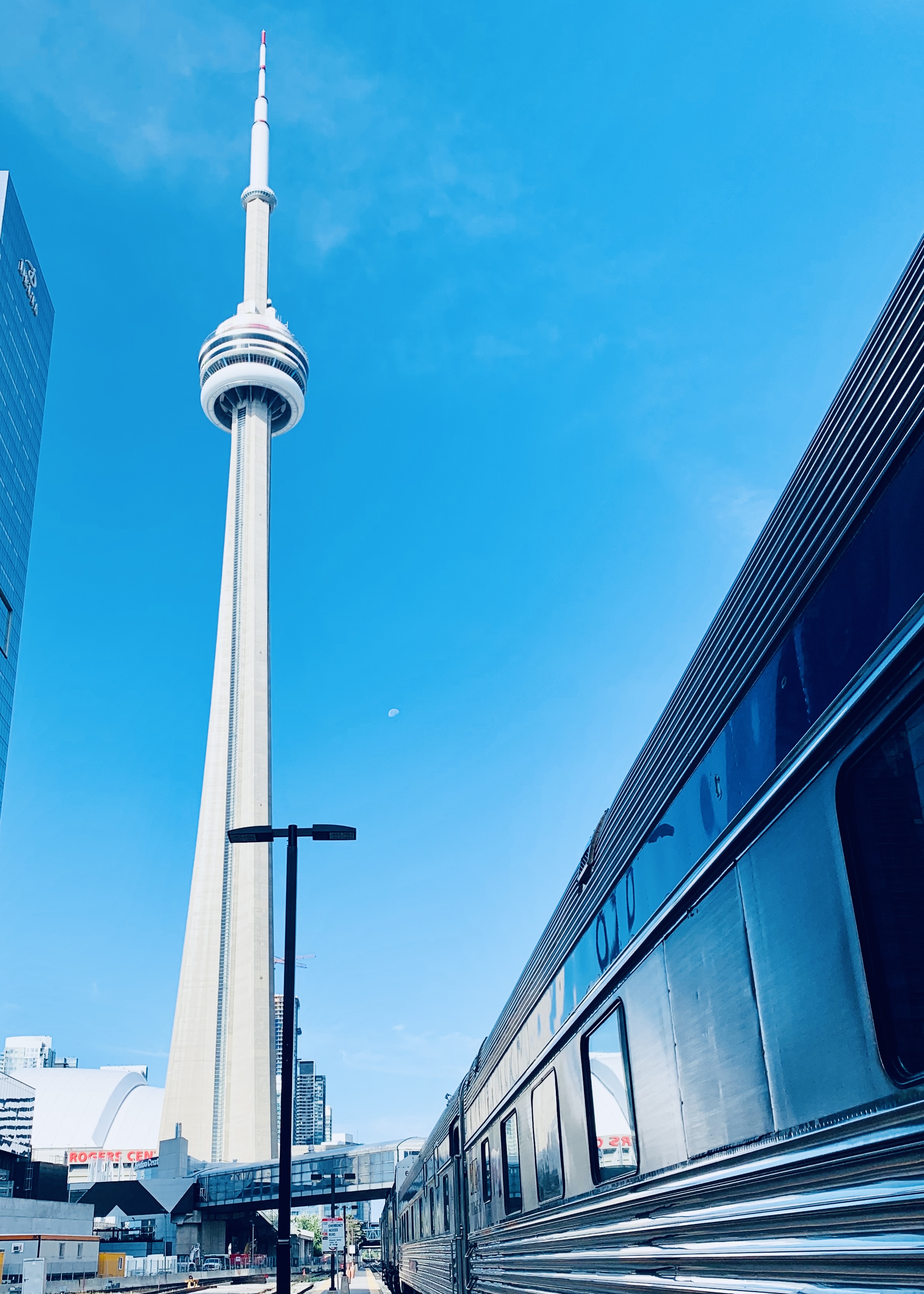
The CN Tower and the Canadian
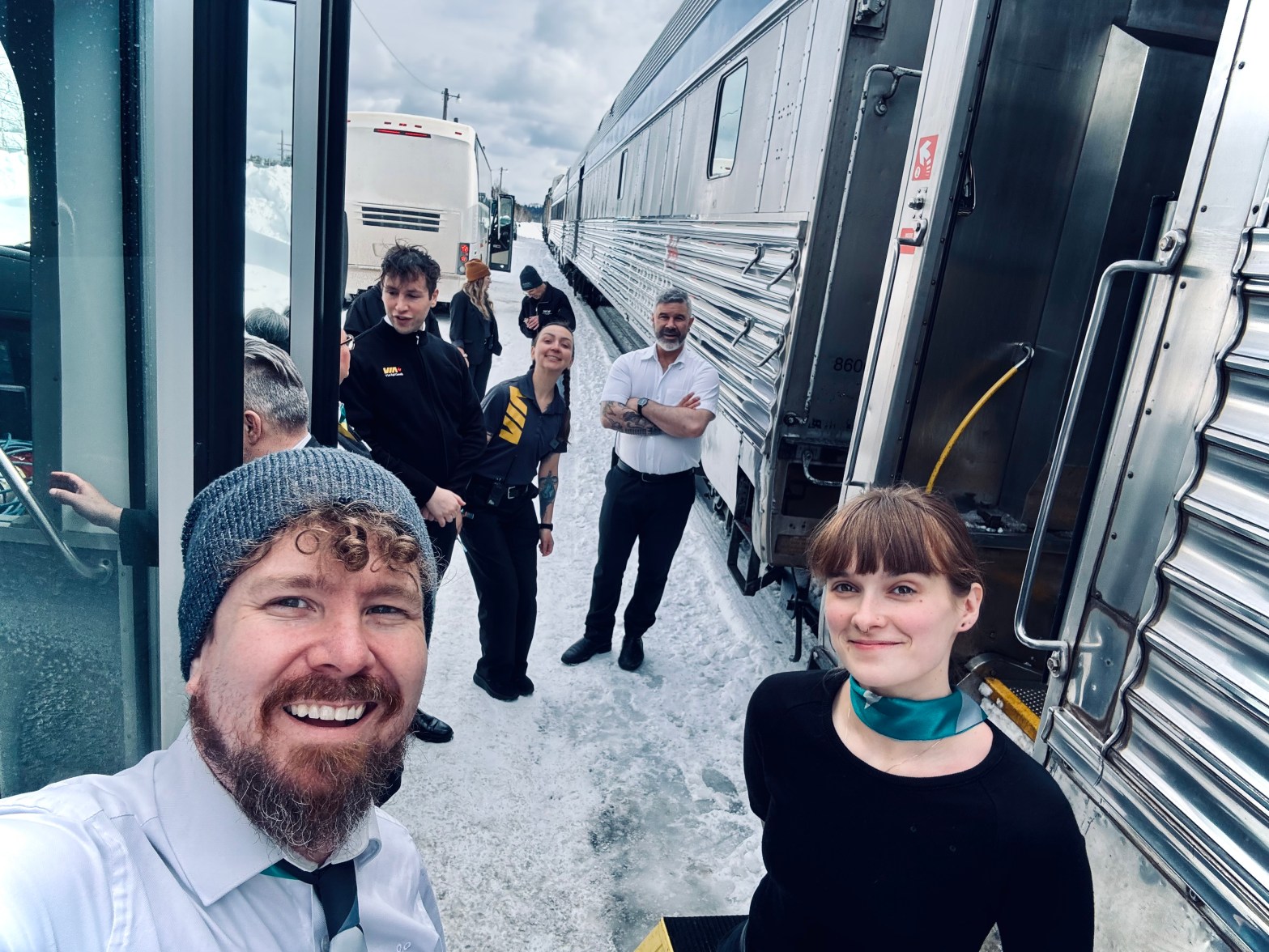
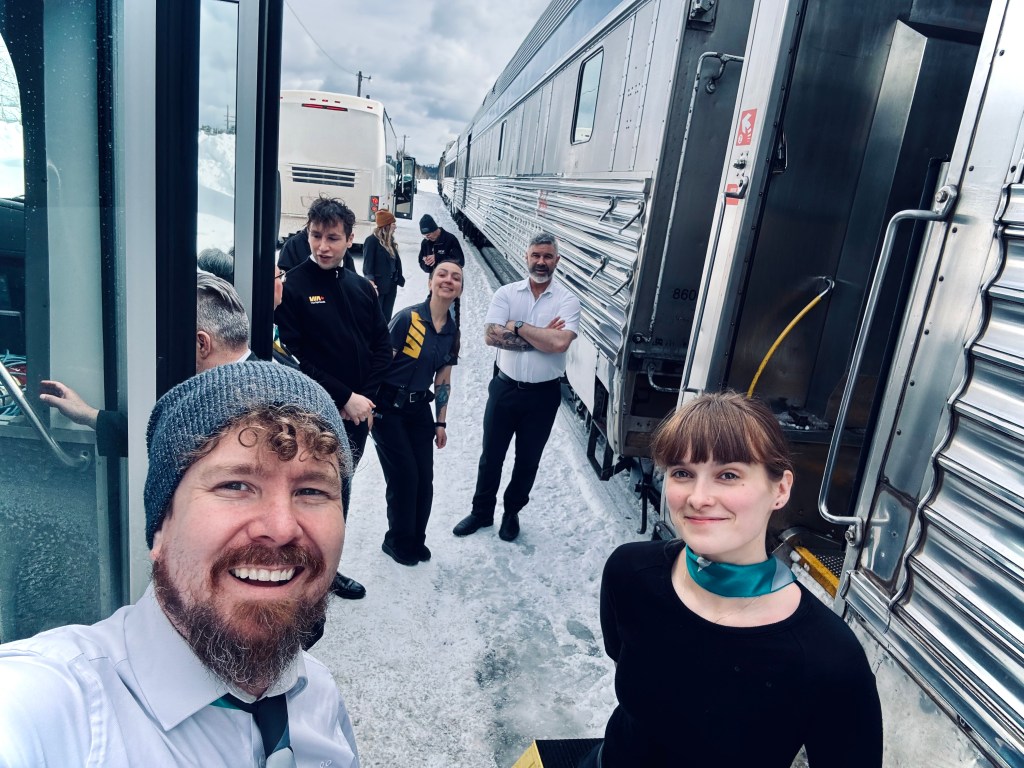
Our Crew
On the train, I am responsible for the safety, comfort, and wellbeing of passengers and crew. My motto is “Teamwork, Safety, Respect,” and we pride ourselves on providing excellent service. Throughout my career, I have responded to a wide range of emergency situations, including evacuations, medical emergencies, and police incidents. I served two terms on our Health and Safety Committee. During last year’s northern Manitoba wildfires, we helped evacuate affected communities.
Experiences like these teach you to stay calm under pressure, communicate clearly, make sound decisions with incomplete information, and work as a team to solve complex problems. Those are leadership skills that translate directly to municipal government, where there are always new challenges and no two situations are ever the same.
Jasper, AB
I hope this gives you a better understanding of both my career and why I believe it has prepared me to serve as your Mayor.
In my previous post, “Why I Am Running for Mayor,” I wrote that leadership is about more than good intentions. It is about transparency, listening, thoughtful decision-making, and creating a Council culture where questions are welcomed and ideas can be debated respectfully.
Everything I’ve shared here is part of that same story.
My career has given me the flexibility to serve this community, but more importantly it has helped shape the kind of leader I strive to be. Every trip depends on teamwork, communication, professionalism, and serving people well. Those same values are important in municipal government. Residents deserve a local government that is responsive, respectful, and committed to providing excellent public service.
Over the coming weeks, I’ll continue sharing both my record and my vision for Pinawa’s future. I hope you’ll continue following along, ask questions, and join the conversation.
I hope you enjoyed reading this post, and the photos from one of Canada’s most famous railway journeys. If you’d like to follow along throughout the campaign, I invite you to subscribe to my blog.
Thank you for reading.
The midnight sun reflecting off the rails in the subartic.
I am running for Mayor because I believe deeply in Pinawa and in the potential of our community.
I became a councillor because I wanted to give back. During my time on Council, I have learned a great deal about how our municipality works, the challenges we face, and the opportunities in front of us.
I have also learned that good intentions and aspirations are not enough. Words like “transparency” and “listening” only mean something when they are put into practice.
Transparency is not simply sharing information when it is convenient. It means being open about how decisions are made, welcoming questions, and ensuring that both residents and councillors can understand the reasoning behind important decisions. That is why I have repeatedly pushed for Council’s positions to be clearly established through formal resolutions, rather than relying on informal or verbal understandings as a substitute for transparent decision-making.
Listening is not simply having conversations with people. It also means listening when someone disagrees with you. It means being willing to consider a different perspective, including when that perspective is difficult or inconvenient. I have tried to put these principles into practice when resolving difficult issues involving local businesses, the Library, the PCDC, trails, and recreation, to name a few.
Over the years, I have heard many of the same frustrations from residents and businesses: that decisions are not always explained clearly, that people do not always feel heard, and that it can be difficult to understand how important decisions are made.
I have experienced many of those frustrations myself as a councillor.
I have asked questions about decisions, process, transparency, and accountability. I have challenged decisions when I believed the proper process was not being followed. Sometimes difficult questions are welcomed. Sometimes they are not. I believe they are still necessary.
I have also seen how challenging it can be for those who disagree with the established direction to have their concerns meaningfully considered. I have seen good people become so frustrated with how things work that they disengage or walk away. When that happens, the whole community loses their experience, ideas, and willingness to contribute.
That is a shame, and it is a detriment to Pinawa.
These are not new concerns. They did not appear during this election campaign. They are concerns that have existed during the years I have served on Council, and during the years that the people who are now promising to address them have been part of Pinawa’s leadership.
Residents are entitled to ask every candidate for Mayor a simple question:
What specifically will you do differently?
Pinawa is at an important point in determining its future. We have opportunities in economic development, housing, tourism, recreation, planning, and the future of the lands surrounding our community. We also face real challenges with infrastructure, emergency preparedness, finances, and ensuring that our municipality is prepared for the future.
We cannot afford to endlessly defer difficult decisions, avoid hard conversations, or allow setbacks to go unexamined. Pinawa needs leadership that is thoughtful and strategic, but also willing to make decisions and be accountable for them.
The Mayor’s job is not to make sure everyone agrees with their personal perspective. It is to make sure Council has the information, the opportunity, and the freedom to debate important issues before making a decision. It is to ensure that the residents of Pinawa are heard, and that their voices are valued in decision making.
As your Mayor, I will prioritize building strong working relationships with AECL, CNL, the Whiteshell School District, the business community, and our many non-profit cultural and recreational organizations. I believe we will be stronger if we can work together.
I want to listen to our young people. Investing in youth, through improving facilities like the Vanier Centre and Pool Building, and strengthening youth recreation, will help build a happier, healthier community for the future. That matters deeply to me, and I believe it matters to all of us.
I am running for Mayor because I believe I can help provide that kind of leadership.
I want to help Pinawa move forward with a clear vision for our future while respecting the work that has already been done by the many people who have contributed to this community.
Most importantly, I want to help build a council culture where people can disagree without becoming divided, where questions are welcomed, and where the goal is to find the best solution, not simply to defend an existing position.
I have spent the time on Council learning, working, asking questions, supporting initiatives, and challenging decisions when I believed it was necessary.
I am ready to take on a greater responsibility.
Pinawa has a strong future ahead of it. I believe I can help lead us there.
Over the coming weeks, I will be sharing concrete examples from my record, as well as specific ideas for how I believe Pinawa can move forward. I will share the work I have done to ask questions, improve accountability, and push for greater transparency in our local government.
I hope you will take the time to read them, ask questions, and share your own thoughts.
This campaign should be about the future of Pinawa.
That is what I am running for.
If you have any questions or just want to learn more about me and what I hope to do for Pinawa, please reach out to me at 𝐦𝐢𝐜𝐡𝐚𝐞𝐥𝐤𝐢𝐧𝐠𝟒𝐩𝐢𝐧𝐚𝐰𝐚@𝐠𝐦𝐚𝐢𝐥.𝐜𝐨𝐦.
After much thought, and many conversations with residents over the past several months, I have decided to run for Mayor of Pinawa.
Over the past six years serving on Council, I have had the opportunity to learn about our community’s strengths, challenges, and opportunities. I am grateful to the many people who have encouraged me to take this next step.
I believe Pinawa is entering an important period. The decisions we make over the next few years will help shape our community for the next 15 years and beyond. We have opportunities ahead of us, and I believe we can build a future together that is prosperous, sustainable, and welcoming for everyone.
Being your voice is one of the important parts of being Mayor, and that’s why I want to hear from you. Over the coming months, I look forward to meeting with residents, listening to your ideas, and discussing the future of our community. If you see me around town, please say hello and share your thoughts on Pinawa’s future direction.
I will be sharing my thoughts and updates here on this blog throughout the campaign. If you are interested in following along, please subscribe by entering your email address below and future posts will be delivered directly to your inbox.
Thank you for your support. I look forward to seeing you.
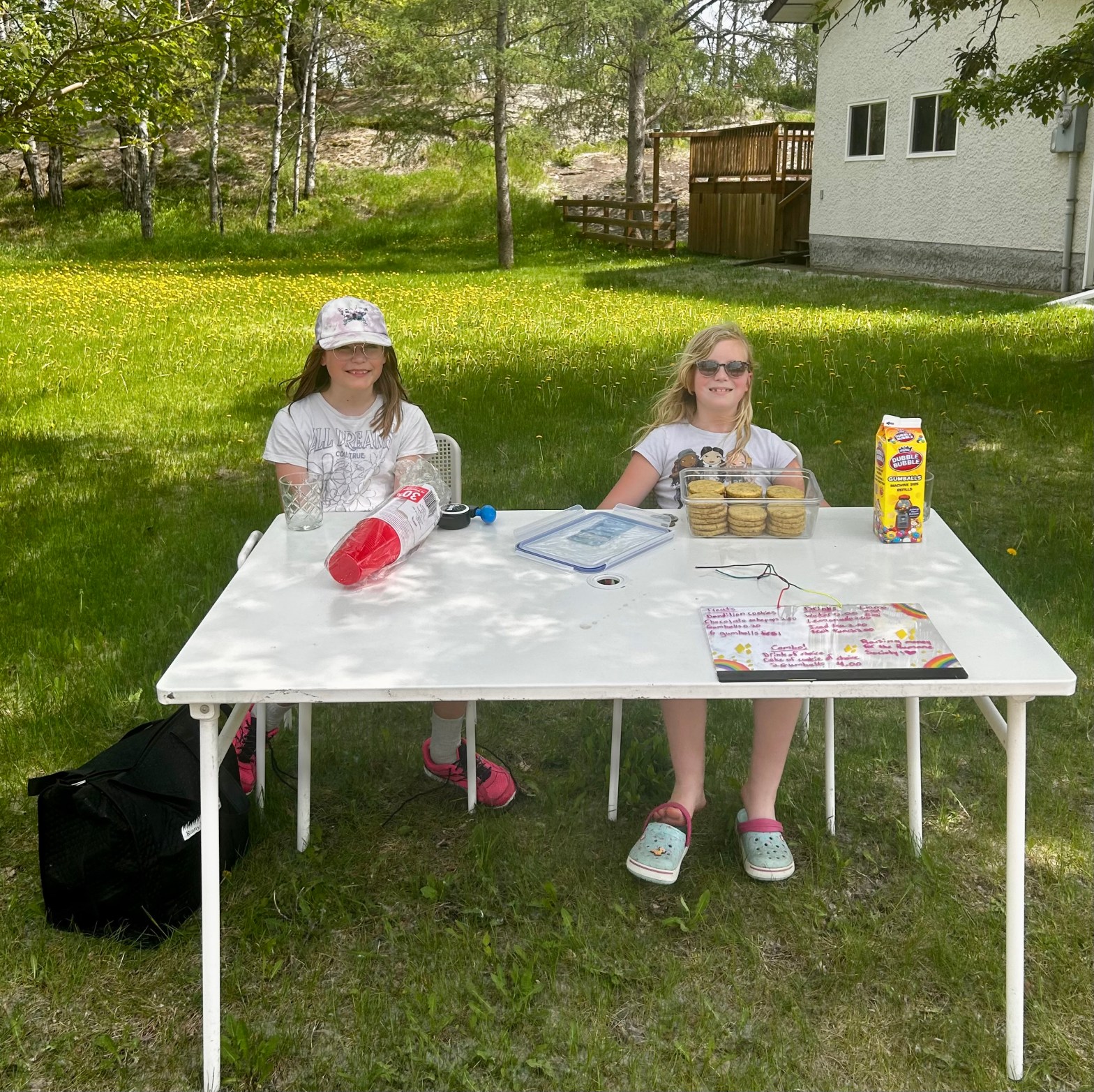
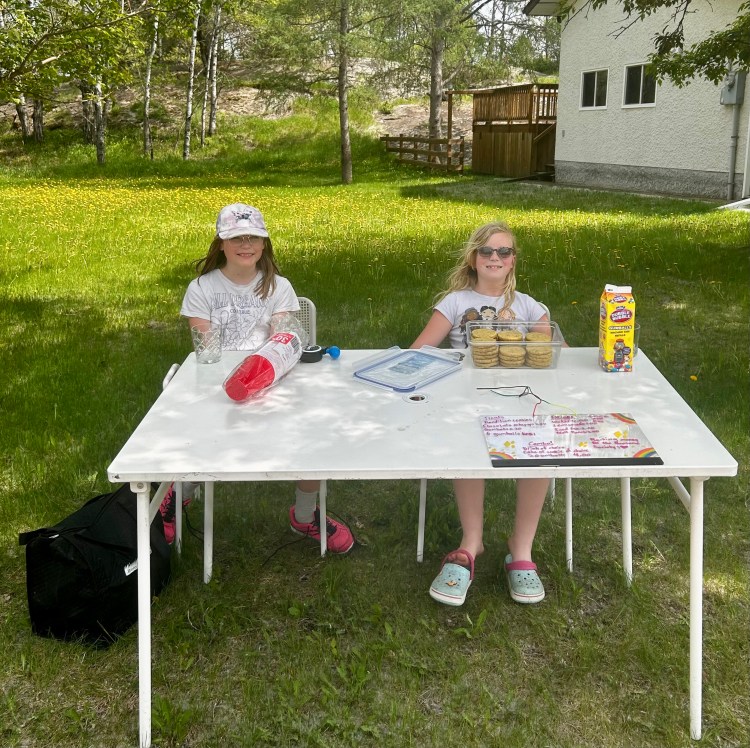
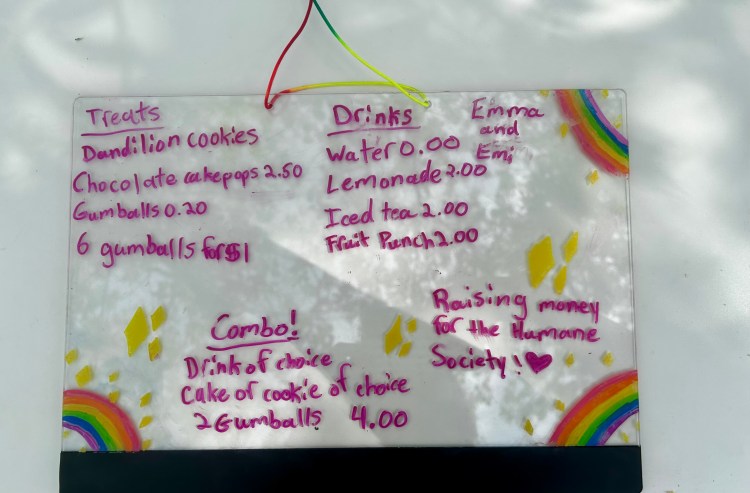
As part of the fun this weekend, my daughter Emma and her friend Emi are selling cookies, lemonade, iced tea, and juice on McDiarmid near Willis E. They are raising money for the Humane Society.
They are smart and put a lot of ice packs in the cooler so the lemonade is cold on this hot day! Enjoy!