Tonight is the Pinawa CDC AGM! 18:30 (6:30pm) at the W.B. Lewis Business Centre, 24 Aberdeen.
I will be speaking about Tourism, and the preliminary findings of our UofM researchers.
Renew your CDC membership ($10) and you will be able to vote nominees to the Board of Directors!
See you soon,
Michael
Pinawa CDC is a non-profit corporation devoted to enhancing community economic development in Pinawa.
OUR VISION For Pinawa to become a growing, prosperous, vibrant, and sustainable community.
OUR MISSION STATEMENT To promote the LGD of Pinawa, and lead the growth of business, community development, and enhancement of quality of life. We work through cooperative efforts with other groups.
OUR GOALS The Pinawa CDC is working to achieve four major goals:
To have a comprehensive marketing plan to support the mission of Pinawa CDC.
For Pinawa CDC to have a high profile in the community.
To realize the achievement of a minimum of one major economic development project over the next five years.
To be a sustainable and continuously improving organization.
I wanted to take this opportunity to tell you about a special policy that I am particularily proud of, that is; the Sustainable Neighbourhood Action Plan. This post is the first of a series that will give some context to this document, feature interesting excerpts, and my thoughts on what it means.
It was nine months ago that I was pounding the Pinawa pavement, asking the people to support me in my vision to build a more prosperous, sustainable, and healthy community. I believe that humans are not seperate from nature, and that connectedness with the environment is key to one’s wellness. Historically, the builders of Pinawa must have recognized this, as our beloved Ironwood Trail is a testament to the relationship between land, water, and society. My heart is in nature, when I walk, when I ski, when I row, when I sail, when I simply allow myself to be with the Earth. It is the recognition of this intrinsic relationship, that guides me in my life and in my work.
I am not alone. There are more and more people discovering the secret of Pinawa and choosing to lay their own roots here. Like me, they are attracted to the natural beauty that surrounds us all. They want to raise their family in a place that respects the environment and the right of the people to access it. They want to retire and live their golden years with fresh air and peaceful recreation. The citizens of Pinawa expect that their government will protect these interests.
We are all related to and respect everything in life. In our planning, we will consider the impact of our decisions on the next seven generations.
The Sustainable Neighbourhood Action Plan (SNAP) is a new policy that sets out a number of strategies to guide the government’s actions. This plan will serve as a compass for defining future goals, measurements, and objectives. What the SNAP also does is act as a filter when government is considering new policy actions, that we consider the sustainability implications in whatever we do.
All strategies shall be based on the triple bottom line approach, considering environmental, social, and economic impacts.
As more people discover the secret of Pinawa, the demand for homes has grown. This, combined with rising housing prices in the Canadian market is driving the cost of moving to Pinawa out of range of many people. While we want to maintain our property value, we need to be worried about the gentrification of our community, where the price of housing becomes so high, regular middle class folks can’t afford to live here anymore.
Most of us recognize that we want to attract young people and entrepreneurs to Pinawa, but they need somewhere to live! Buying or building a single family detached home is not affordable for a single person or a young family anymore. Around Christmas the RCMP even contacted Council because they had a young officer with family assigned to our local station but couldn’t find anywhere to live! A senior citizen who needs to downsize their home shouldn’t be forced to move away from their community. We need affordable housing.
Establish a strategy to ensure a mixture of residential housing types including single-family dwellings, two-family dwellings, multi-family dwellings, apartments, 50+ housing, and supportive housing.
This is why I supported the Zoning By-Law ammendment to restrict short term rentals in Pinawa. In other hot tourist markets like Jasper, wealthy land owners would buy up residential property and use it for commercial enterprise. Not only would this cause disturbance for the local residents, but it would also reduce the stock of available housing, driving prices up further. This damages communities and throttles the actual commercial zone development that we want to see! We are now seeing a significant increase in investment interest for accomodation development in our commercial areas. I want to see new housing options in Pinawa, so that we can have healthy sustainable growth for all people.
Establish a strategy to encourage continued residential growth that includes measures specific to attraction of young families and attraction and retention of seniors.
I believe that people have the right to affordable housing. The old ways of urban sprawl will not serve cities in the future. We need to build dynamic, walkable, vibrant communties on a human scale. I want to live in a place where my neighbours come from all walks of life. Where we can meet up in the park or on the trails. Where we can safely ride a bike to the store. We ought to be a leader in sustainable urban development. This is how we foster reslience.
Be well,
Michael
This post is part one of a multi part project on Sustainable Neighbourhoods. I will continue to advocate for progressive and creative solutions to the issues that affect our community. Thank you for being here!
I would like to share with you an article that features a very cool program we have here in Pinawa, which is our Junior Kindergarten Forest School. This program was spearheaded by Mrs. Michelle Long, who is an amazing educator in our community. My daughter, Emma, was in Forest School last year at F.W. Gilbert and she had a great experience. What an amazing introduction into school! This year there are 19 kids enrolled!!
CBC Gem produced a documentary on Forest Schools in Manitoba and features Pinawa and F.W. Gilbert School (Pinawa comes in around the 17:00 mark). This type of programming is very attractive to many young families. It demonstrates how Education as one of our economic development pillars, and recognizing the Environment as the foundation, provides a unique opportunity for our community; One that we should continue to promote as a society, and as individuals. Pinawa is lucky to have many people, like Michelle, who contribute to making this community such a special place! You are awesome!
Speaking of Education and Environment, don’t forget that Carbon Lock is having an open house today from 15:00 to 16:30 at the LGD Maintenance Yard where you can learn about their new technology! Hope to see some of you there today!
I am impressed with your website! I’m a resident of Pinawa and will be voting for a councillor.
I am wondering what you know about the benefits and risks of small modular (nuclear) reactors to Pinawa and to the environment?
Do you have a stand for or against SMRs and Pinawa being a demonstration partner?
Your welcome to post my question and your response. Thanks,
Kelly Klick
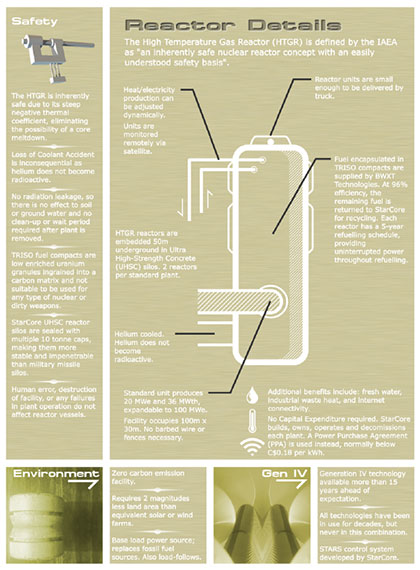
Source: Starcore
Hi Kelly! Thank you for the compliment. I’m glad you find value in my writing.
If 2020 has taught us anything, it showed what can happen when policy decisions are based on political posturing rather than the best available science. I am not a nuclear technician and I have never worked at AECL. I studied public policy, environmental politics, economics, and law.I work for the National Passenger Railway Service in On-train Services and Occupational Health and Safety. When it comes to determining the safety of such a project, I will leave that to the experts at the federal regulatory agency, the Canadian Nuclear Safety Commission. The people that work there are much more knowledgable about Atomic Fission than myself. According to the CNSC, Small Modular Reactors are regulated the same way as any other reactor in Canada.
I feel confident in the safety of this project as nuclear power generation is a heavily regulated activity and falls under the jurisdiction of numerous federal acts such as:
SMRs have many safety systems including a passive shutdown, which means that even during a loss of grid power, it can still dissipate the thermal energy and safely shut down the reactor.
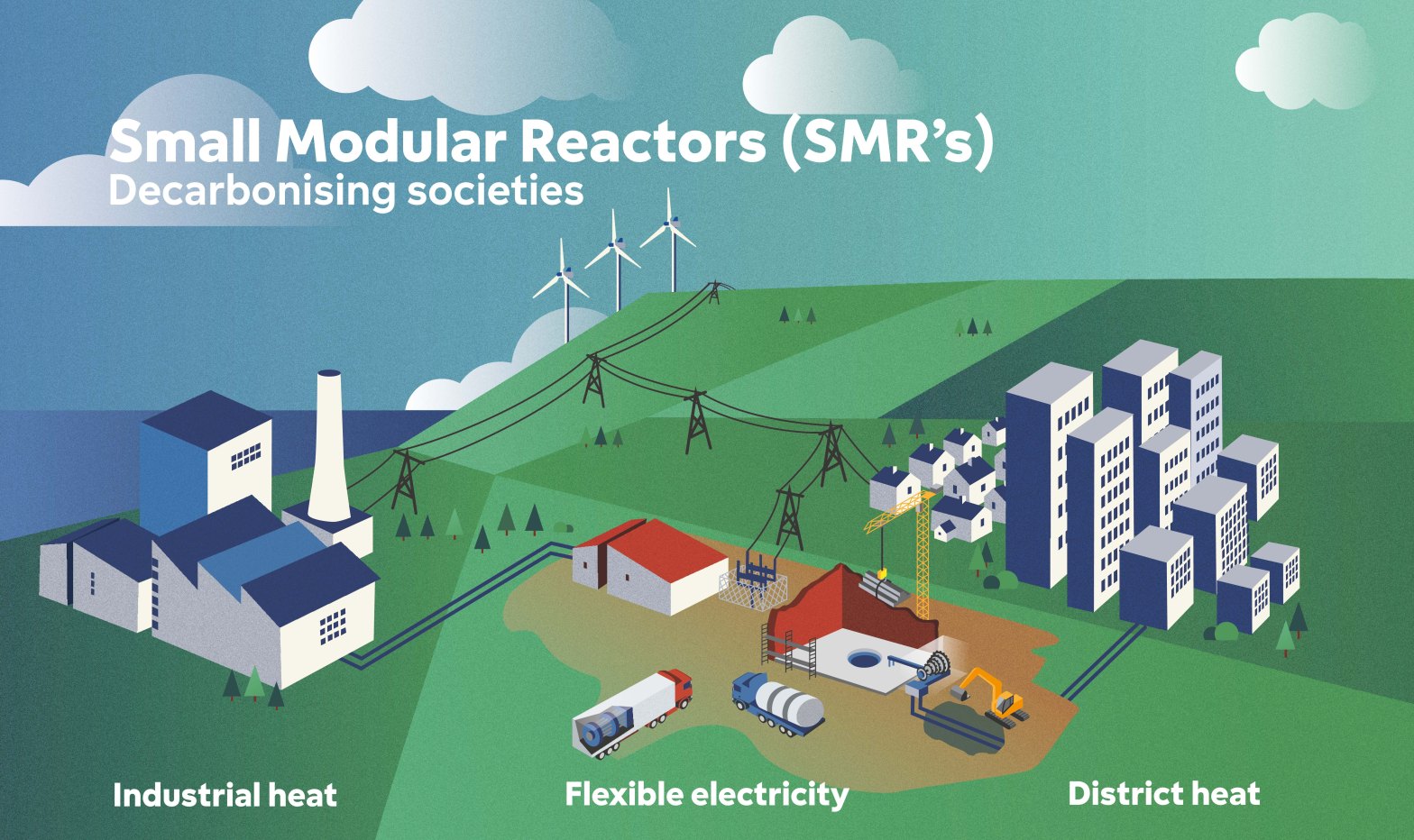
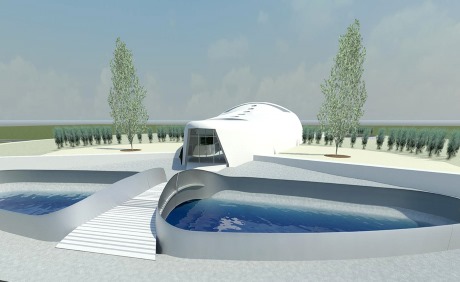
Some people think of the Starcore SMR project in terms of power generation, but that is only partially correct. The potential of this goes well beyond creating many well paying jobs constructing the facility, managing the reactor, and maintaining infrastructure. The SMR demonstration reactor with Pinawa as a partner community, should actually be seen as a very niche marketing project. Alberta, Saskatchewan, Ontario, and New Brunswick have signed a deal to explore using small modular reactors as a way to reduce their dependance on fossil fuels at a time when reducing greenhouse gas emissions is a national priority. Representatives will be coming from these places and from around the world to see this technology. It doesn’t need to stop at the reactor site. My vision is to attract and demonstrate other complimentary technologies, programs, and initiatives in our town.
Source: Starcore
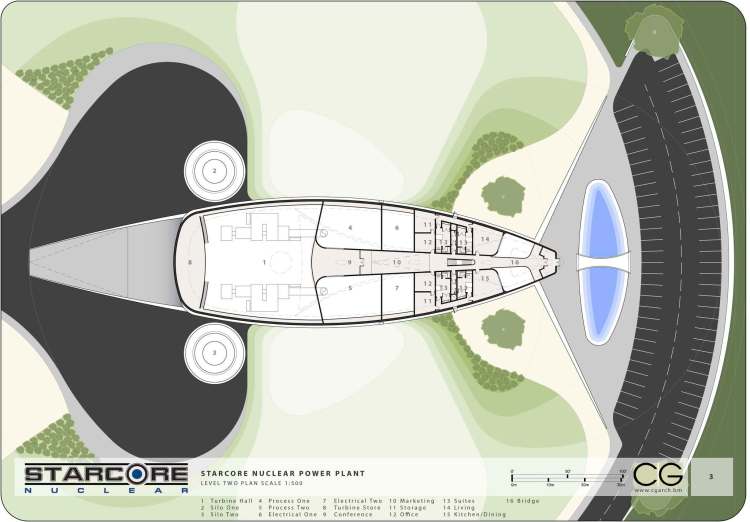
The Small Modular Reactor Demonstration Site is marketing its product to a specific group. These visitors will have money to spend, they might stay in a nice hotel, eat at a fine restaurant, and occasionally purchase multi-million dollar pieces of new tech! The marketing potential of being a town powered by this brand new technology is immense. There are some potentially lucrative investment opportunities, and wouldn’t we all love a brand new restaurant in town?
Source: Starcore
Attracting economic development and investment is part of ensuring our future economic sustainability. Being able to bring a specialized high tech operation to a small town is a big opportunity. Pinawa is well suited to this project, and I believe that the Starcore demonstration reactor combines nicely with my platform of promoting true sustainable practices, policies, and economic initiatives within the town. The SMR demonstration project would instantly make Pinawa a recognized name in the green innovation community during the coming decades when transitioning to a low-carbon society will be the stimulus for the global economy.
Thank you for your question.
*This article was reviewed by a Nuclear Environmental Specialist to ensure accuracy.
This question concerns the effect of eco-tourism on Pinawa’s wildlife. Many of the candidates have talked about the importance of eco-tourism to Pinawa’s economy, and that it can be a way for people to appreciate nature. However, multiple studies have shown that eco-tourism is not a simple ‘benefits-for-all’ approach. “Ecotourism is… commonly viewed as highly compatible with conservation objectives, and indeed it contributes a number of important benefits, including revenue generation, support for conservation, and educational opportunities for visitors and local communities. Nevertheless, there is increasing evidence that human visitation to natural areas can have significant effects on the environment and the wildlife therein” (Shannon, Larson, Reed, Crooks, & Angeloni, 2017, p.30). These effects include direct mortality (ex: in car accidents), habit degradation stemming from the building of tourist infrastructure, the bringing of non-native invasive species (ex: zebra mussels), and long-term behavioural shifts. In terms of behavioural shifts, studies of urban foxes, pigeons and blackbirds living around humans showed that these species became less vigilant, and thus more susceptible to predators. This increased susceptibility impacted individual reproduction, survival, and population dynamics amongst these species (Mccleery, 2009; Rodriguez-Prieto, Fernández-Juricic, Martín, & Regis, 2009; Santos, Cramer, Pârâu, Miranda, Wikelski, & Dechmann, 2015; as cited in Shannon, Larson, Reed, Crooks, & Angeloni, 2017). In a 2015 meta-analysis on over 100 case studies of eco-tourism’s affect on animals, its authors write, “If individuals [animals] selectively habituate to humans — particularly tourists — and if invasive tourism practices enhance this habituation, we might be selecting for, or creating traits or syndromes that have unintended consequences, such as increased predation risk. Even a small human-induced perturbation [deviation of a system caused by outside influence, in this case the outside influence being tourism] could affect the behavior or population biology of a species and influence the species’ function in its community” (Geffroy, Samia, Bessa, & Blumstein, 2015, p.763).
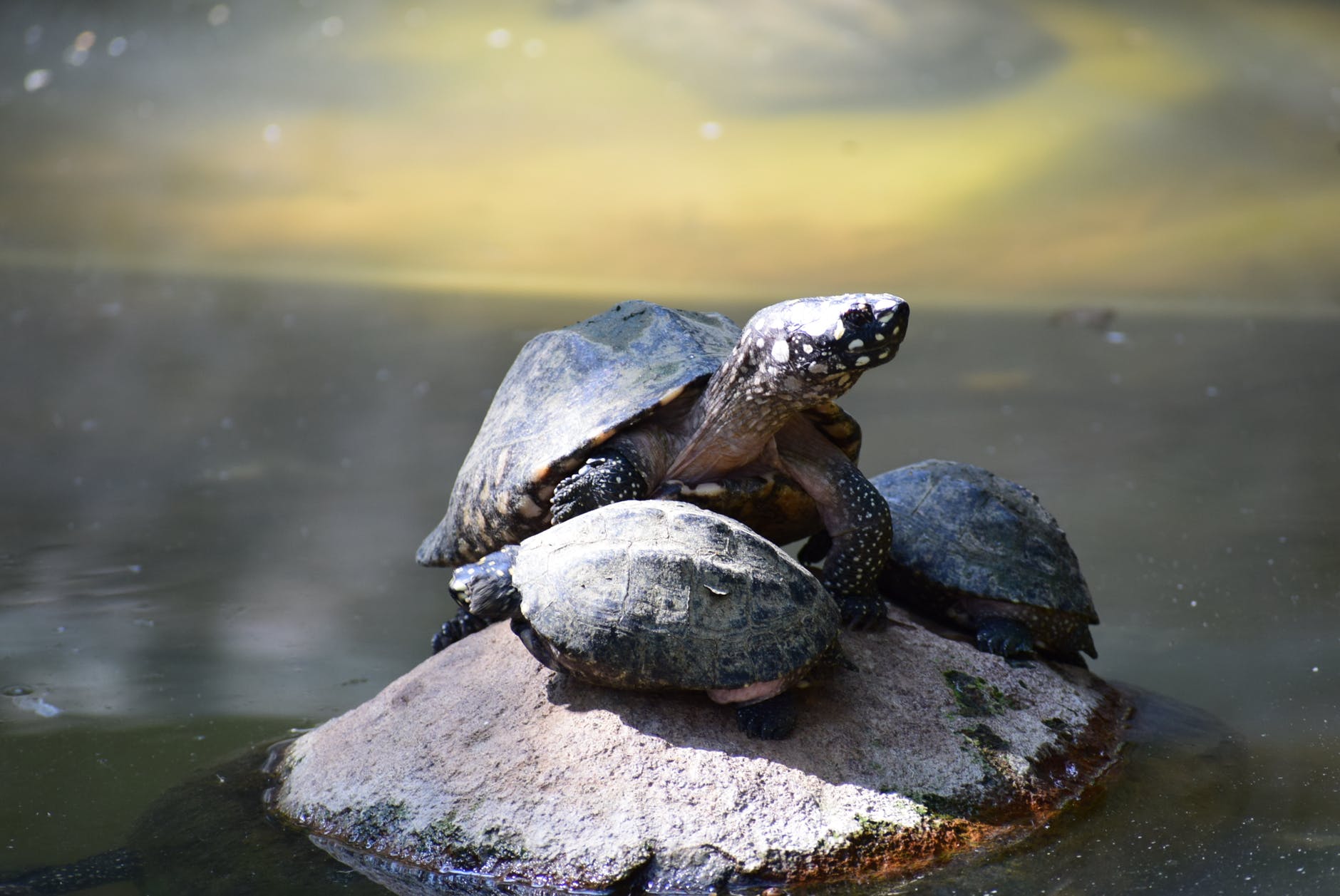
It is not only the negative non-intended consequences of eco-tourism which may affect Pinawa’s wildlife. Unfortunately, as one resident noted, turtle nests in the beach area have been dug up, and turtles themselves harassed. With more traffic to this area, comes more potential for turtles to be harmed.
Considering these potential negative effects from eco-tourism, my question is: what steps would you pursue as councillor to ensure that – to the best of council’s ability – the externalities from Pinawa’s eco-tourism do not harm animals and their habitat? What measures would you bring to Council to prevent the spread of invasive species, prevent the harassment of animals, and encourage the conservation of habitats?
Thank you for your time,
Sophie Long.
Works Cited
GGeffroy, B., Samia, D.S.M., Bessa, E., & Blumstein, D.T. (2015). How nature-based tourism might increase prey vulnerability to predators. Trends in Ecology and Evolution 30:755-765. https://blumsteinlab.eeb.ucla.edu/publications/
SShannon, G., Larson, C., Reed, S., Crooks, K., & Angeloni, L. (2017). “Ecological Consequences of Ecotourism for Wildlife Populations and Communities.” In D.T. Blumstein, B. Geffroy, D.G.M. Samia, & E. Bessa(Eds.), Ecotourism’s promise and peril: A biological evaluation (pp.19-46). Springer. doi:10.1007/978-3-319-58331-0_3
Thank you for your question. My intention is to offer you an answer befitting the effort you put into articulating your concern.
You are absolutely right. As you very well described and cited, there are externalities from any industry and tourism is no exception. The prefix eco can get thrown around sometimes too easily. We need to be careful to not be greenwashing our activities. Frankly, I think Pinawa is engaging in this today. Just because we are a town surrounded by nature does not mean that we are Green. Just because there is an urban deer population does not mean that we are stewarding a healthy ecosystem. Just because tourism happens outdoors, does not make it eco.
Pinawa is about to engage in a tourism study in consultation with researchers from the University of Manitoba. The information gathered here and the direction of study (to be completed in Q4 2021) will inform council’s decisions going forward into the winter season and will set up tourism development plans for many years. This is an extremely important project for Pinawa. I am campaigning hard in this election because I want to be at the council table, this year, to bring a new voice to our marketing philosophy. My vision is to promote a town in transition. True eco-tourism.
The world is grappling with pollution and ecocide on massive scale. Governments around the world including Canada, the United States, China, and the EU, are investing heavily in recovering their post-pandemic economies with investment in low-carbon infrastructure. I believe that Pinawa is in a position to be a leader in demonstrating how small rural communities can make changes to improve their ecological footprint, and can use this leadership as a marketing tool to promote further economic investment in the community. I refuse to believe there is a dichotomy where we must choose between protecting the land versus economic growth.
We must work with our community partners to find innovative ways to organize and systematically protect both the environment, and the economic benefit that such protection brings.
In response to your letter, I have taken the following actions as of April 29:
I have initiated a motion in the PCDC marketing committee to include literature regarding invasive species such as Zebra Mussels in our promotional materials in different medias.
I have also initiated a motion in the PCDC marketing committee to consider the creation of an annual prize which will be awarded to a local enterprise who demonstrates exceptional innovation to their business practices that reduces their environmental impact, promotes ecological awareness, increases efficiency of resource use, and/or stewardship of the natural environment.
I have taken steps to begin a dialogue to organize a strategic partnership with the intention of getting Boat Launch users to power wash the hulls of their vessels in an effort to reduce the potential of invasive aquatic species contamination.
I have been in talks with Leslie Wilson, Environmental Specialist, about a signage project to promote the Pinawa Channel not as a utilitarian activity, but rather an opportunity to experience a unique boreal community. The goal is to promote a culture shift towards better awareness and behaviour. You can read that report here.
In terms of the townsite itself, I seek to study the best practices of other jurisdictions and towns that are leaders in safety, conservation, and social equity, then adapt those to Pinawa wherever possible. One of my priorities is to develop a plan to specifically manage the parks and open spaces in Pinawa. The Development Plan states in its objectives:
To identify lands with environmental constraints and/or the presence of sensitive features and establish policies to promote the protection, conservation, maintenance and enhancement of such features.
To protect the natural environment, including fisheries and wildlife.
Pinawa Development Plan 3.3.1
To encourage the identification, preservation, conservation and maintenance of natural, cultural or man-made historical or heritage features.
Pinawa Development Plan 3.3.2
With this in mind, as Councillor I intend to enhance our ecological performance by:
Working with community partners, such as yourself, to identify ecologically sensitive areas or wildlife populations and develop plans to improve their viability.
Developing a forest recovery strategy to improve the long term sustainability of our urban forest reserves.
Encouraging enterprises and community groups to promote conservation and environmental community awareness.
Advocating that future developments are done according to the best practices of conservation and active transportation methods.
Investigating ways to improve our waste management processes and to have Pinawa commit to a Zero-Waste Target for the future.
Providing leadership on the portfolio of Parks, Recreation, and Trails. These are some of our most critical assets. With involvement from the community, I seek to designate several open space areas to be specialty parks to facilitate different goals of conservation, human wellness and recreation, and educational opportunity.
Advocating that Tourism in this town is managed in a way that promotes conservation, education, and stewardship and does not compromise the fundamental identity of our community.
Slow Tourism Shared Streets / Trails
Accessible Wellness Park improvements
Astronomy Dark Sky Park
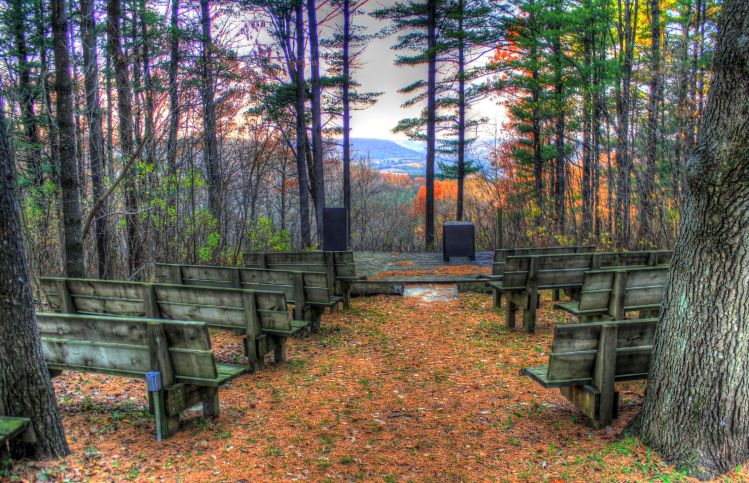
Conservation Education Ironwood Amphitheatre
Food Resilience Education Community Gardens
Technology Tourism SMR
Potential projects for Pinawa.
Pinawa’s greatest source of energy is not Nuclear, but rather it is Human Energy.
Our community has more to offer than the commercialization of Mother Earth. While campaigning I have heard many intelligent ideas from regular people, and after being cooped up for this long, there is a lot of pent up energy waiting to be harnessed. We have an opportunity, post pandemic, to revitalize our community, and the more we get involved the better it’s going to be. We cannot change the wind, but we can adjust our sails. Let’s set our sights on a positive future for Pinawa.
Thank you for your writing and for the work you have done in this community, and for the contributions you are yet to make.
The community over at Pinawa Outpost Facebook Group is excited for the 2021 by-election for councilor of the LGD of Pinawa. We would love to be able to ask you questions and hear you speak at an all candidates night, however with the pandemic that will not be possible. Therefore we have taken it upon ourselves to create a list of questions that we hope you would be willing to answer for us.
By replying to this message you are giving permission to publicly publish your responses. Your responses will be kept intact and will not be altered, only formatted together into a cohesive document.
Please submit your responses by April 30th. We look forward to hearing from you!
Are any of the Candidates bound by Non Disclosure Agreements with either CNL or AECL, and if so how will that effect their role in negotiations with those parties as a Councilor.
I am not bound by any Non-Disclosure Agreements with either CNL or AECL.
Question 2 (submitted by Sylvie Labossière)
Are any of our candidates familiar with the participatory budgeting process? What are their thoughts on this approach? Do they see ways in which this process could benefit a community such as ours?
Thank you for taking the time to write. I am always searching for the newest ideas and best practices for local government. This is essentially the heart of my platform; Innovation. As you can tell, I put a lot of time into the proposals in my blog and I actively engage with commenters. My intention is to always look at the best examples in the world of other cities and towns that are having success, analyze what they are doing right, and determine if that could be feasibly adapted here. I’m interested in any idea that could improve the democratic function of our community.
To be honest, I don’t know much about participatory budgeting process; but it sounds like an interesting concept. Participation is a critical component of democracy. If you think that your idea might be something that could improve the town, give me a call. Make the pitch! I will listen. Maybe participatory budgeting process could work here in some way. We won’t know until we look at it in detail. I will tell you though that as your representative, I am always open to hearing people’s thoughts on positive solutions that could improve things in our town, and will be willing to assist you to build your idea from a concept into a potential reality. This is one way that I will help you, and others participate in the shaping of our shared community.
Question 3 (submitted by Jeff Miller)
What is the biggest issue to be addressed right now, and what is the biggest issue on the horizon to be dealt with?
Bill 64. The current plan as it stands is a bad deal for Pinawa. I participated in the virtual townhall and have reviewed the WSD letter sent to the Minister of Education. After having found out that the Minister of Education has not responded to the grievances laid out very well by our School Trustees in a letter addressed to the Minister, I reached out to the NDP Critic for Education, Nello Altomare. We spoke today and I explained our position and the Master Agreement funding arrangement with the division. I am happy to report that this issue will now be raised by the Opposition when the Government submits its Estimates for Bill 71 Education Property Tax Reduction Act to the House on May 10th. I will do everything in my power to protect Pinawa’s Schools.
Tourism Management Plan. This research project will be conducted this summer and will inform Pinawa’s tourism strategy going forward. This is an extremely important file as it will define the vision for what Pinawa will look like in the future. This is why I am campaigning so hard in this election. I do not want to see Pinawa become Wisconsin Dells. I have a vision for tourism based on education, science, and conservation where the identity of Pinawa is enhanced and celebrated. For more information on this, make sure to read my other articles as almost every one of them relates back to this file in some way. This is the biggest issue on the horizon as it affects so many aspects of Pinawa including…
the SMR. Being able to attract a world class tech company in a very niche, high demand industry, at a time when Governments are investing trillions of dollars in non-carbon emitting infrastructure is an enviable position to be in. This is an important project for Pinawa and I intend to find ways to make Pinawa the most attractive site for Starcore demonstration project, and to leverage the marketing potential of this to attract other complimentary enterprises. (There will be a dedicated post to this project coming out this weekend so stay tuned for that. Sign up for my email list if you haven’t already and it will go to your inbox when it comes out).
Parks, recreation, and infrastructure. One of Pinawa’s greatest assets is its natural areas. These provide animal habitat, recreation and wellness opportunities for people, support active transportation which can help achieve carbon targets, and provide an economic benefit. These areas would be a prime target for further investment. The most livable cities in the world place a high priority on parks and outdoor spaces, and I believe that this is the right move for Pinawa today as it will pay big dividends down the road.
Question 4 (submitted by Alexandra Elizabeth)
What is your plan to address and reduce local crime?
Thanks Alexandra for your question. Public safety is an important issue to me, and I recognize that it is important to you. I know that you are a parent. My kids are 6 and 4 and we all want our children to be safe in the community. There are some behaviours that I am witnessing that are concerning to me. I’ve seen ATVs driving through school grounds. My son was bit by an off leash dog. People driving too fast on the streets, or driving while intoxicated. And we all know, that these unsafe behaviours are not exclusively perpetrated by outsiders! We all have a role to play when it comes to the safety of our community.
You must understand that the municipal government only has so much influence when it comes to policing. That is the jurisdiction of the RCMP. As councillor, in this regard, I can promise you that I will do my best, within my power, to make sure that Pinawa is receiving fair and adequate protection from the police services. I am going to push for more roadside checks during the summer to crack down on intoxicated drivers; that I will promise you.
We all have a role to play when it comes to public safety. When it comes to speeding, driving while intoxicated, locking your vehicle, texting behind the wheel, reporting suspicious activity; every single person reading this has the opportunity to make choices that will either enhance the safety of this community, or do the opposite. I challenge all of us, as Pinawanians, to make a habit of personal responsibility for the safety of others.
Question 5 (submitted by Ashley Miller)
Now that Pinawa is no longer associated with the WRRD (Winnipeg River Recreation District), what are your plans in making sure recreational activities such as soccer and t-ball are available to children of ALL ages in town?
Hi Ashley. Thanks for the question. I 100% agree with you, we need recreational activities in our town. Cameron would love to play soccer! I’m not sure what the council’s plan is currently to replace the disassociation with the WRRD. I would certainly be willing to take on that portfolio at the committee level to get this off the ground. Affordable access to a variety of recreational activities is very important to me. I will promote accessibility as much as possible as it is my belief that a child’s participation in extra-curricular activities should not be limited by their parent’s pocketbook. One of the biggest hurdles with these sports and activities, however, is finding volunteers to help run them. I’m willing to step up to the plate and take the lead on this, but only with a team of motivated people can we make an awesome recreation program for everyone in Pinawa! Not just the kids, but adults and seniors too because it’s been a hard year and we need some fun time too (following safety guidelines of course)! I am excited for the opportunity and I hope you are too.
Question 6 (submitted by Zane Grey)
Tourism is being pushed at significant cost to taxpayers with exponentially less income to the town coffers. Is any thought being given to recouping these losses? And has any consideration been given to those who do not appreciate the impact on the community – the crowded beach, trails and channel, and the significant increase in garbage?
Hey Zane. You’re asking if any consideration was given to those who do not appreciate tourism, you’ll have to ask the current council that, I can’t speak for them. I can only speak for myself, and I will tell you that yes, I do consider those who do not appreciate the impact on the community. Throughout this campaign I have been talking to people in the community and I hear a lot of flak about tourism/tourists. When I speak with them though, I find that what they are actually concerned about is not tourism per se, most of us recognize that diversifying the economy is a good thing, but people are concerned with what tourism in Pinawa will look like and the effect it would have. They are concerned that their community, our community, will lose what makes it special in order to make a buck. Is this a choice between preserving the identity of the town and economic growth?
What if I told you that we could have both?
There are different types of tourism my friend. I don’t want to see Pinawa turn into Wisconsin Dells. We don’t need to! There are a lot of places that already market to that demographic. When you’re marketing something, you want to stand out from the crowd. You know what type of place I like to visit on vacation? Pretty, quiet, little towns and neighbourhoods! I like parks, and nature, and educational activities, and bike riding trails, and community spaces and gardens. There is a whole market of people who like to do things like that, and they are underserved in Manitoba and their money spends just as good as anyone else’s.
The town currently is planning on charging $10 for parking for visitors at the end of 211 and the suspension bridge (possibly the launch as well). I’m sure you’ve seen how many cars are there. Maybe 200, 300+ on a busy day? You do the math! That’s basically what I pay in property tax in a year the town will generate in one day from parking. That’s a lot of cash! We could put that money to good use. I understand it’s annoying, I really do. As councillor I am going to do everything in my power to ameliorate the logistical issues. But unless somebody comes up with an easier way to make that money, we’re going to have to work with this. Given the choice, I’d rather charge the tourists than pay more on my property tax bill!
This just accounts for direct fees charged by the LGD for parking, and does not include dozens and dozens of people who are directly employed by the outfitters and operators.
This year, Pinawa is working on a tourism study in conjunction with researchers from the University of Manitoba. This study will analyze the community and there will be an opportunity for public feedback. The results of this study should be ready in Q4 and will then be used to inform council on its decisions going forward. I will tell you right now, we need someone at the table that has a vision that fits with the identity of this town. That’s why this by-election is so important. I work for VIA Rail Canada. I travel to cities and towns across Canada with tourists from all over the world, I understand this issue. My interest is in the long term sustainability of this beautiful town that I love and protecting that which makes it special.
To be perfectly clear. I am not anti-tourism. I am not anti-float or anti-water park. I believe that these projects can and do fit in with the Pinawa model, and in a few years we will come to accept them and hopefully embrace them. I am taking steps already through PCDC to encourage all of these companies to improve their business practices relating to conservation. That being said, I do think it’s time to switch gears. Pinawa needs a tourism plan that clearly defines where we want to go from here, and I do intend to promote a change in direction. A lot of the issues we are seeing in the past couple years are not tourist issues, but rather infrastructure, logistical, and organizational issues. As I’ve said in almost all of my posts, we need a streamlined system of revenue capture to provide a direct benefit to the people. I am a very systematic and meticulous person. And I am going to push council on this. I will be open about my work on this project, and I believe that people are truly going to get behind it.
I understand your concern. The last couple years have been interesting to say the least, we’re seeing changes and challenges, and the communication from council could certainly be improved. I am here to tell you that it can be different. If you would like to discuss this further, please reach out. Thank you for your question.
Question 7 (submitted by Alexandra Elizabeth)
What is your stance on transparency with citizens regarding subjects such as proposed developments and household water quality?
My intention as councillor is to be as transparent as possible. I intend to hold my colleagues to account as well as openness is a critical element of democracy. My website will remain active the entire time I am councillor and I will post regularly if there is interesting stuff that I think the people might want to weigh in on. I did talk to the mayor on the phone after the last council meeting where the protestors showed up to the municipal building (I was at that meeting). During our call I mentioned to the Mayor that a lot of the protestors made it pretty clear they felt there was a lack of transparency in the process regarding the parking lot issue. While I appreciate that the councillors and mayor have their phone numbers available and the minutes are posted online, to be quite honest, they’re not always easy to read. It is necessary to use a lot of technical language and legalese in government documents, and that doesn’t make it very accessible to the average person. I asked about the feasibility of writing a document, in plain english, to summarize important issues from the council meeting to be more accessible to the average citizen. I am happy to say that if you go on to the Pinawa website you will see a new feature called council highlights which does exactly that!
While I can promise to be as transparent as possible, democratic participation is a two way street. Some people would say if you don’t vote you can’t complain. I say we need to take it a step further than that. We all need to put in effort to stay informed. I know it’s not always easy, or hasn’t been in the past. There is the quarterly newsletter, the council highlights, and my website. I promise to share everything that I can. Some things as councillor you just can’t because of non-disclosure or other reasons, but I will make sure that privilege is not abused. I have posted my whole platform online for you to see. Please read it. Please read the other candidates as well so that you can make an informed choice!
When it comes to proposed developments. There is a process that needs to be followed. There are zoning by-laws, development plans, secondary development plans, rfp’s, different regulations involving different levels of government. As councillor, I intend make sure the process is followed. Some things require public hearings, others don’t. I don’t think that we want to get in the habit of having a referendum on every project, but my intention is to keep people in the loop and listen to people’s concerns, to build trust in the government.
As for water quality, that’s maintained by public works and is, as you can imagine, a very regulated utility. As councillor, my expectation is simply that the department follows all regulations that are required of them. If you have any specific questions about that, you should contact the LGD office.
Thank you for your question!
Question 8 (submitted by Patty Drew)
I would like to know their opinions on how close to tourist capacity Pinawa is.
That’s an interesting question Patty. Before I could answer that, we would need to agree on a definition of what tourist capacity even is. My travels take me often through Jasper, Alberta. It’s a town of about 4000 people, a bit larger than Pinawa, but not by an order of magnitude. They welcome MILLIONS of tourists every year. You walk around the townsite, it’s nice! Downtown is busy when the train comes in of course, but they have trails in the woods behind the town just like us and I’ve hiked them, never had trouble with over crowding whatsoever. Now I recognize that some people would say that Pinawa is way over capacity already. It’s somewhat subjective and I am not advocating for millions of people to come here; just to illustrate that “capacity” is determined by a whole host of variables.
The most truthful answer anyone can give you is somewhere between: “it depends” and, “we don’t know”. That’s the truth! We don’t know because we don’t have good data. Our issue now is not so much about capacity as it is about logistical organization. Pinawa has been working on an ad-hoc basis and been forced to be reactionary. To be fair to our current council, there were issues such as non-ownership of the 211 highway and the unexpected mass increase of local Manitoba tourism due to Covid-19 that made the management of the situation pretty challenging, and quite honestly, I think they did a decent job all things considered. I do believe that my degree in politics and my decade of work aboard a Transcontinental Heritage Sleeper Train would be helpful in this regard.
That being said, this is an important by-election because this year we will actually beginning to do a proper study on tourism in the community, with the help of researchers from the University of Manitoba. This report will be completed in Q4 and will inform the decisions of council regarding tourism for the next 5, 10 years or longer. I am an analytical and methodical person and I want this done right. I want the data. In terms of importance for the community, this is the most important project in a generation. This project will literally lay the groundwork for the expansion and management of what will be a critical economic sector (second only to CNL, for now) that affects almost every aspect of our town, including the SMR (It’s a demonstration reactor). A lot of these decisions will have already been decided before the next general election in October 2022. That is why I am campaigning so hard in THIS election. We need a new voice in council, now. One that understands that we are at a juncture where in this next year and a half, we will be making a decision on the vision of Pinawa that we want going forward. Please, take a look at my website so you can learn about my vision for Pinawa, and if that inspires you, then make sure to make your voice heard loud and clear on May 5th.
Thank you for your question.
Question 9 (submitted by Janet Lamb)
Who will be responsible to enforce safety protocols ie. physical distancing, sanitizing equipment at beach park and water park, and controlling number of admissions to avoid over crowded channel float. ?
Physical distancing rules and limits on gathering size is an order of the Provincial Health Authority and enforcement is done by police and personnel authorized by the Provincial Government.
Maintenance of equipment at the beach is the responsibility of the LGD public works as it is town property.
The water park is a private business and must abide by regulations set out by the Provincial Health Authority.
Nobody controls the number of admissions to the Pinawa Channel as it is a public area and waterway. Some may believe that the float operators are charging admission but this is incorrect, they are providing the rental of a tube and transportation services.
I am glad that you are concerned about people following the covid-19 safety protocols! It’s important that we remain diligent. Pinawanians in general took this seriously and because of that we have been lucky to not experience a mass outbreak in our town which could have been catastrophic for our senior population. Something to keep in mind is that by the time the float is open for the Summer, the vaccination program should be very well established and restrictions may look quite a bit different than they do now. I for one am looking forward to that!
Thank you Janet for the question.
Question 10 (submitted by Steve Czarnecki)
With the upcoming waterpark concept it will undoubtably attract much larger crowds .was their any consideration to the need for the need of increaing sanitary facilities ? Increasing the numbers of porta pots would just be archaic as we have seen all too well the condition of how well this has worked at the main marina and other areas of town where these are located
.they are just discusting at times of heavy usage .I feel sorry for the people trying to enjoy a lunch at the picnic tables at the Burger boat when the stench wafts over them with wind gusts. The trash containers are always filled to the point of overflow and the porta pots located there are not oriented properly as the doors swing open into the staging lane where people are launching their boats. The fact that the trail exits there is .also a great safety issue that is never discussed
I have seen persons mostly women in need of having to use these porta pots open the door and back away and heard them say no way and comment how such a nice town be so inconsiderate or the lack of better facilities. This by no means is a way to promote tourism. What is needed first and foremost prior to creating all these attractions is to install the infrastructure prior to the added enticements. After all you do not build a Walmart or a Costco first and put in the water and sewer or parking layer. Do the planning first before sticking a shovel in the ground.
Hi Steve. Thanks for writing. There’s a lot to unpack here. I get the impression that you are concerned about the state of toilets in public areas. I hear you! I’ve gone in there before and sometimes they are nasty! If we as a town are going to put up public toilets, (which are necessary for health reasons, obviously), you’re 100% correct there needs to be a maintenance program in place! Whatever the plan was previously, clearly, it wasn’t good enough. We can improve on that.
Your question in the first paragraph “was their any consideration to the need for the need of increasing sanitary facilities ?” That’s a question for the current council as I wasn’t there. However, one thing that you will probably be happy to hear is that council has put out an RFP for development of a 4 season public toilet facility near the marina. This was discussed at the April council meeting which I attended. I support the construction of this as it will be good for warmer months as well as the ice fishermen and skating rink users in the Winter. This will improve the sanitation issues you are concerned about. Take care.
Question 11 (submitted by Libby Crust)
Tuesday evening Mayor Skinner announced plans for the proposed water park were still in the feasibility stage. A parking lot for this project still needs to be organized.
As this project (waterpark) for Pinawa is not a done deal where do you stand on this proposed project?
How would you vote – For or Against?
Hi Libby. Throughout my campaign I have said that my intention is to be able to explain my rationale for voting for something or not voting for it. It would be irresponsible of me to commit one way or the other to voting for or against anything without having seen the evidence! To do otherwise would be to abandon rational analysis and good governance in favour of populism and cheap political points. I will not do that.
I’m afraid that the information you have may not be entirely accurate. I was at that meeting on Tuesday, saw the protest, and called the mayor the next day. I did see a few weeks ago that the waterpark was going through it’s Federally Mandated Public Review from Transport Canada. From the information I have, Hoopla Island has fulfilled nearly all of their regulatory requirements and has a Memorandum of Understanding approved by council (I confirmed this Monday with the Mayor directly). The project effectively is a go, and there will be no further vote on this issue.
The parking lot project is not currently on the books and will not proceed this Summer. This will have to be revisited after the tourism review is completed and townwide parking planning solutions can be studied in full. More information on this the would then be available.
For more information on upcoming projects in your town, be sure to read the quarterly newsletter, check out Pinawa.com for the council highlights, and visit my website at michaelkingpinawa.ca.
Question 12 (submitted by Donna Warenko)
The image in my mind of a future Pinawa includes a downtown area, with a few small shops, a place for the art gallery downtown, a pub, coffee shop … Do we have any master plan for an expanded downtown area? Are we collecting data from our recent boom of tourism that we could use to attract developers to build and entrepreneurs to open shop in the core area around the mall and marina? Is this something a new candidate might find useful?
Hi Donna. The image you describe sounds amazing! It reminds me of Deep Cove, BC. You might be interested to know that the LGD has put out a request for proposal for the development of Mitchener Road between Vanier, Bessburough, and Burrows. This development will be the prime piece for Downtown development in Pinawa. If elected, I would be reviewing this RFP along with the rest of council, should any proposals be received (as of the last PCDC meeting, there were no applicants).
You ask about development plans for Pinawa, yes, there are some plans. Most notably would be the Pinawa Primary Plan and the Secondary Plan. I was at the open house a couple years ago for the development of the Secondary Plan, and it’s a good tool. In 2021 Pinawa will be conducting its tourism study in conjunction with researchers from the University of Manitoba. This document will also inform the development plans of the downtown area.
I want to stress something. The development of Michener road is a critical, cornerstone project for the community. We do not want to get this wrong and end up with a lacklustre development. For all the amazing qualities that Pinawa has, there have been some missed opportunities, mostly due to the way that AECL divested themselves of property once upon a time. We cannot afford another one. Mitchener Road is one of the few prime locations where the LGD has the land rights to development. That means we have control. I can tell you that I will not accept any proposal but an amazing one.
Conceptual drawing of downtown Pinawa from 1992
I want our downtown to be beautiful. I envision a planned street that’s pedestrian and bicycle friendly, with cafés, patios, local shops, boutiques, parks, and galleries in mixed commercial/residential buildings. I see hanging flowers and ornamental street lamps, bicycles and street vendors, kids buying snacks, young couples out on a date, seniors hand in hand in the park. I will not accept anything less than a stunning, modern, inspiring urban design that we can all enjoy and be proud of. That’s what I see. That’s the vision I intend to bring to the council chambers of Pinawa.
Thank you for your writing and passion for the community.
Thanks to everyone for your questions and participation.
I would like to share with you a question posed to me by a the Pinawa Friends of the Trans Canada Trail. The volunteer group has invited me to post this here so the public can better understand my position on this issue. You can read the question, and my response below.
These questions are posed on behalf of Pinawa Friends of the Trans Canada Trail.
What do you think are the benefits, economic and otherwise, of having the Great Trail in Pinawa, and how should Pinawa Council help to sustain this largely volunteer-supported asset? If you were the Council representative to the Pinawa Trails Committee, how would you ensure that (a) communication remained open between the trail volunteers and council, and (b) trail use is compatible with the purpose of a given trail?
Respectfully submitted,
P. T.
Secretary, Pinawa Friends of the Trans Canada Trail
My son and my cousin hiking in Lynn Canyon, BC
Good day, friend.
Thank you for writing to me about an issue that is very dear to my heart.
Allow me to introduce myself. I was born here in Manitoba and my parents started me camping before my first birthday. When I was little I explored the sand dunes of Spruce Woods and some of the little trails in the Whiteshell and other Provincial Parks. My school was just outside Bird’s Hill Park and we would regularily get field trips there to ride bikes on the Chickadee trail and the beach loop. My family had made a quarter mile long trail running through the woods from my house to my aunties place and on to my grandparent’s house, which my brothers and I would use to go visit them.
As I got older, my love of trails did not diminish. My friends and I planned canoe trips and hiking trips in the Whiteshell and in Nopaming. I’ve hiked the trails around Jasper the few occasions I’ve had the luck of getting a train layover in the park. I’ve hiked the Baden Powel Trail in Vancouver and done the Grouse Grind. I’ve cycled the entire waterfront of Toronto and circumnavigated the Stanley Park Seawalk I can’t even tell you how many times. Walking or cycling is my preferred method of visiting a place. My dream vacation is to go to Québec again with my family and our bikes to cycle la Route Verte, and also the Confederation Trail in Prince Edward Island. Other top picks are Acadia National Park in New England because of its beautiful sea side carriage trails.
So I can tell you that yes, trails can drive economic activity. They are tourist attractions in an of themselves, and people will travel in order to hike them. As I’m sure you can attest, members of the Pinawa trails groups also enjoy travelling to other locales for eco-touristic activities such as hiking, birding, and biking as well. According to studies done on the economic impact of community trails and the economy:
A 2018 study of Helena, Montana’s trail impact revealed a $4.3 million annual impact for the town of 31,000 residents.
Outdoor recreation now outpaces the oil and gas industry in economic impact. The outdoor recreation industry is built on trails, making trails an important economic driver.
Properties near trails increase in value.
Trails both drive tourism, and make communities a more desirable place to live.
Trails create jobs. Pedestrian and bicycle infrastructure projects create 8–12 jobs per $1 million of spending. Road infrastructure projects create 7 jobs per $1 million of expenditures (Garrett-Peltier, 2011).
For every 1 dollar spent in trails, there is a 3 dollar savings in healthcare costs.
More overall physical activity is measured in communities after trails are built.
Cardiovascular benefits are seen across all trail user types. This means healthier hearts, and a reduction in preventable disease, for trail users.
Commuting by foot or bike gains popularity when trails go into a community. This both reduces traffic and creates a healthier more physically active community.
Stanley Park Seawall, Vancouver
Shore of Hudson’s Bay, Churchill
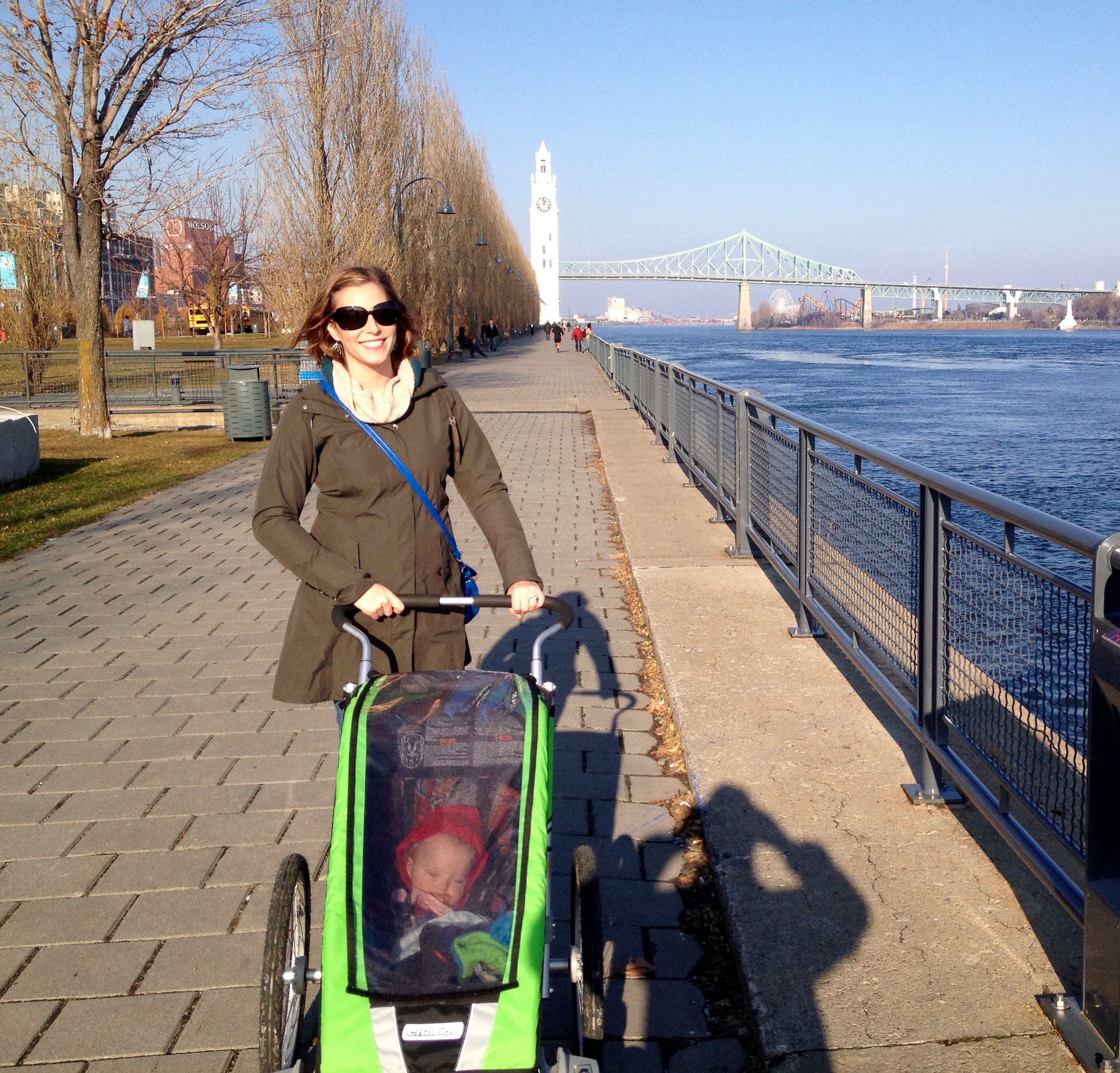
St. Lawrence Riverwalk, Montréal
Trails are a critical piece of urban infrastructure, and they should be allocated resources necessary to to maintain safe and positive access for all.
How do we accomplish this?
I have reached out to several members of the Trails organizations already. I’ve been in talks with the PCDC and with our Economic Development Officer Ben Shantz, and I have been clear and consistent in my stance. The trails and public open spaces of Pinawa provide a direct benefit to the tourism and accommodation industry. However, they are maintained by volunteers, public servants, and tax dollars. I believe that a critical element of the much needed tourism plan (2021) for Pinawa must include a streamlined system of revenue capture that fairly reflects the increased use of these public assets. There are a number of different ways this could be achieved, such as charging for parking, accommodation tax, or point-of-sale levy on tourist activities, or others; any of these will have to be studied in depth before implementation to ensure the best fit for Pinawa. To be clear, we welcome ethical businesses and their customers, to enjoy pleasant recreation in the public areas of our community environment. Simply put, more users requires more resources. However, more resources can open more opportunity! With this in mind, the revenue generated from this system would then be earmarked to a great extent into financial support and improvements for public amenities such as parks and trails.
This is a critical time my friends. The post pandemic economy will bring unique investment opportunities to communities. Pinawa is still trying to figure out how tourism works, and right now, it’s not going as well as I would have hoped. There is an emphasis on development and growth from tourism businesses in town, but first, we as Pinawanians need to decide what sort of community we want to promote. My vision is inspired in education and ecology, Fort Whyte Alive and Oak Hammock Marsh. As councillor, I will fight to protect and enhance harmony of humans, science, and nature. The decisions that will be made this year will set the course for Pinawa for years to come. We need a strong voice at the table that sees protection of trails, parks, natural areas, and public access as keys to our future!
Recently, I was on a phone call with a citizen, who seemed resigned that Pinawa was “changing” but seemed to accept this with a shrug saying “that’s what the young people want, I suppose”. I disagreed with her on that. I told her that people love Pinawa for what it is, and for what it could become. With new eyes, we see the potential in the maturation of our community. The reason I am here writing to you today is because of the respect I have for the work that people like yourself put in before! I recognize this. I’ve heard many times from our great volunteers that they’re “getting older” (which tends to happen to us all, oddly enough). It’s true, we need more engagement from the younger generation. That’s what I am doing in this campaign. I can tell you that based on the traffic to my site, and the response that I have received from people of all walks and ages in town, there is energy here. And I intend to be a leader that brings us together as a people, to accomplish great things. When I cross the suspension bridge, ski the Red Trail, or walk the Ironwood I think of the vision of those before me, and that inspires me to be the change that I want to see in my community.
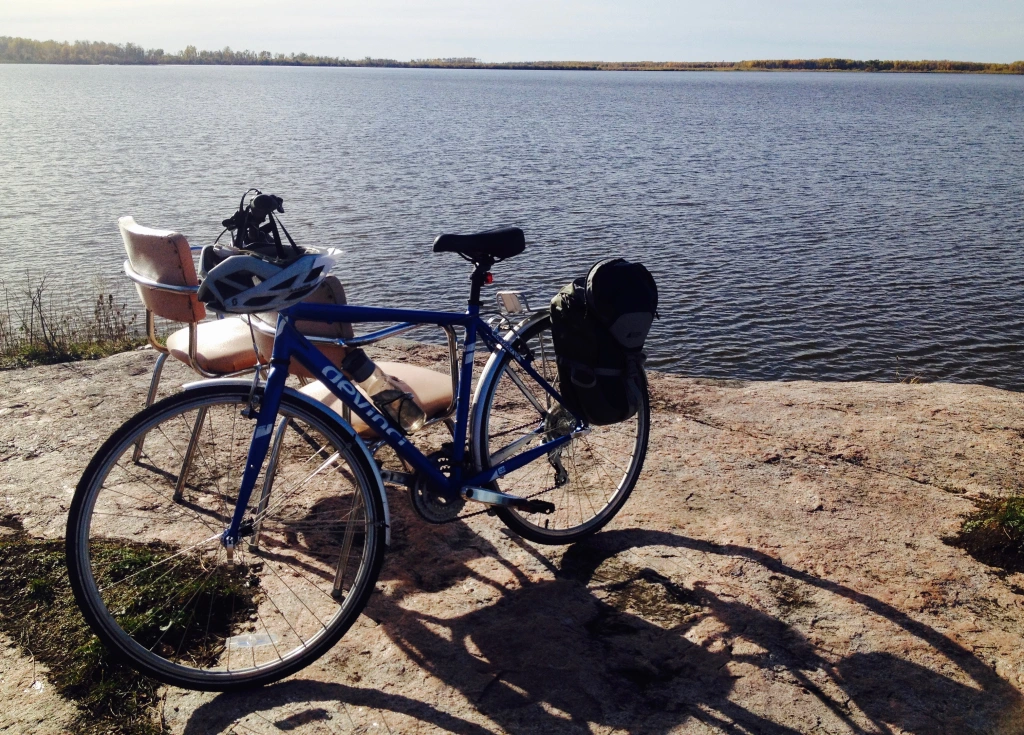
My wheels near the TCT in North Whiteshell
You ask if I were chair of the Trails committee (a portfolio I would welcome) how would I ensure communication between myself and the rest of the committee. First I would say, consider the words in this letter and my other pages! I plan to continue to host this site and be open about my work as councillor. I’ve received a number of calls from Trails members, and we had some long and engaging conversations, just ask your friends. When it comes to committee work, I served as co-chair of Via Rail’s On-train Health and Safety Committee for the Western Region, representing hundreds of on train personnel, over thousands of kilometres of track, from Toronto to Vancouver to Churchill. While co-chair our committee was evaluated as one of the tops in terms of performance. I run a clean ship (or train).
As a member of the Whiteshell Ski Club, I understand that there are issues with multi-use trails. I’m not going to tell you I have all the answers to that, because none of us do. But I do believe that there is a solution to be found. It’s not going to be easy, and it’s going to involve some compromise by all parties, there’s no way around that. We need to remember that the intention of the Great Trail is to be inclusive and accessible to all, and it is our job to find a solution to better facilitate the shared use and enjoyment of this amazing public asset. I am ready and willing to step up to the plate to facilitate this conversation.
I believe that parks and trails add a tremendous good to the community. As councillor, I intend to work to develop a comprehensive park and trail strategy for Pinawa. A plan that recognizes, in ink, the importance of these invaluable assets, and secures and sustains our natural environment for future generations to come. Investing in our parks, greenbelts, and trails is an investment in the health of the economy, it is an investment into the health of the people, an investment in the future that we can begin together, today.
A place where you find yourself when you need to lose yourself
Hello Friends, thank you for being here.
In this post I’ll be taking a break from my typical policy issues, and instead writing about a passion of mine, in hopes of giving you a better understanding of the type of person that is Michael King.
(If you are looking to read my detailed platform, click here).
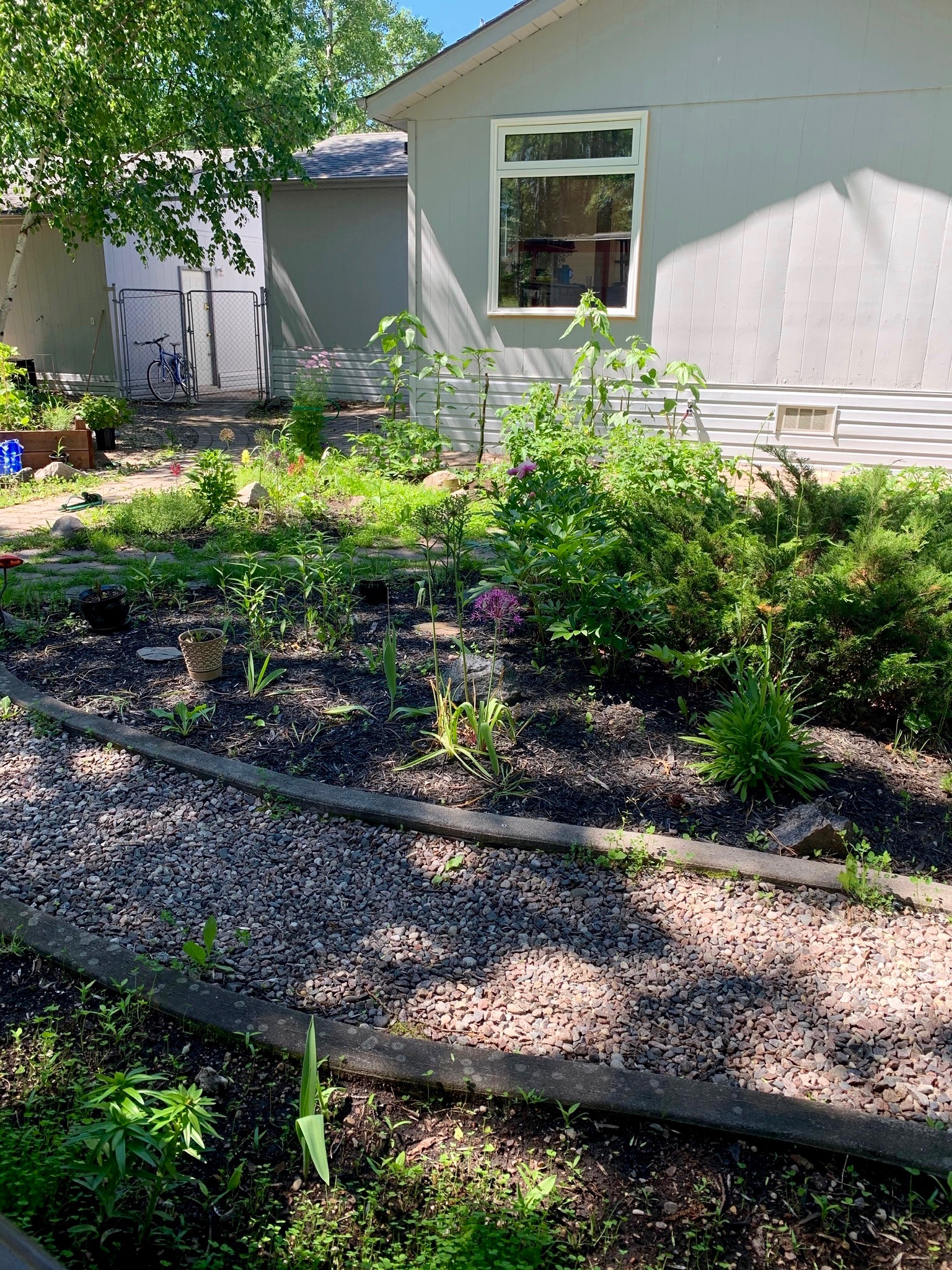
Early Summer in the King Garden
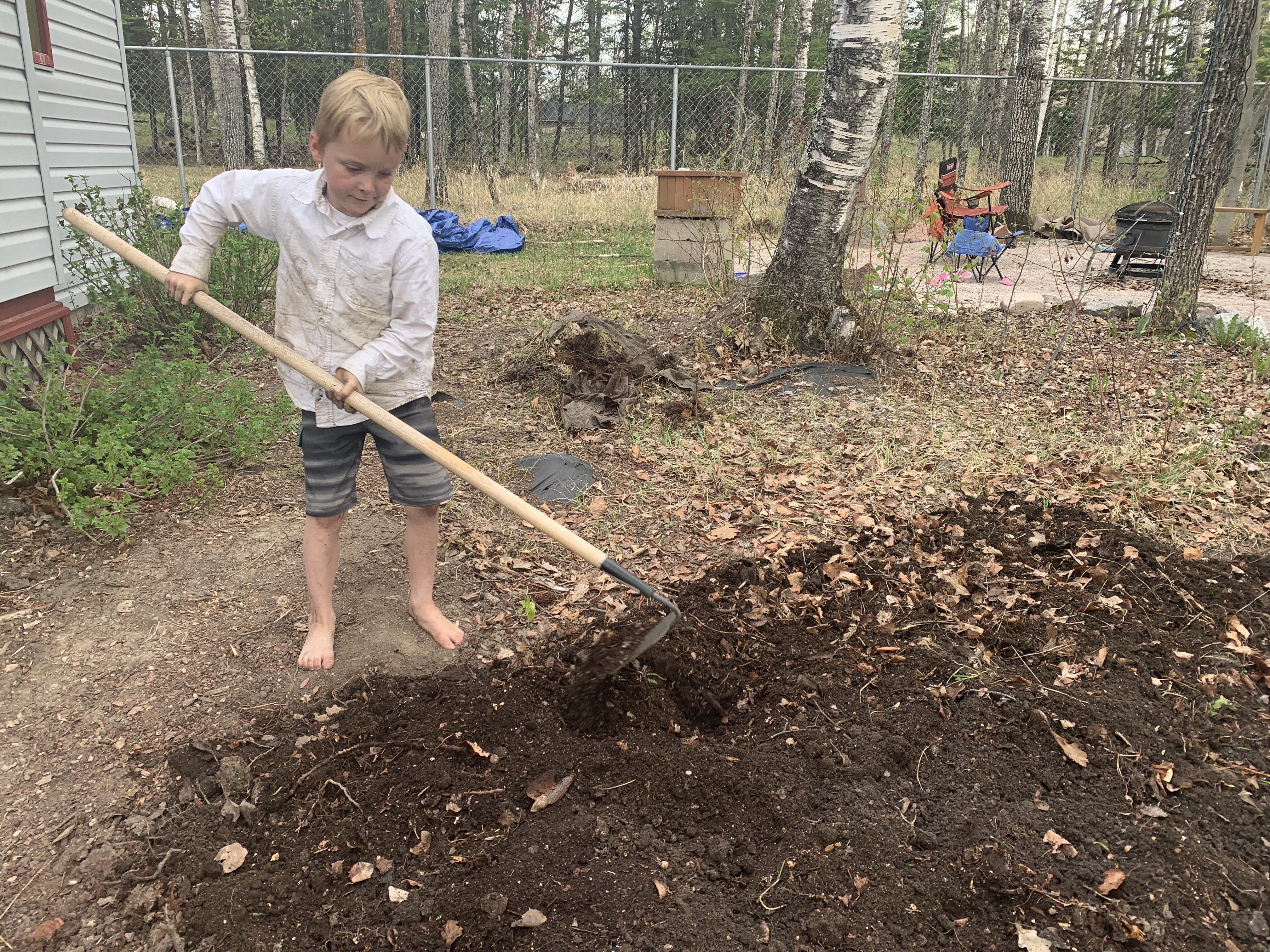
I inherited a love of gardening mostly from my Mother’s side. My family’s land was half a country mile long and most of my extended family lived on it; us, uncle and aunty, grandparents, great grandmother, other aunty, six cousins. My grandmother always kept massive gardens; a huge veggie patch in the back and whimsical flower beds in the front. If we wanted a snack we would go dig up carrots from the earth or pick peas and beans off the vine right into our mouths. Now, my kids do this in our backyard Pinawa paradise.
This boy loves his carrots
There are a lot of aspects to gardening that I really enjoy. Designing a garden is both a science and an art. There is planning and there is experimentation. There are so many variables to consider, light levels, soil type, crop rotation, and drainage. Then when it comes to plants you must consider the height, the spacing, colours, bloom time, how they spread, how they look and behave with other plants, attracting birds and polinators, if the animals will eat it or not, so much!
I think about the gardens on different levels of scale, sometimes considering the entire yard a whole, sometimes an area, sometimes down to an specific garden bed. And of course you always have to stop and consider each plant as an individual, is it thriving, or does it need help?
Meadow Sage
I have always loved design, and the garden allows for nearly unlimited expression of creativity. Perennials and permaculture are always present. Thoughtful placement of rain barrels saves money and effort for watering, wind chimes and grasses add an auditory element to the experience. We harvest fruit and vegetables from out garden with edible landscapes. Planting scarlet runners along a fence will give you nice red flowers and a wall of delicious fresh beans. Last year I finished training several grape vines onto a reclaimed arbor. Hopefully this summer the vines will bear fruit. I haven’t decided if I’ll use it to make jam or wine.
Overflow from the rain barrel now trickles through this Japanese inspired riverbed.
My Dad is a craftsman and master tile installer. The luxurious flooring of Pinewood Lodge at Dorothy Lake, including the foyer and pool, is an example of his work. He would say if you’re going to build something good, take the time to make it also look good. Functionality and aesthetics are not mutually exclusive, the best designs marries both elements into something beautiful and useful.
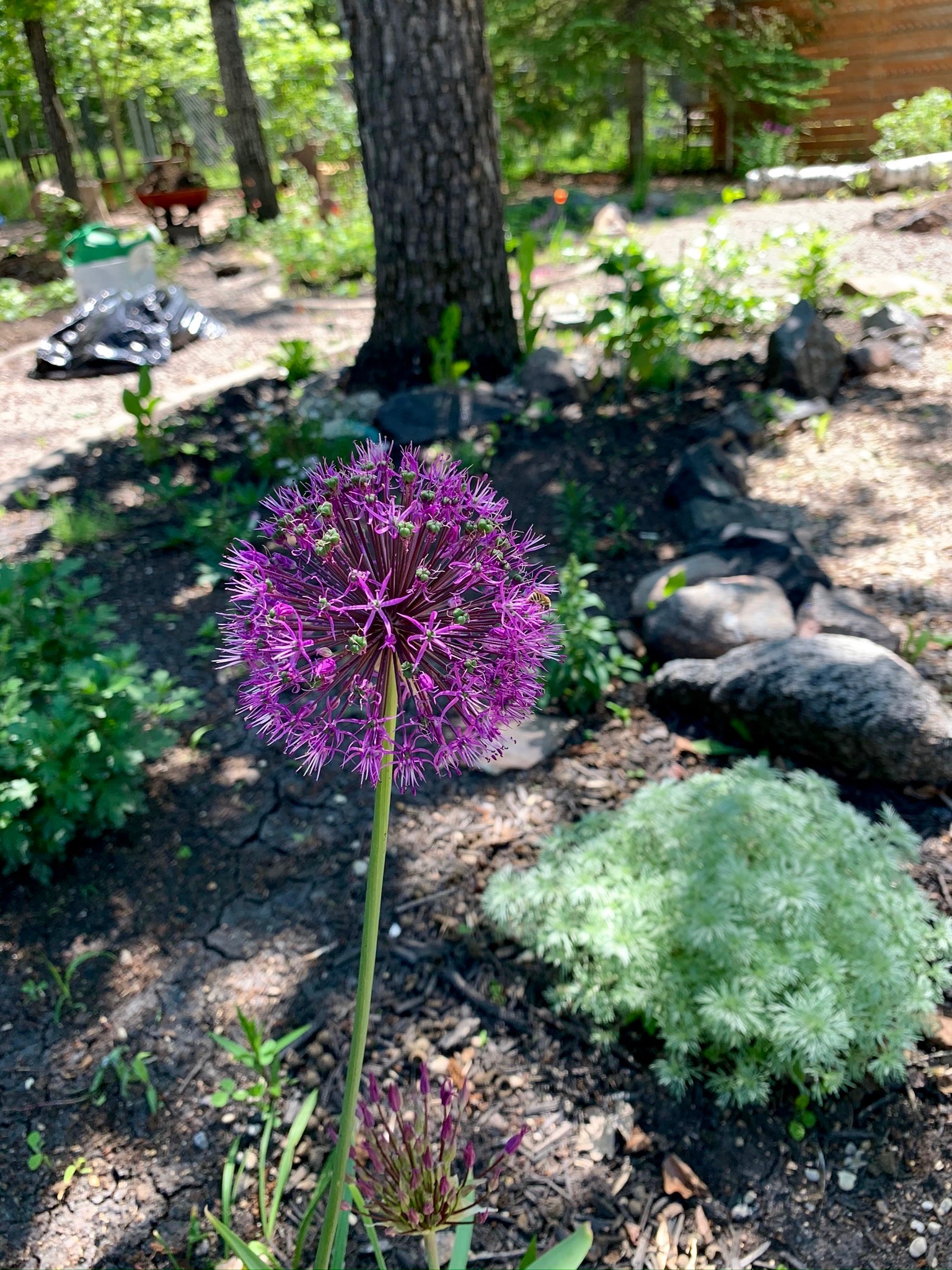
Allium
My focal garden project for this year an homage to my grandmother. I plan to clone and transplant a host of her favourite plants and flowers from back home in Cooks Creek into a new garden bed here. She has quite the collection of Bleeding Hearts of varied colours. I plan to put this bed somewhere with a nice view of the reserve to watch the deer and the birds which she has always loved to do. We’ve been saving seeds from her tomatoes for years, last year the plants were taller than my children!
One of the most delightful things about a garden
is the anticipation it provides
I’ve had this African Violet for 9 years.
I would like to see Pinawa enter into Manitoba Communities in Bloom. Our town hasn’t participated in this since 2001, where we received a score of 3/5. By participating we would organize a community effort towards beautification, cleanliness, sustainable management practices, and promotion and protection of natural areas. Judges would come in late summer and take a guided tour around town with an official Pinawa delegation. We would then receive an official score on a whole range of metrics. This would be a good tool that would help inform Council and community groups on areas for improvement. Not to mention the extra benefit of motivating citizens to get out and get involved, especially after the winter we’ve had this year. If you like this idea, leave a comment or send me a message!
Planting time
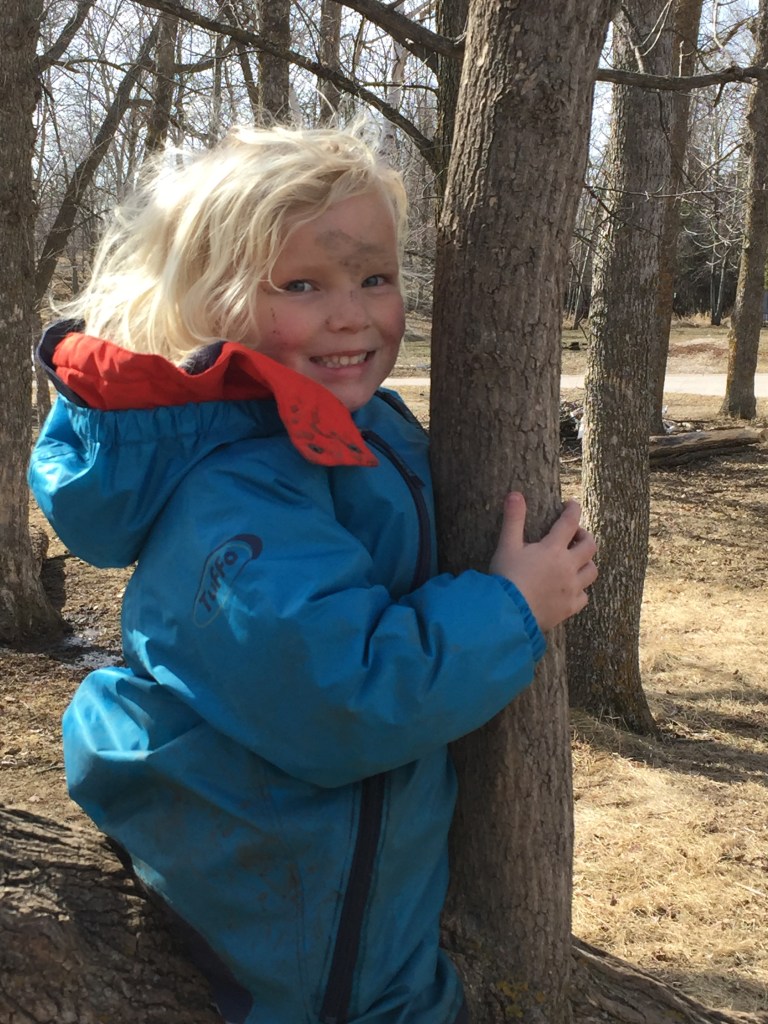
Tree Hugger
Strawberries
Friends, I hope you have enjoyed this very floral edition of my blog. If you are inspired to get more plants for your garden, make sure to check out the local greenhouses in our area, and even ask your neighbours if they have any seeds or plants you can trade or share. Heck, if you want an African Violet like mine just ask! Enjoy this early Spring, and remember to vote on May 5th. Be well.
The greatest gift of the garden is the restoration of the five senses
There are many benefits to gardening for you, your family, your community, and for the planet. If you would like to see greater accessibility for community gardens for families and for seniors in Pinawa, send me a message or leave a comment!
I received a question by email yesterday from a citizen of Pinawa. This person has asked me to post the question and response online so other voters can understand who is Michael King, and what does he stand for. If you too would like to ask me a question, go to my contact page. I’ll get back to you as soon as I can. Thank you for being here. Enjoy the read!
MGK
Message: Would like to know your stand on the waterpark that is rumoured to be coming to town. For or against? If for, what would your strategy be to manage parking for vehicles to prevent same from encroaching into residential areas?
What would be your plan of action in attempt to attract developers to build commercial buildings for small business entrepreneurs to lease?
Regarding non-residents using boat launches and public docks at no cost to them (that Pinawa tax payers pay to maintain and operate). Would you like to see a fee implemented for non-residents to launch boats? Or do you think that would negatively impact tourism? Interested in your opinion if some of these costs should be put back on the tourist rather than all on the taxpayer.
Thanks!
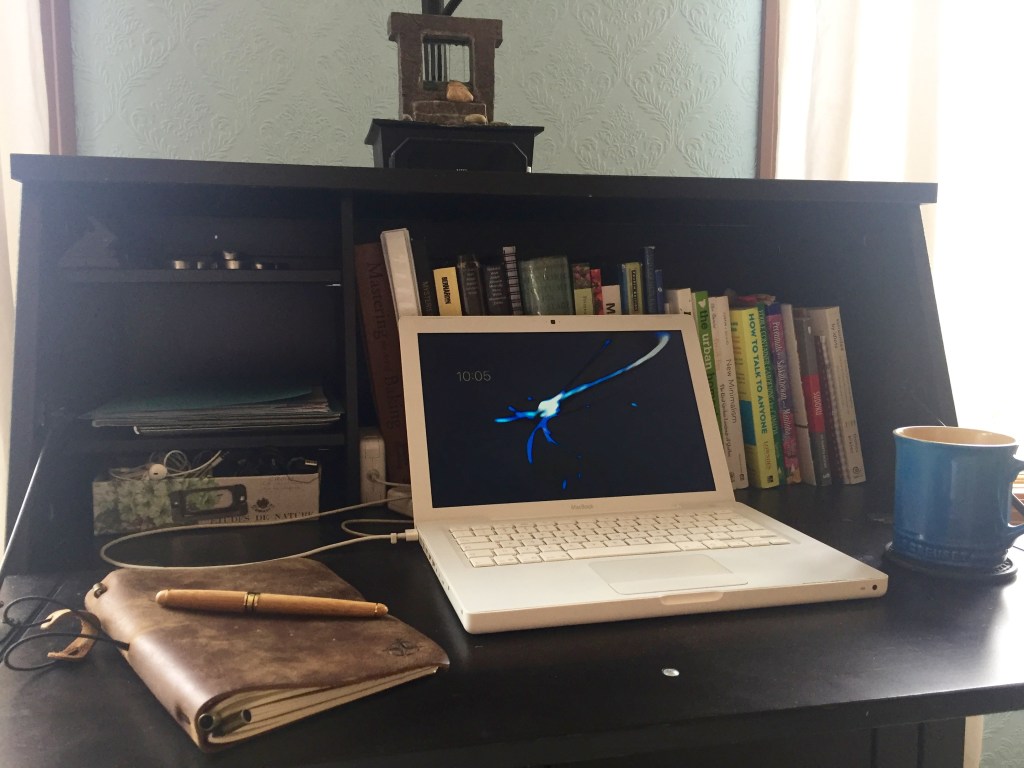
This is my desk.
Dear D,
Thank you for writing.
In order to provide a suitable environment for business development, you need a fair regulatory and approval system. The job of government is to facilitate this framework. Such a framework is a like a web with jurisdiction at the municipal, provincial, and federal levels. Elected officials make the laws, and the civil service applies them. I believe in having a strong regulatory framework and legislation that protects the interests of the people and the environment first and foremost.
If you want to open a business in Winnipeg, you don’t go directly to the Mayor’s office. You call 411 for the appropriate departments. You do research on the by-laws and regulations, look for available grants, follow the necessary review processes (if applicable), and get the paperwork done. Whether you’re a big city or a small town, the principles are the same.
Pinawa needs a Tourism Development Plan that incorporates all related elements of the industry operations within the town. Recently, a study has been initiated to develop such a plan with the help of consultants from the University of Manitoba. This would of course include areas around the channel, the suspension bridge, golf course, beach, marina, parks, campgrounds, parking lots, and boat launches. A comprehensive strategy would include enhanced planning solutions for traffic, parking, and transit that is townwide in scope. The final document, which will hopefully be in it’s final draft in Q4 2021, will be compatible with the Pinawa Development Plan and Secondary Plan. The problem we have been facing thus far, is that without such a plan, decisions were being made ad-hoc.
While this Tourism Plan is in its developmental phase and during the implementation phase, I intend to ensure the protection of public assets within the plan. Many of our greatest attractions to Pinawa are not businesses at all; they are the public beach, the iconic Ironwood Park, the public docks, the postcard-ready suspension bridge, and our beautiful network of trails. These jewels of our town are for the enjoyment of all citizens. Although these resources provide recreation opportunities for visitors and guests, the cost of maintainence is borne by the town and dedicated groups of volunteers. They do not have the capacity to support the growing usage and will require additional resources. This should not be the sole responsibility of the Pinawa taxpayer or volunteer groups.
One of my priorities with the Tourism Management Plan is to develop a streamlined and efficient system of visitor based revenue capture for the town, so that residents of Pinawa see a direct benefit from visitors who use public lands, resources, and facilities. Perhaps that would include charging for use of the launch, maybe not. Charging for parking is an option, as well as a sales tax or levy on visitor activities; but again, until we have solid data and a complete plan, sometimes what seems like the solution can actually create more problems. We need a comprehensive plan, otherwise we’re just playing a game of whack-a-mole. Some of this revenue would be re-invested in supporting the infrastructure surrounding the tourism industry, but a significant portion should be earmarked for investment into our public recreation areas, parks, and trails.
You are absolutely right, there is certainly a need for more commercial space in Pinawa. In talking with members of the business community, it has been expressed that there have been some prospective businesses that were frustrated by the Council process. Such sentiment could have a chilling effect on attracting future investment. We should be wary of turning any enterprise into a political football. A prospective business should primarily be dealing with the EDO, who would direct them through the regular approval process, conforming to all existing by-laws, municipal/provincial/federal regulations, public review processes, and permits. That process should be handled by the civil service, not the politicians. In the interest of efficiency and transparency, I believe it is crucial to have clearly defined rolls and responsibilities for Council, the Resident Administrator’s Office, and the Economic Development Office.
Yes, depending on the scope of work for a new business, council may need to enter into, and oversee various agreements with LGD departments; such as an agreement to share lifeguards with the waterpark (compensated of course), or an agreement for usage of public land, resources, or utilities. However, I believe that our Economic Development Office should be the primary contact point between business and the municipality. Private/public partnerships can be considered as tools for some larger projects, but such projects must have a clear longterm financial benefit for the taxpayer and be done transparently. We currently have some startup support programs and grants which could potentially be altered or enhanced depending on analysis of their effectiveness. An efficient and effective regulatory structure will give prospective investors more confidence in Pinawa’s business environment, as well as allow the people to have more confidence that our needs are always being represented, thus building trust between industry and community.
Since you specifically asked about parking. The Zoning by-law 658-04 Article 4.21 lays out all requirements regarding parking facilities. This article also outlines defined standards of grade, location, material, and visual screening. The expectation should be that based on projections for usage of the waterpark that adequate parking will be constructed in accordance with article 4.21 including visual screening such as the planting of trees to form a natural barrier. This shall be monitored and that data will be used to inform the development study for the aforementioned Tourism Management Plan. A townwide parking strategy will form a signifcant component of this plan.
Zoning By-Law 658-04 5.5 RECREATION COMMERCIAL, NATURAL AREAS AND PARKS & OPEN SPACE ZONES 5.5.1 Intent and Purpose RC – Recreation Commercial Zone • To provide for public recreation areas such as water slide parks, arenas, curling rinks and golf courses.
The town zoning by-laws essentially puts waterslide parks on the same tier as the Pinawa Club, so I do agree this proposal is a fit for Pinawa. As for approval, the expectation again, is that they check all the boxes for necessary compliance with all by-laws, public review processes (ie. Transport Canada Navigable Waterways public review), and governmental regulations. Businesses can deal with regulation, as long as it’s equitably applied, transparent, and predictable. The waterpark is going through the process, and I support that. The proposed waterpark would be used by locals too, not just tourists! I’m pretty sure all the kids in town, or grandkids of residents, are pretty excited by this idea.
In conclusion, I think the waterpark is a neat idea; my kids will probably be begging every single day and driving me crazy because of it. But my personal opinion is unimportant. A waterpark fits with the development plans for Pinawa, as long as they cross their t’s and dot their i’s, I’m all for it. I want Pinawa to prosper and for all entrepreneurs to have a fair opportunity to succeed. The government’s job is to create the regulatory framework (legislation) and ensure fair application of those laws (civil service). This is important to ensure the impartiality of government, respect for due process, and ensure a fair and transparent environment for businesses to grow in Pinawa.
As a councillor, I will always conduct myself with the highest integrity. In my heart, I truly believe in the great responsibility to my community that elected office demands. And I will work to ensure our government meets the needs of all citizens of Pinawa.
When I was a kid, I did a lot of my growing up in the aisles of the Dugald Convenience Store. The store which sits right on Highway 15 across from the Curling Rink, is owned by my aunties Sandy and Cathy King since forever. And when my parents got tired of my incessant questions about everything, which was often, they would send me and my brother over to Auntie’s place.
Working in the store as a kid was awesome. I’ve been handling money since I was old enough to pick it up. My “burgler alarms” which were constructed from cereal boxes and jars stacked across the aisles were effective at notifying my aunties that customers were attempting to shop. I got paid in treats and hugs and the only downside was that every old lady and gentleman insisted on touching my head because of my curly blonde hair (which my daughter inherited.)
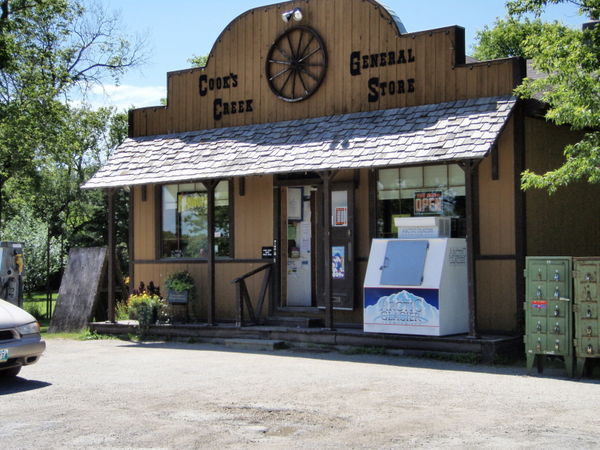
As a teen I started working for real, first at my aunties store, then for my dad’s tile business, the Cook’s Creek General Store (one of the coolest little store’s ever), and for a family friend in a machine shop fixing parts for trains. The common thing about all of these places is that they were all small local businesses. That’s where I learned about work. I learned first hand that when you are a small business owner, your business is your life. I often wouldn’t see my dad because he would be working late finishing jobs. I remember my aunty telling me how someone stealing a bottle of liquor from the store could wipe out a day’s profits. My boss Gloria at the Cook’s Creek Store told me it was my job to learn every customer’s name and to talk with them, because maintaining relationships with customers was key to survival in a world of big box stores.
Small businesses face different challenges than big business. But having healthy small businesses are critital elements of a community.
I kept working at those stores, at the machine shop, and for my old man all throughout University. On my shift at the machine shop I would write my dissertations in my mind while cleaning Gear Cases, then hammer them out on the keyboard after a shift at the store. At the University of Winnipeg I focused my studies in Environmental Politics, Canadian Public Policy, Law, and Economics.
Being from a rural area, and having first hand relationship with small business, gave me a different perspective on these issues. Politicians often talk about supporting small businesses but too often their “support” ends up playing favourites, usually to insiders and influential corporations, and there are unfortunately plenty of examples of that. Supporting small businesses means creating a fair and transparent system of regulation, so all companies are playing by the same rules. Supporting businesses means removing barriers to new start ups, to help them over the hump of the first year, so that they can grow into contributing members of the community. Supporting small businesses means having a Economic Development Office that responds quickly and effectively to the needs of the community.
The government’s job, however, is to always protect the people, first and foremost.
The government should not bend over backwards so some people can make gross amounts of money. When the town was doing everything they could to try and court Chinese investment, that was the wrong plan. Do you think that a big Chinese or other Large company would come to Pinawa without some big concessions by us, the people? And once that operation was here and those concessions were no longer good enough, that Pinawa would have much leverage against a team of high paid lawyers? And who knows how many of those jobs would actually go to Pinawanians. The government cannot be blinded by the allure of promisary money. You need to be cautious when dealing with big businesses whose sole motivation is maximising profits.
Of course businesses can provide jobs and services to the people, that’s great! But most businesses also come with negative externalities as well. For example the externality of potential nuclear contamination! Or something that we are feeling a bit more lately, the externalities from the growing Tourism industry in town.
Many people in town are concerned with the explosion in Tourism popularity in town and I share your concerns.
I see the economic potential of the tourism industry in a place like Pinawa, but it has to be managed. It cannot be like the Wild West. We don’t want conflict, or environmental degradation, or incurring a loss of revenue due to having to clean up after others! The council must show leadership to set out the rules, fair rules, that allow businesses to operate in a way that is consistent with the values and identity of the Pinawa community.
As counsellor I will work towards a fair and open business environment by:
Developing a comprehensive townwide tourism management plan that lays the framework for the industry in town in a way that encourages sustainable profits for business while protecting the interests and concerns of the people.
In consultation with the Pinawa Chamber of Commerce, the Children’s Co-op Daycare Board, parents, and other stakeholders, work to improve access to Daycare spots so that young working families are able to manage their business and family obligations! Access to quality daycare services is a key consideration for entrepreneurs with young children who are considering moving to Pinawa.
Working with the tourism industry to create a Code of Ethics for operators. This code would outline the expectations of operators to maintain good practice of environmental stewardship and community standards. Having an agreement like this for all parties would ensure that all operators have confidence that they are on the same page, playing by the same rules. And would help protect them from being undercut by less scrupulous business folks, for example a bar in LdB dropping off a party bus of floaters in our town.
Working together with all businesses in and around the Pinawa Channel area to come up with a comprehensive organizational plan that fairly facilitates eco-tourism and commerce, while protecting the interests of residents and the environment. This plan would create a framework for improving the logistics and impact of activities over several years with the goal being to offer a superior experience to visitors, enhanced environmental protection, reduced traffic issues, and smoother operations for outfitters. As the town moves forward with acquiring that segment of highway this plan is absolutely critical as it incorporates kilometers of road and highway, waterways, businesses, sensitive areas, the cemetary, trails, visitor safety, dozens of jobs, and significant potential revenue. It’s important that this plan is transparent, cooperative, and accountable as it affects an important economical, environmental, and cultural asset. I want to bring these objectives together in a way that we can all be proud of!
As part of the Channel Plan above, develop a revenue structure that is based on usage. Using a combination of parking fees, point of sale tax, and rental agreements with operators, we can develop a streamlined and fair system that works. This would ensure that the people of Pinawa see a direct financial benefit from the tourism industry, while also benefiting the industry itself. Revenue from these sources would be reinvested in parks, beaches, docks, signage, trails, promotional materials, and other initiatives that improve the quality of life for Pinawanians, and the quality of experience for visitors.
Promoting the development of Mixed-use commercial/residential development in the central commercial district (the undeveloped area between Burrows, Vanier, Besbourough and Willis). This sort of development (business on bottom, residential on top) fills two niches that are underserved in Pinawa currently, those being; the severe lack of centrally located commercial space, and the lack of apartments and condos. Mixed use areas are more vibrant and more cost effective for a town. Also, it opens up more opportunity for a new entrepreneur as they could potentially open their business on the ground floor and live in the same building. This can reduce costs and makes it more attractive to an entrepreneur.
Improving communication between the LGD and the business community. I keep hearing about this feeling around here that you need to have an “in” or be connected somehow. Whether that is true or not, it is still something that needs to be addressed because it is imperative that people have confidence that everyone will be treated fairly! Any sense of favourtism can have a chilling effect on the economy as other entrepreneurs will feel discouraged to even start.
Encouraging through advertising and networking, the benefits of shopping local and highlighting all of the amazing local businesses in our area. If you need somethign fixed, call the local guy! When your friends come to visit, tell them to rent out the cabin, or a room, or a camping spot! If you want to go on the channel float, don’t go to Canadian Tire in Winnipeg to buy a cheap tube, talk to one of our local outfitters they will hook you up (with a way better experience I might add)! Rent a canoe or a paddleboard, play a round of golf, get a massage, buy some local art, or do a fitness class at the gym. The best way that Pinawa can support local businesses, is to support local businesses!
I have been around small business all my life, and I can tell you 100% that it is not tax cuts or variances or investment from China that supports the economy, it’s people. The relationship between community and small business is what makes it or breaks it. I consider so many of the entrepreneurs and business owners in town my friends, and I want all of them to be super successful! Those business owners who know me well, know that I care about them and this town. They also know that I’m a straight shooter, and if we disagree on something, I’m always willing to tell them why and back it up with supporting facts and information. It’s that sort of mutual respect and cooperation that will build confidence within the business community, while at the same time, always advancing the interests of the citizens of Pinawa.
Please, make a committment to try and shop locally and intentionally whenever you can 🙂