Municipal assets like roads and pipes and sewers aren’t really assets at all. They’re liabilities.
It’s pretty easy to think about the next election. What we need is a plan for the next generation. For years, budgets in Pinawa were built around inflation. When the province required an asset management report, the numbers finally told the truth. Limiting spending to inflationary increases was never going to be enough, because it didn’t account for the assets quietly wearing out underneath us.
The asset management report forced the LGD to shine a light on the problem. The report showed that pretty much everything was at end of life. Now, that doesn’t mean everything is immediately broken and useless, rather, it’s a way to force a town to account for its infrastructure long term. A $5 million road expected to last 50 years loses $100,000 of accounted value every single year. That’s the liability piece I was talking about earlier. It’s an imprecise tool, and repairs in real life don’t follow such a linear model, but the lesson holds true. Eventually, you have to pay, so you had better plan.
Here’s Pinawa’s problem in numbers. Our asset replacement forecast identifies roughly $129 million in municipal infrastructure, with only about $26 million in remaining asset value. The bill keeps growing as the assets wear out underneath us.
This is why Sue Appleyard and I pushed for the asset management plan in 2023, and why we’re still pushing for it. The underground network is where the biggest costs lie. I say we should determine our priorities based on risk: what threatens safety, health, environment, reputation, considering potential severity and likelihood.
The top of my list is clear: water. The treatment plant, the distribution, and sewer. It would be foolhardy to pave the roads in gold while the water lines underneath fall apart. We will fill the potholes, but water has to be the priority.
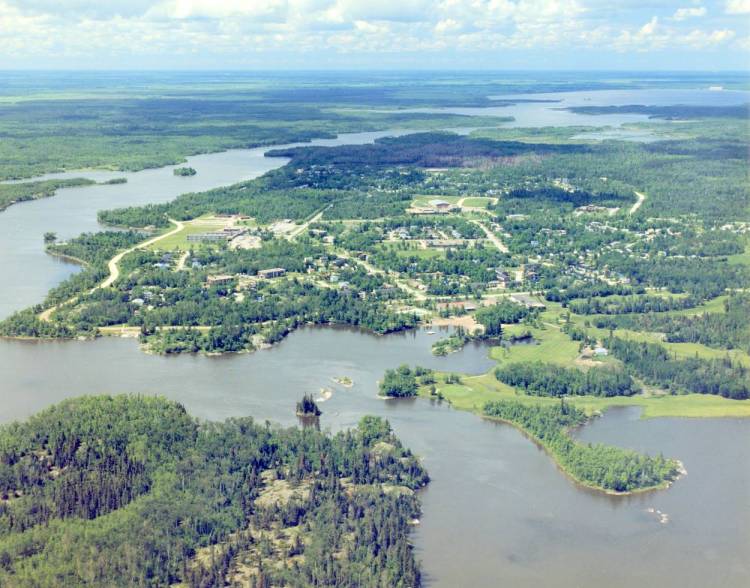
My plan is pragmatic, consistent with the Downtown Waterfront Secondary Plan adopted in 2017 and consists of three parts. First, grow the population and the tax base using mostly available undeveloped land. Land that’s ideally already serviced or easily serviceable so we grow the wealth of the town while minimizing growth in our infrastructure debt. Second, we can target strategic investments and incentives to boost the value of our productive areas. Finally, when it is time to expand, we will want to plan it in a sustainable way, so we don’t keep kicking the can down the road for our kids to pay for.
I’ve seen people ask: ‘How can the town develop land it doesn’t own?’ Good question — and the answer is: the town doesn’t have to own it. Its job is to make private development worth doing with clear rules, real incentives, and a council that says yes instead of stalling. If private landowners are confident they’ll make more money developing their land than letting it sit vacant, they’ll develop it.
I know of at least two significant development opportunities that did not proceed here — one worth $16 million (Deer Ridge), and a multi-unit residential build. The same developer was involved with both and came to council as a delegation and said it was too hard to do business in Pinawa. Some people might have different opinions on that, but the outcome is not in dispute: the investment didn’t proceed, and Pinawa lost the assessment growth that comes with it.
It will take a change in attitude to create those conditions. There are real developers who want to work with a town that’s open for business. We need a different way of thinking to incentivize and encourage private capital to invest in Pinawa.
The bottom line is: Can we afford to maintain the status quo?
That’s what Pinawa 2000 is really about: not a bigger town for its own sake, but a town that generates the wealth needed to protect what we have and keep taxes reasonable. If we do not do this, our community will be forced to make some very painful choices in the probably not so distant future. I think I speak for all of us that we would rather not have to do that. So, let’s make a choice, on October 28, to elect a council that can work together to tackle this challenge.
I hope you enjoyed reading. Thanks for the ongoing encouragement. I’m here to offer the people a choice. I’m going to keep on working, but I can’t do it without you. Subscribe below with your email to get the next post delivered directly to your inbox. – Michael


One thought on “Assets are Liabilities”